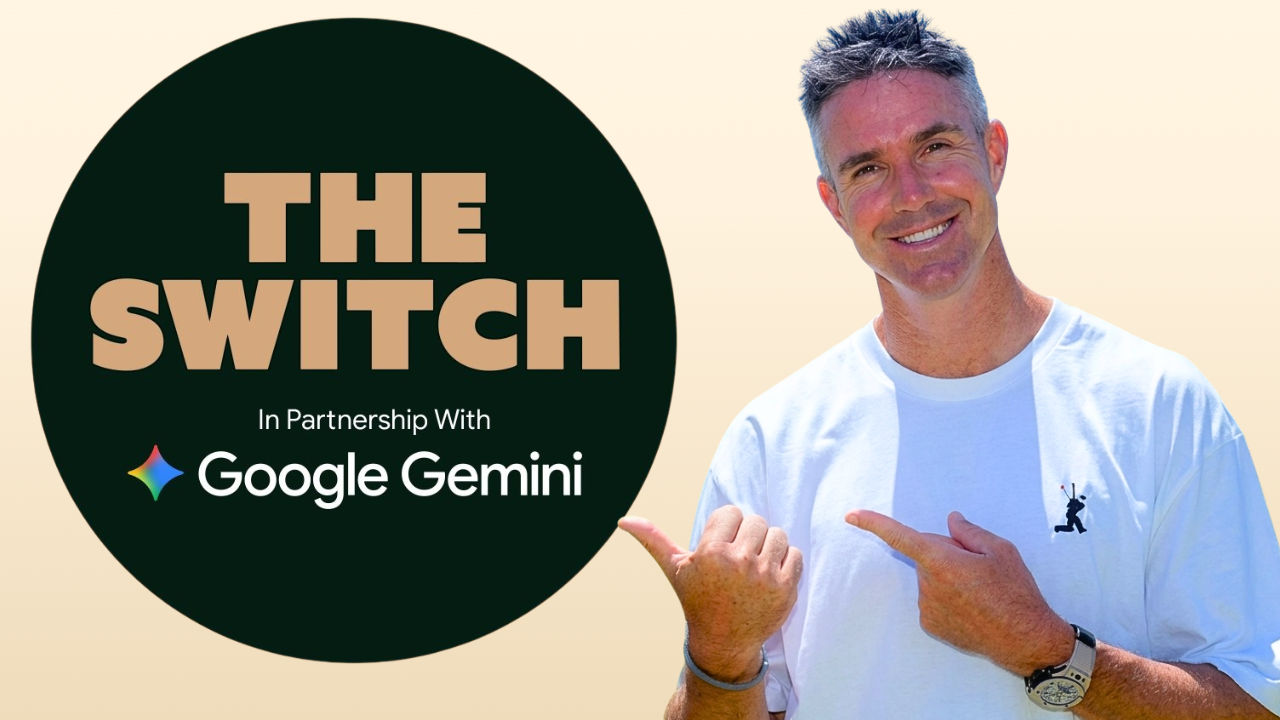
Google has moved deeper into sports media through a new collaboration with Kevin Pietersen, launching a large-scale cricket content series built around artificial intelligence and digital-first distribution. The project, titled “The Switch”, debuted on YouTube on May 4, 2026, with a structured rollout spanning 90 episodes released twice each week, positioning it as one of the most extensive creator-led cricket formats currently in production.
AI takes a central role in content creation
At the core of the series is Google Gemini, which is embedded across multiple stages of production rather than operating as a background tool. The system supports research, scripting, and data interpretation, while also contributing to the construction of storylines and content formats designed for digital audiences. Interactive elements, including fan-facing quizzes and tailored player insights, are integrated into the viewing experience to deepen engagement and reflect changing consumption habits.
The series blends long-form conversations, short-form clips, and behind-the-scenes access, bringing together current international players and former professionals across episodes. This structure allows the format to extend beyond match-focused discussion into broader storytelling, with an emphasis on personality-driven narratives and global fan interaction.
Pietersen positions AI as a creative partner
Kevin Pietersen outlined the thinking behind the collaboration in an official statement, stating, “Today, The Switch is partnering with Google Gemini to redefine how cricket is experienced by fans around the world. YouTube is the epicentre of cricket fandom – it’s where the game lives, breathes and connects people globally – and The Switch sits right at the heart of that. Gemini has become a real creative teammate for me – it allows us to move faster, think bigger, and give fans something they haven’t seen before. For me, this is about pushing the boundaries of how cricket is shared and experienced.”
The integration of AI into daily production processes enables faster turnaround and greater experimentation with content formats, while also supporting the operational demands of a global creator schedule. By offloading time-intensive tasks, the system allows for a sharper focus on creative direction and audience-facing output.
Social media signals launch momentum
The partnership was also highlighted through Pietersen’s social media activity, where he shared:
“THE SWITCH 🤝 GOOGLE GEMINI
We are thrilled to announce Google Gemini as our NEW teammate on the channel 🙌
HUGE names & EPIC challenges are coming your way VERY soon 💥.”
THE SWITCH 🤝 GOOGLE GEMINI
We are thrilled to announce Google Gemini as our NEW teammate on the channel 🙌
HUGE names & EPIC challenges are coming your way VERY soon 💥
SUBSCRIBE NOW… Don’t miss what’s next! 🫡#GoogleGemini
cc @sundarpichai @Google @GoogleIndia @GeminiApp… pic.twitter.com/UwoYrpVKtu— Kevin Pietersen🦏 (@KP24) May 3, 2026
The messaging points to a pipeline of high-profile guests and concept-driven episodes designed to sustain momentum across the release cycle.
YouTube becomes the primary distribution engine
YouTube serves as the central platform for the series, enabling a mix of rapid-reach short videos and more in-depth long-form content within a single ecosystem. This approach allows direct access to a global cricket audience without reliance on traditional broadcast frameworks, while also supporting continuous engagement through regular uploads.
The guest roster includes a mix of established and emerging names from across the international game, reflecting a deliberate effort to position the series as a global cricket hub rather than a region-specific production. The format is built to capture diverse perspectives and extend relevance across multiple markets.
Broader implications for cricket media and technology
The collaboration reflects a wider shift in how sports content is being produced and distributed, with technology platforms playing a more active role in shaping both workflow and output. By integrating AI into a high-volume content pipeline, Google is demonstrating practical applications of its tools within a live entertainment environment.
For Pietersen, the move signals a continued transition into creator-led media ownership, where athletes can build and control their own global content ecosystems. The model combines scalable technology, direct distribution, and personality-driven storytelling, reinforcing a broader industry direction where sport, media, and technology are increasingly interconnected.