
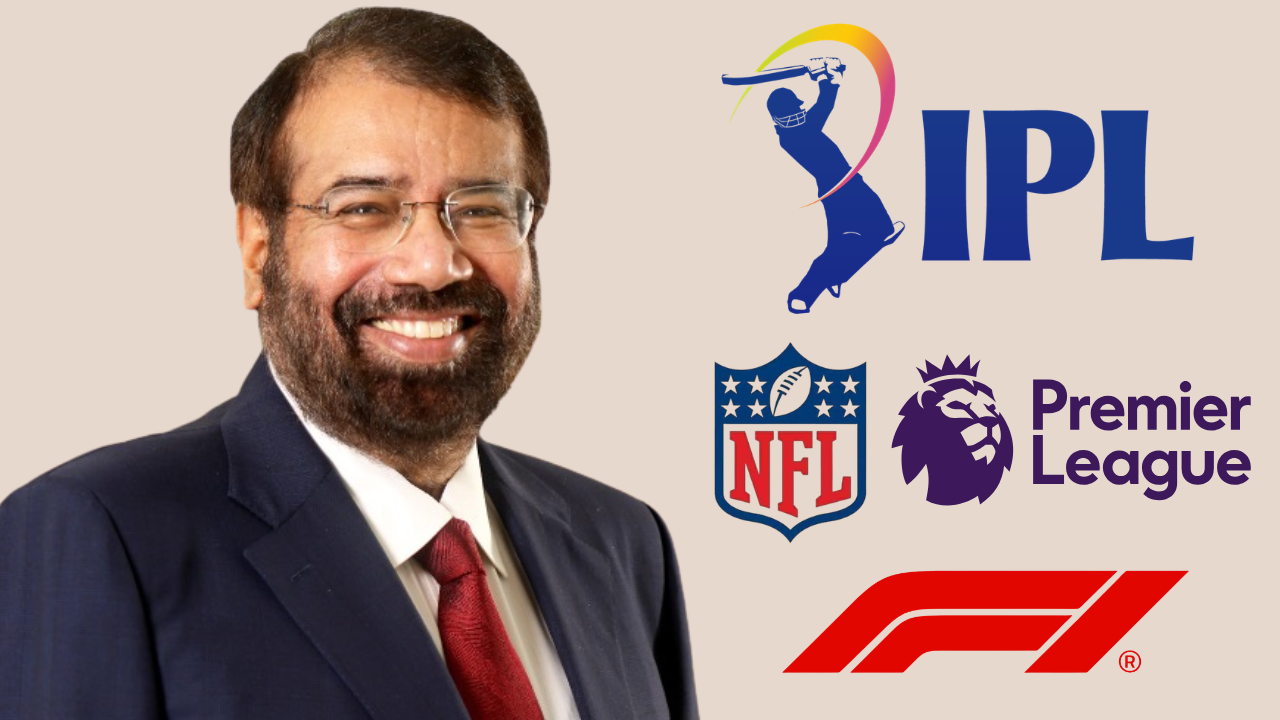
The Indian Premier League has already become one of the world’s most commercially powerful sporting properties, but RPG Enterprises Chairman Harsh Goenka believes its next challenge is transforming from a dominant cricket tournament into a truly global sports league. Writing in the Times of India, Goenka said the IPL “has transformed cricket from a sport into a high-voltage entertainment industry combining glamour, celebrity, commerce, fandom and athletic excellence in a way few sporting properties anywhere in the world have achieved.”
Goenka, whose RPG Group owns Lucknow Super Giants, argued that the IPL now possesses the scale and commercial influence to compete with properties such as the NFL, Premier League, NBA and Formula 1. However, he suggested the tournament risks stagnation unless it is willing to evolve structurally across cricket operations, scheduling, fan engagement and media strategy.
Batting dominance and Impact Player rule under scrutiny
A major focus of Goenka’s analysis centred on the balance between bat and ball in the modern IPL. He argued that the tournament’s cricket product has increasingly tilted toward relentless scoring at the expense of tactical tension and unpredictability.
Referring to the current batting-heavy environment, Goenka wrote that “too many IPL matches have ceased to be cricket contests” and added, “They have become batting exhibitions.” He argued that repeated totals above 220 have reduced the shock value traditionally associated with aggressive scoring. “A six loses its meaning when it arrives every other delivery,” he wrote.
Goenka also questioned whether the Impact Player rule has unintentionally reduced strategic complexity. “A rule introduced for excitement has, paradoxically, made the game more predictable,” he wrote, while arguing that deeper batting line-ups have weakened the significance of wickets and reduced pressure moments within matches.
According to Goenka, restoring competitive balance will require greater variety in pitch preparation and conditions across venues. “Cricket’s appeal lies in uncertainty,” he added, while calling for surfaces that challenge both batters and bowlers rather than consistently favouring power-hitting.
Matchday experience and fan culture need improvement
Beyond the cricket itself, Goenka argued that the IPL still falls short in delivering a world-class in-stadium experience despite its commercial success. He suggested that operational issues at venues continue to undermine the league’s broader ambitions.
Describing the current situation, Goenka wrote that “attending a match must be a joyful evening, not an ordeal.” He pointed to recurring problems involving parking, entry systems, sanitation and food services across stadiums.
Goenka also criticised the widespread allocation of complimentary passes to political and institutional stakeholders. “This fills the best seats with disengaged guests while genuine fans pay premium prices or stay away entirely,” he wrote, while arguing that ticketing systems and hospitality allocations require deeper review.
Franchises must become cultural institutions
Goenka suggested the IPL’s early growth was driven not only by cricket quality but also by larger-than-life personalities who became deeply connected with fan identity. He referenced figures such as MS Dhoni, Virat Kohli, Chris Gayle and AB de Villiers as players who helped shape emotional loyalty around franchises.
He argued that many IPL teams now underutilise digital storytelling opportunities by limiting content strategies to promotional material and routine updates instead of building stronger emotional communities around players and franchises.
“Your city’s team should feel like your city’s heartbeat. Every franchise should aim for nothing less,” Goenka wrote, while encouraging teams to invest more heavily in documentaries, behind-the-scenes access, podcasts and personality-led content.
Scheduling and media consumption habits are shifting
Goenka also proposed reconsidering the IPL’s scheduling model, arguing that an extended tournament window risks reducing the significance of individual fixtures over time. “Scarcity creates excitement,” he wrote, while warning that “even passionate fans begin to treat the tournament as background noise” when matches stretch across more than two months.
He suggested a shorter competition window and even raised the possibility of moving the IPL to the winter calendar to improve spectator comfort and align more effectively with India’s tourism season. While acknowledging the wider scheduling complications involved, Goenka wrote, “The IPL is now powerful enough to demand that conversation.”
The evolution of digital consumption habits also formed a central part of his argument. Goenka pointed to changing viewing behaviour among younger audiences, who increasingly consume matches simultaneously through highlights, fantasy gaming, tactical analysis and multi-screen viewing experiences. “Proof of this is the staggering 800% increase in connected viewing in the last five years,” he wrote.
Goenka also highlighted the growing influence of fantasy sports ecosystems on fan engagement. “Millions now watch matches involving neutral teams because they have skin in the game,” he added.
IPL’s next phase depends on reinvention
While Goenka acknowledged the IPL’s extraordinary commercial growth, he argued that the league’s long-term success will ultimately depend on whether it can build legacy and emotional permanence rather than relying solely on scale and valuation.
“What it now needs is timelessness — rivalries that become folklore, moments that transcend cricket, franchises that become institutions,” Goenka wrote.
He concluded by arguing that the IPL’s next phase of evolution will require the same disruptive thinking that originally transformed it into a global sports business powerhouse. “The league was built on disruption. It will only reach its full potential through a willingness to disrupt itself.”


