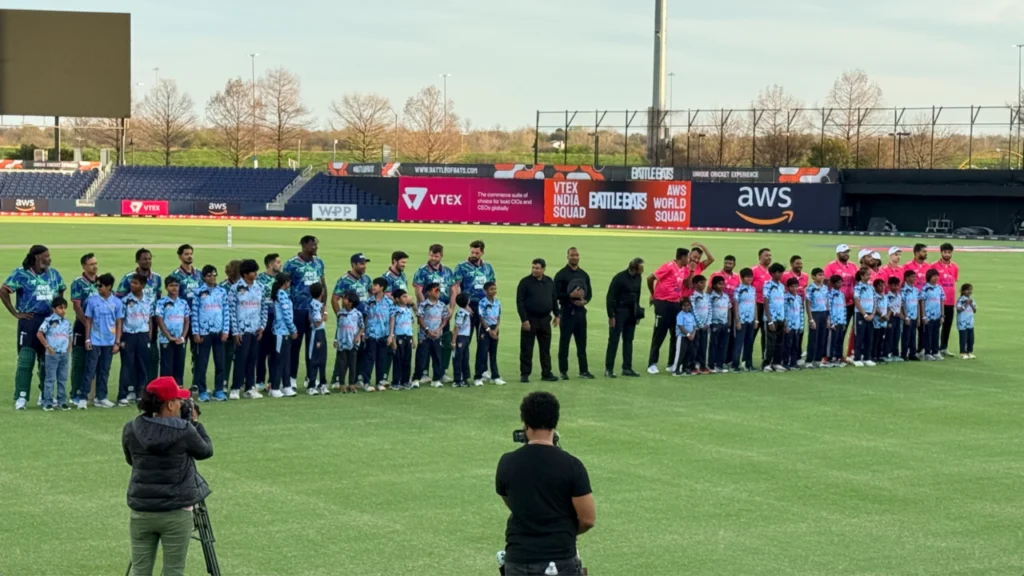
On a warm Texas evening this past March, Ravichandran Ashwin walked onto the field at Grand Prairie Cricket Stadium to a roar that could have belonged to Chennai. Children chanted his name. Families scrambled for photographs between overs. India’s second-highest Test wicket-taker was captaining a side called the VTEX India Squad against a World team led by Chris Gayle, in a format nobody had played before, at an event being staged for the first time in its history.
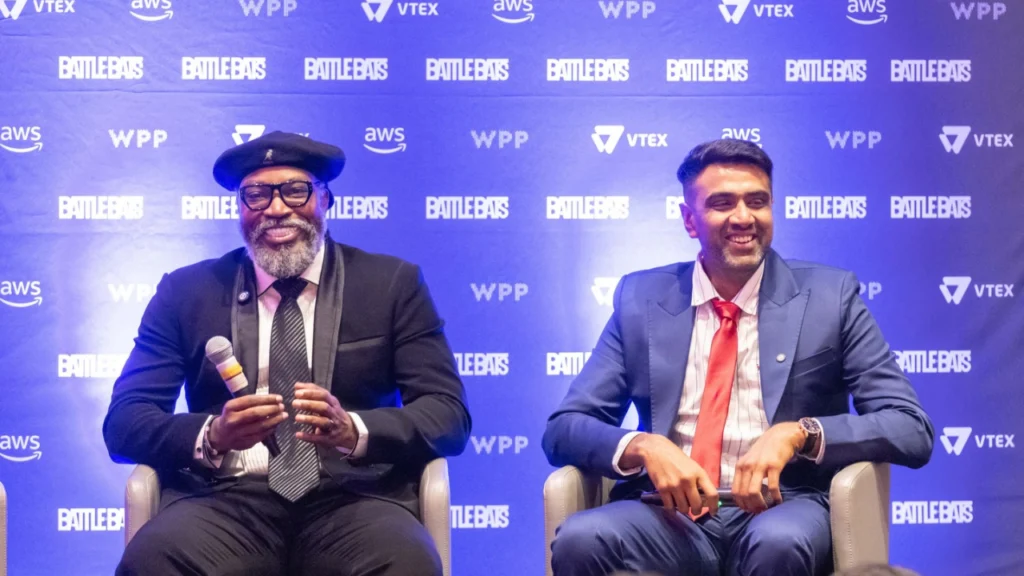
The company whose name was on Ashwin’s shirt sells enterprise e-commerce software. It was founded in Brazil in 2000 by two mechanical engineering students, runs the digital commerce operations of KitchenAid, Stanley Black & Decker, Colgate-Palmolive, Carrefour and OBI, and listed on the New York Stock Exchange in 2021.
“Literally we don’t know anything about cricket,” Santiago Naranjo, VTEX’s Chief Revenue Officer, said in Dallas that day. “It is not in our culture yet.”
That admission is the starting point of one of the more unusual commercial stories in world cricket. Six months on, VTEX has gone from cricketing outsider to owner of a proprietary event, to one of Major League Cricket‘s principal sponsors, and to the conduit through which AWS and WPP have attached themselves to cricket in the United States. Cricket’s central commercial problem is persuading large non-endemic brands that its audience is worth buying. Nobody sold cricket to VTEX. It found the sport by reading its own customer list.
The customer told them where to go
The decision began, as most durable sponsorship decisions do, with a customer analysis rather than a passion for the game.
VTEX is often described to newcomers as the enterprise predecessor of Shopify — Mariano Gomide de Faria, the co-founder and co-CEO, prefers “Shopify for grown-ups.” The platform runs large-scale digital commerce operations across more than 40 countries. As the company pushed into North America, with Gomide relocating to New York and his co-founder Geraldo Thomaz to the UK, the profile of the buyer became impossible to ignore: the people signing off on enterprise commerce architecture at large American technology companies were disproportionately of Indian origin.

VTEX had already been building its brand through sport, connecting its high-performance culture to figures like Lewis Hamilton and Rafael Nadal at company events. The question became which sport would connect with the technology sector in the United States. Marina Baltz, Managing Director of Battle of Bats, points to where that leads: inside VTEX’s enterprise customers, the majority of stakeholders are of South Asian background. “We thought that it would be a really good place to be, because our clients like cricket.”
What Gomide saw in that concentration was an asset the market had mispriced, and he is unusually direct about why. “If you relate to all the tech companies, the majority of their stakeholders inside our customers, they are fans of cricket,” he said. “So there is a huge audience here. But the marketing departments are led by Canadians, Americans, Europeans that just ignore cricket.”
The incentives, as he describes them, do the rest. “It’s very hard for you as a marketing VP to say, ‘I’m going to bet on cricket.’ It’s not fancy. Fancy is F1. Fancy is NFL, because I get to have my booth at NFL, and I become the powerful marketing guy. Cricket? I need to go to IPL in India, in Mumbai? No, no. I’d rather go to New York.”
Which produces the line that ought to appear in every sponsorship deck American cricket writes: “There is a lot more ego than data driving marketing decisions in the U.S. And if you go with the data, cricket is a missing spot.”
Why they built something instead of buying something
Having identified the opportunity, VTEX did the harder thing. It did not buy signage.
“When we want to do something, we want to create something,” Naranjo said. “We don’t like to take the easy path, and the easy path would be just a sponsor. If you want to be in F1, okay, put in eight, ten million dollars and someone would show your logo on some car. But this is not who we are.”
That instinct is inseparable from the company’s own history, which is an underdog story of the kind cricket tends to appreciate. “VTEX was built in the corridors, in the ground of a public university in Brazil,” Gomide said. He and Thomaz were mechanical engineering classmates who interned at the same bank. “We don’t come from rich families. I sold my car, Geraldo got some money, and we were working from his apartment because we didn’t have money to afford an office. And we started writing code, because internet was there.” Nearly a decade of nothing followed. “In 2008, we only had four customers after, like, eight, nine years of company. We almost went bankrupt many times.”

The turn came from the largest company on earth at the time. Walmart was selecting a platform for its emerging-markets operation, and Brazil was the biggest of those markets. VTEX, then twelve people, was invited into the process as a courtesy — according to Gomide, the message was “you’re not a company, you will not win this, but I’m going to invite you to calibrate a bit” — and proceeded to beat Microsoft, IBM and the enterprise incumbents of the day across five of the six evaluation rounds, before losing the sixth catastrophically on compliance paperwork. What followed was an ultimatum rather than a rejection. “You won, but I cannot hire you. Unless you go over the country and find 60 people, the best of the best engineers, and in 45 days you come back to my office with them. If you get that, the contract is yours.”
They did, and delivered Walmart’s Brazilian operation well ahead of the incumbent’s European build. “Everybody was asking, who are those Brazilians putting Walmart live?” says Gomide. The client base went from four to 232 in four years.
Winning Walmart was one thing; the years of scaling that followed were another. Gomide explains that stretch with a story from Formula 1. He once asked Lewis Hamilton what separates a champion from a legend. Hamilton’s answer:
“To become a champion, it’s easy — requires discipline, resources, and focus. To become a seven-time champion, you need to be in a certain level of obsession that people will never be able to understand.” Gomide recognised the description. “What kept us going is the obsessive belief that we can keep doing better.”
The payoff, when it came, was almost incidental. “When you are in a tunnel, you just don’t look around. Let’s go for the next step, and next step. And suddenly, when you stop, you’re listed on the New York Stock Exchange.” A Bloomberg reporter asked him on listing day what he would do the next day. “I said, I didn’t think about it. I’m going to go to the office at 7AM, as I have for the last 20 years. I’m not celebrating anything. This is like 20 percent of the journey.”
That discipline is structural rather than sentimental. VTEX has burned money in only three of its twenty-six years, and the founding group still holds roughly 48 percent of a listed company — a balance sheet built for patience rather than for a sprint. “That’s the spirit of the underdog,” Gomide said. “Always cutting, always pressuring.”
Naranjo frames the mission in terms that map onto cricket’s own position in the American sporting hierarchy. Latin America, he argues, is still typecast abroad as an exporter of raw materials and footballers rather than of engineering — a perception the region’s software industry has spent two decades pushing against. “The world still sees Latin America as the underdog in software,” he said. “We know we build at the level of anyone.”
Gomide sees the same dynamic in the sport he has adopted. “Cricket itself is an underdog in the eyes of the Western world.”
Building a format, and a funnel
The event VTEX built was designed around a problem it had identified in the product itself: length.
The template was internal. Gomide had built VTEX Day, the company’s own retail conference, on the same principle.
“Let’s start doing very small things, gathering big and strategic concepts,” he said of applying the method to cricket. “The concept behind Battle of Bats is, if someone cracked the code on joining cricketers from all over the world, many Indians, executives and fans in a format that they can entertain themselves — this is going to be massive.”
Getting there meant asking a question the sport does not much like. He approached people in the cricket community about a shorter, more broadcast-ready format and was told repeatedly that it does not work that way. “Cricket’s too traditional. We don’t touch the format,” he was told. He kept asking. “But five hours, it’s barely an event. This is not cracking the code of executives.”
Eventually someone pointed him toward a structure played decades earlier, and the team adapted it into 4X Cricket: four innings of ten overs, alternating between sides — the two-innings rhythm of Test cricket compressed into an evening, with room for captains to adjust strategy mid-match. “It’s fast, responsive, and more broadcast ready,” Gomide said. “It’s ready for engagement.”
The second design decision was more radical, and it came from inside the team: Ariel Merino, who leads media for Battle of Bats, argued the field should be opened not just to executives but to anyone.
Gomide saw the strategic logic immediately. “What if we allow some amateurs to play with them? The goal is to create the bridge between spectators and participants. If the fan base that today are spectators of cricket have the aspiration to be on the field with Chris Gayle or Ashwin, then we’ll take the engagement to another level.” His model was Formula One’s American breakthrough. “F1 was too far away, and then they had a great idea to launch their Netflix series, and the sport just exploded in the US. Why? Because transforming idols into people transforms fans into participants.”
The response outran the forecast. “I was expecting around 300 to 500 people,” Gomide said, and applications ran into the thousands. A cricket committee narrowed the field to fifty, then twenty, all flown to Dallas at the company’s expense. Fourteen took the field on the night, in front of a crowd of around 3,000, with the broadcast peaking at roughly 40,000 viewers.
The professional roster was curated rather than assembled, the brief being to build the spiciest possible pairing of sides. Ashwin captained the India squad alongside Cheteshwar Pujara, Ambati Rayudu and Stuart Binny; Gayle led the World side, with Ravi Bopara and Carlos Brathwaite also on the ground. India lost, and the result was almost beside the point — the chants from the Grand Prairie stands were for Ashwin to come back and play more.
The team ownership model came from an unlikely reference point: SailGP, where corporate backers own national boats. VTEX took India, AWS the World squad, with Capelli Sport, WPP and Willow by Cricbuzz joining as partners. Baltz and Merino moved to Dallas a month ahead to lay the groundwork in person rather than over Zoom. And it nearly did not happen at all: a week before, disruption to air travel through the Gulf threatened the arrival of players routing through Dubai, and when Gomide warned the venue and suppliers he might have to postpone, not one of them asked him for more money.
The club you have to be invited into
That response told Gomide something about the sport he had entered, and it is the observation of his that cricket executives are most likely to recognise.
“There is something different in cricket,” he said. “The history behind cricket is so long and rich. So people that are here, like Danny (Morrison, who was commentating), like Chris and Ashwin — that’s a club. So you don’t join a club. You need to be invited. And we know our position here. We’re not part of the club. But we are listening and sharing our thoughts.”
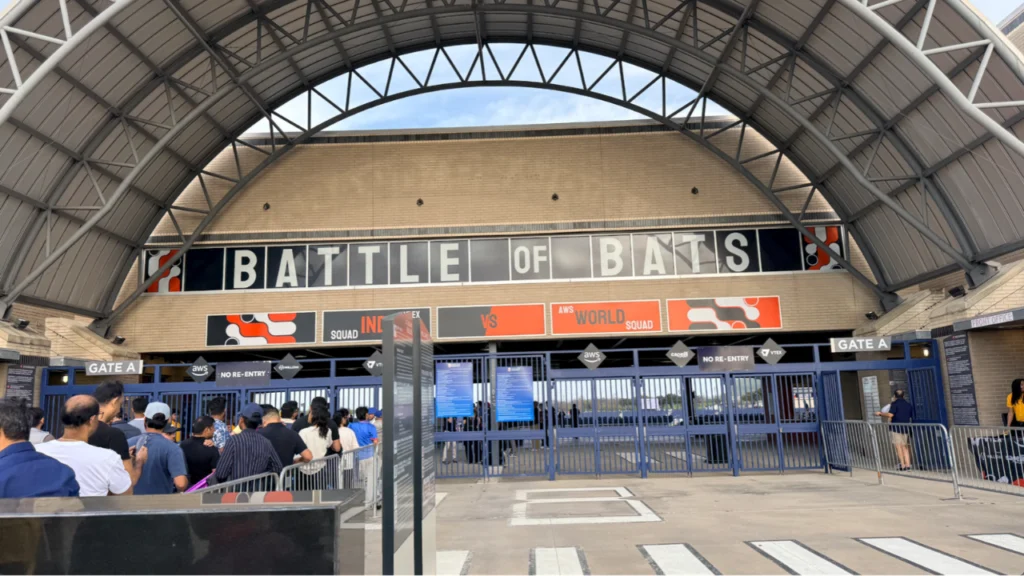
He treats reputation as the operative currency, on both sides. “Respect through reputation is really serious in cricket. And this is important, because our reputation is the only thing we do have.” He is equally relaxed about the limits of his own knowledge, which he frames as an advantage: “The leverage that we do have in cricket is that we don’t know anything about cricket, and that’s a luxury position to be in, because you can listen to everybody.”
Where that posture produces value for the sport is in what happens to the brands VTEX brings with it. Gomide describes a WPP executive’s reaction on the ground in Dallas: “Holy s***, I didn’t know that this was so powerful.” His response — “I told you” — was followed by an introduction to Major League Cricket. “If we become a catalyst for that, it’s a great legacy that we would give to the sport, and the sport will give back to us.”
From owning an event to sponsoring a league
Three months after Dallas, VTEX became one of Major League Cricket’s principal sponsors, its branding carried through the season that concluded in July.
The two are not in competition. Battle of Bats is a proprietary asset — VTEX controls the format, the guest list, the experience and the intellectual property — but it is one property in one city. The league sponsorship buys reach a single night cannot. Carlos Salcedo Izarza, VTEX’s VP of Marketing and Alliances, describes one strategy with two instruments: Battle of Bats is “a product of our own,” built to “fill this space that we have in the cricket world in the US, bringing the legends,” while the MLC deal is about “creating other types of connections and giving brand awareness.”
Neither has been measured yet. The MLC season finished in July, and Baltz is careful to say the results are not in. What they can see, they like. “We don’t have the result,” Salcedo Izarza said. “However, we really like what we see on TV.” He points to strong engagement around the in-stadium activations, and rates the broadcast and digital output highly.
What VTEX had not anticipated was the access. Across Dallas, Los Angeles and San Francisco, the season put its leadership, Gomide included, in rooms with the people trying to grow the sport in America, most of them with a view on how it should be done. Baltz describes those as powerful conversations, and rates what VTEX took from them — a senior-level read on how American cricket might actually be built — above the brand awareness and the activations. Salcedo Izarza called it the turning point.
What comes next
The format survived contact with its audience, which was the first-year question that mattered most. “We thought that the format was fully accepted,” Baltz said. “The players, the crowd, the people involved were like, ‘oh, that was fun.’ That was different, but not so different that we, as cricket fans, wouldn’t like it.” The legends were the draw: “Gayle and Ashwin made all the difference.” What she took from it was a read on unmet demand rather than an ambition to compete with anyone. “We don’t want to be a league. What we saw is that people would go to Battle of Bats again to see those legends that they haven’t seen in eight years.”
Season two is now confirmed: 4 to 7 March 2027, back at Grand Prairie Stadium, rebranded as the Battle of Bats Cricket Festival and expanded from a single night into a multi-day event. The field grows too, with Pakistan joining. The 4X format stays, tightened further for pace.
“Battle of Bats now is an asset. It’s a brand,” Baltz said. “We’re not going to go back on it.” The model behind the teams is evolving too. The SailGP-derived structure that gave VTEX the India squad and AWS the World side was always a first version, and the company is now exploring alternatives for how the teams are held — including selling ownership stakes to outside investors. “We built the teams the way we needed to in year one,” Baltz said. “Now that people have seen what this is, there’s real interest in owning a piece of it, and that’s a conversation we’re open to.”
Gomide had committed to that permanence before the first ball was bowled — “we are committed to doing Battle of Bats every year” — and was, by his own account, converted somewhere along the way. “It’s a religion, it’s not a sport. And I’m part of this religion.”
The commercial version of that sentiment is less romantic but more useful to the sport. VTEX did not come to cricket out of affection. It came because the data pointed it there, stayed because the community responded, and expanded because the first bet worked — bringing several of the world’s largest brands with it. As Gomide puts it, describing what he thinks he is actually building: “Uniting corporate executives, plus cricketers, plus fans into a social platform. More sponsors will come, more audience will come, more cricketers will want to play again.”
Whether they do is a question for next March and the seasons after it. What is already settled is that the loudest corporate case for cricket in America is being made by a Brazilian software company that came to the game on its own and learned it from scratch.