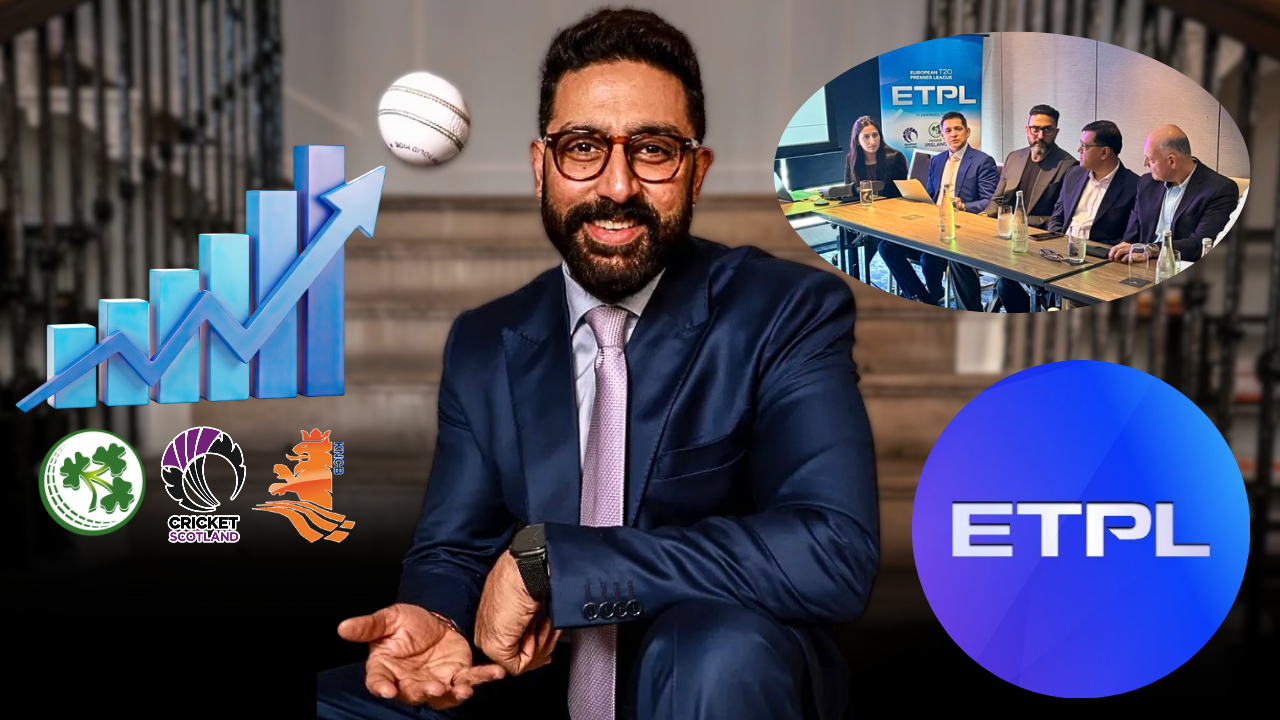
Abhishek Bachchan is Bollywood royalty: one of its most famous actors and producers. But talk to him about sports, and it’s clear that he is a true fanatic – as obsessed with all different games as his legions of fans are with him.
He has been a die-hard Lakers fan ever since his father took him to watch the Lakers play the Celtics at the Forum in the 80s. Bachchan can move seamlessly from breaking down last night’s playoff matchups to debating baseball to dissecting European football tactics.
He played in the NBA Celebrity All-Star Game at Madison Square Garden in 2015 and got to meet his idol Magic Johnson at the next day’s main event. In fact, it was watching Johnson’s transformation from basketball legend to one of America’s most successful sports entrepreneurs that first inspired Bachchan to pursue the business of sport himself.
And pursue that passion he has: visibly devoting much of his time for well over a decade to building three highly successful sports franchises in India.
His latest endeavour, however – the European T20 Premier League – marks a new role for him: that of a league owner and operator, investing his capital and energy not at a franchise level but in the overall venture. When asked why, he starts with insights he gained growing up at a boarding school in Switzerland and spending summers in New York: how the American and European sports markets differ.
“In America, you have arguably five major sports that dominate and they all do a great job,” Bachchan told cricexec. “But Europe is different — it’s a continent that embraces diverse sport, from handball to rugby to cycling, and people watch all of it. And with cricket, you’re not bringing something alien. Especially in Ireland, Scotland, the Netherlands — it’s something school kids play. It’s very much part of their day-to-day. The land is very, very fertile. It’s just waiting for an opportunity, and ETPL – I truly believe – is that opportunity.”
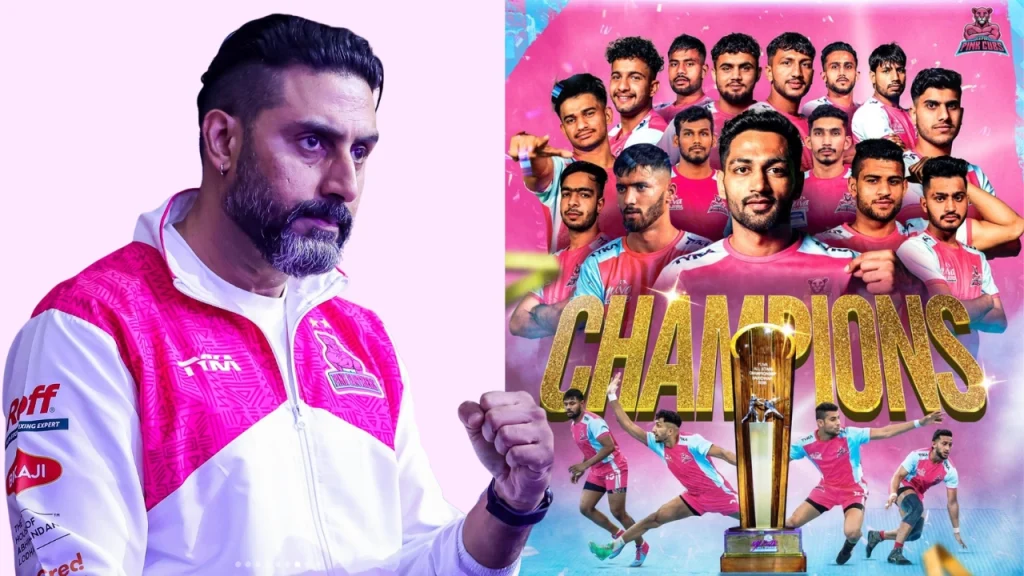
Bachchan’s path to the ETPL followed a deliberate progression. His first venture was the Jaipur Pink Panthers in India’s Pro Kabaddi League, where he saw the chance to help springboard a traditional sport to a new commercial level — and did, winning two titles. Then came Chennaiyin FC in the Indian Super League, motivated in part by a pointed remark from then-FIFA President Sepp Blatter at the 2014 World Cup in Brazil: “Over a billion people, you can’t put 11 boys on a pitch?” Bachchan took the joke seriously. “I said, ‘You know what? It might not sound nice, but he’s right. Let’s do something.'” Chennaiyin has since won the ISL cup twice.
Cricket, however, was always the prize. “I would have loved to be involved earlier, but I wasn’t sure what I could contribute,” Bachchan said. He tested the waters in 2024 through the Indian Street Premier League, whose tagline — “from street to stadium” — gave ordinary enthusiasts the chance to play professionally. The Bachchan family’s team, Majhi Mumbai, won the second-season title. “The ISPL gave me the final amount of confidence that I could work within cricket and not feel like a fish out of water.”
That is when the ETPL opportunity arrived. “In walked Saurav (Banerjee), Priyanka (Kaul), and Dhiraj (Malhotra). They said, ‘We want to do this.'” Malhotra — the veteran cricket operations executive who served as tournament director for the inaugural IPL and the first ICC World Twenty20, and later as CEO of the Delhi Capitals and the 2023 World Cup Tournament Director — had worked with Bachchan in both the Pro Kabaddi League and the ISL. “He’s seen my approach to how I run the teams,” Bachchan said. “They were looking for a partner who was ready to roll up their sleeves and get down and do the work. That’s the only way I know how to function.”
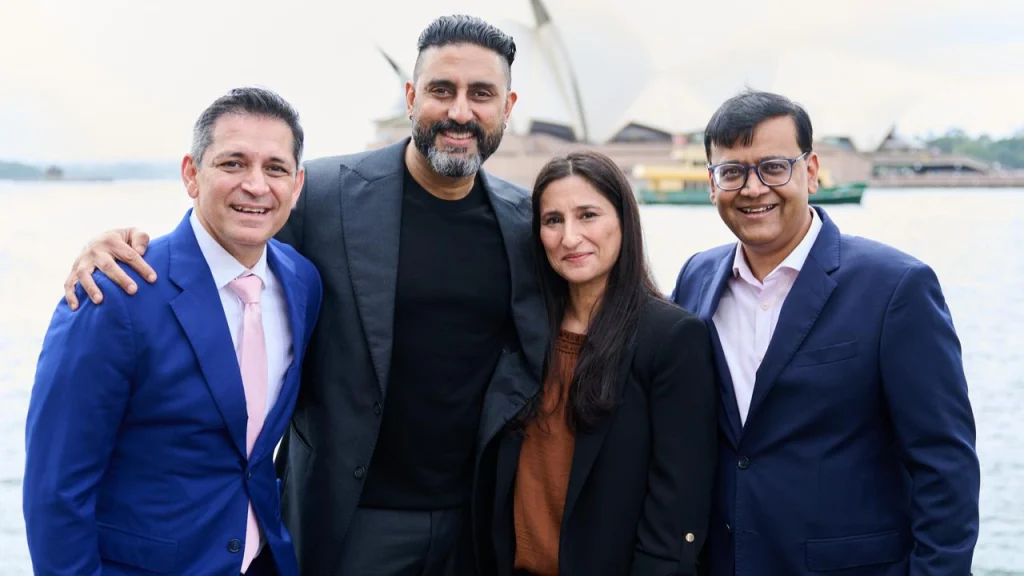
That opportunity is now four months from its first delivery. The ETPL, scheduled to launch on August 26, has spent the past six months converting ambition into infrastructure at a pace that has surprised even its founders. All six franchises have been sold. Twenty-four major international players have been signed. A franchise workshop bringing all ownership groups together was held in Mumbai in March. And a $20 million league-level fundraise — anchored by Bachchan’s personal investment — is underway.
For Bachchan, putting his own money in first was non-negotiable. “I would never ask anybody to even look at something if I could not turn around and say, ‘I’ve put my own money into it.’ I’m one of the anchor investors. I’ve helped build this thing from the ground up. That’s how much I believe in it.”
From vision to proof of concept
When cricexec first profiled the ETPL in October 2025, the league had an ICC sanction, three partner cricket boards, a capable leadership team, and an ambitious vision. What it did not yet have were franchise owners, signed players, or operational proof points.
The transformation since then has been rapid. Three franchises have been publicly announced, each anchored by legends of the game: Steve Waugh heads the Amsterdam franchise alongside Olympic hockey great Jamie Dwyer and business executive Tim Thomas, in partnership with Queensland Cricket and the Brisbane Heat. Former New Zealand internationals Kyle Mills and Nathan McCullum own Edinburgh, partnered with Otago Cricket. And Glenn Maxwell co-owns the Belfast franchise through the Floodlight Capital Consortium alongside Rohan Lund, the former COO of Foxtel and Seven West Media. Three additional franchises — in Dublin, Glasgow, and Rotterdam — are understood to have been finalised and will be announced imminently, following the same model of cricket greats partnered with experienced business executives.
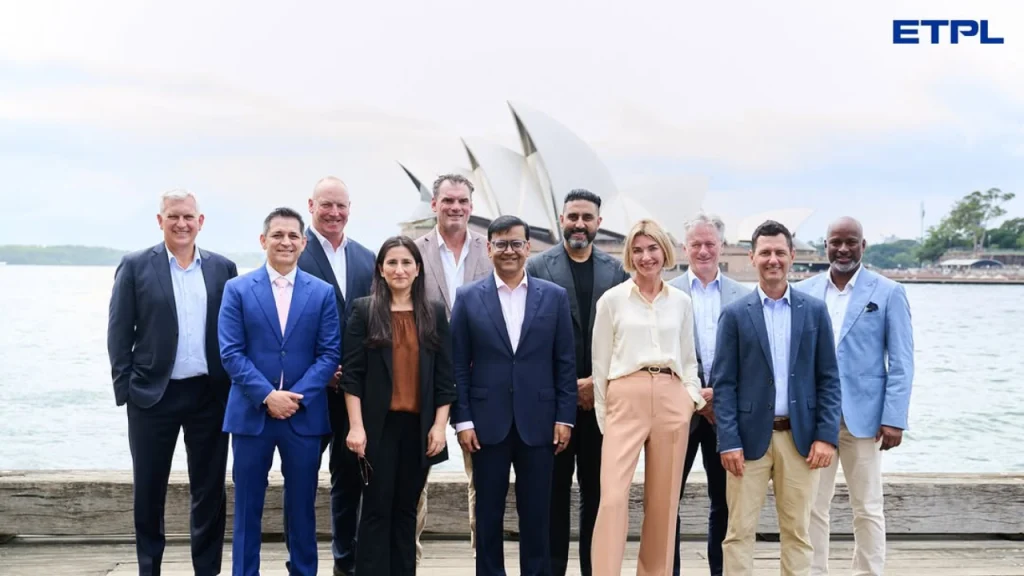
The player pool is formidable. Confirmed signings include Steve Smith, Glenn Maxwell, Mitchell Marsh, Tim David, Tom Curran, and Mitchell Santner — as well as many other yet-to-be announced stars creating a roster that would anchor any tournament in the world.
“At this point, I know all teams couldn’t be more excited about their player lists,” says Lund.
For co-founder Saurav Banerjee, the speed of progress reflects what happens when a strong foundation is in place. “Putting the initial building blocks together — the ICC sanction, the board partnerships, the governance — that took longer. But when it came to execution, there was a domino effect. We signed Steve Waugh first, and after that, the others came quickly.”
A franchise model designed for the people who know cricket best
What distinguishes the ETPL’s ownership structure is not just who owns the teams, but how the economics were deliberately designed around them.
Unlike the IPL, where franchises were acquired by industrial conglomerates, or The Hundred, where private equity firms and IPL teams led, the ETPL pursued cricket legends as franchise anchors. The approach was deliberate — lean into players and cricketing names to bring more attention and credibility to the league from the start. But legends of the game, however successful, are not billion-dollar corporate groups. The financial architecture had to match the ownership profile.
Banerjee, whose background includes over thirteen years as CFO and later Co-CEO of NDTV and a venture capital career at Kalaari Capital, structured the economics accordingly. “Our advisors told us that a high annual franchise fee was fair for a league of this pedigree. But we took the opposite approach. We halved the franchise fee from their recommendation and increased the common pool distribution to 80% in the first three years, to ensure that the league and the franchises would reach breakeven at roughly the same time — around year three.”
The result is a collaborative financial architecture in which the people who understand cricket best can afford to grow alongside the league. “Almost all the franchises are oversubscribed in terms of their capital requirements,” Banerjee added. “The financial partners see value in being associated with something like this.”
Lund sees this collaborative ethos and alignment on approach as essential. “The long-term value is to build cricket in Europe. That’s what the cricket associations committed to, and that’s what the teams passionately believe in. It will take patient capital and a level of pragmatism to build this together but the opportunity is enormous if everyone can align around the same vision and values.”
The league-level investment case
The ETPL is raising $20 million at the league level, with $5.5 million in anchor investment already committed — led by Bachchan’s capital. The remaining $14.5 million is open to investors. The case rests on several interlocking pillars, each progressively de-risked over the past year.
Start with the macro environment. Cricket viewership in major markets grew 30% between 2023 and 2025, outpacing overall sports viewership growth of 13%. Over 1,100 new cricket clubs were registered across 28 European nations in five years, bringing the total to nearly 2,850. More than $450 million has been invested in European cricket infrastructure since 2020. Cricket will debut at the 2028 Los Angeles Olympics. And England, Wales, Ireland, and Scotland will co-host the 2030 ICC Men’s T20 World Cup — a tournament that will further entrench cricket’s commercial presence on the continent.
“Europe is the second-largest sporting market in the world in terms of revenue after America,” Bachchan said. “It’s a market which enjoys its sports, and literally puts its money where its mouth is — not just viewership, but merchandising, hospitality and more. Everything about Europe is very positive when it comes to sports.”
Banerjee adds: “The last unexplored bastion for global cricket is Europe, which has more than 30% of ICC’s membership, with 33 ICC members,” out of the 110 total.
Then there’s the ETPL’s competitive positioning. The tournament sits in one of the lighter windows in the global cricket calendar, running from August 26 to September 20 — immediately after The Hundred, with no real overlap with other major T20 leagues other than the CPL. That positioning is already reflected in the calibre of player commitments.
The lower entry price amplifies the opportunity. At a time when two IPL franchises recently traded at valuations exceeding $1.6 billion, the ETPL offers league-level exposure at a fraction of that cost — and in the IPL’s case, even gaining access to invest is nearly impossible. Bachchan experienced this asymmetry firsthand. “When the IPL first came about, I would have loved to get involved. It was just not part of my budget. I was a relatively new actor, only seven or eight years into my career. I didn’t have that kind of money. And now here’s an opportunity in the second-biggest sporting market in the world, and you’re not paying IPL prices.”
Laurie Pinto, founder of Pinto Capital and a veteran sports finance advisor whose firm brokered GMR’s investment into Hampshire County Cricket Club, sees growing appetite. “Cricket has become a very interesting asset to American sports investors,” Pinto told cricexec. “You saw this with the IPL auctions for Rajasthan Royals and RCB where multiple Americans bid. There is definitely real interest in exposure to cricket. Why is cricket interesting? It’s the second biggest game on earth by following. And it’s the fastest growing women’s sport on earth. Cricket is not a startup — it’s been going for 150 years.”
Pinto pointed to a recent dinner he hosted as evidence of the shifting landscape. “Eighteen very prominent and wealthy American investors attended. Fourteen of them wanted to talk about cricket. If I’d hosted that three years ago, there would have been zero.”
For sports investors who already hold cricket assets, the ETPL offers something rare: genuine diversification. Its revenue base is entirely European — sponsorship, ticketing, broadcast, and tourism-linked commercial activity rooted in Ireland, Scotland, and the Netherlands. It is structurally uncorrelated with the Indian market, not dependent on BCCI scheduling or rupee-denominated sponsorships, and has no IPL ownership groups among its franchise holders. Until now, no cricket asset has truly filled that gap.
As Pinto summarised, for both existing and new cricket investors: “If you believe the league is sellable to broadcast, then this is a very attractive investment — which is also affordable and bite-sized.”
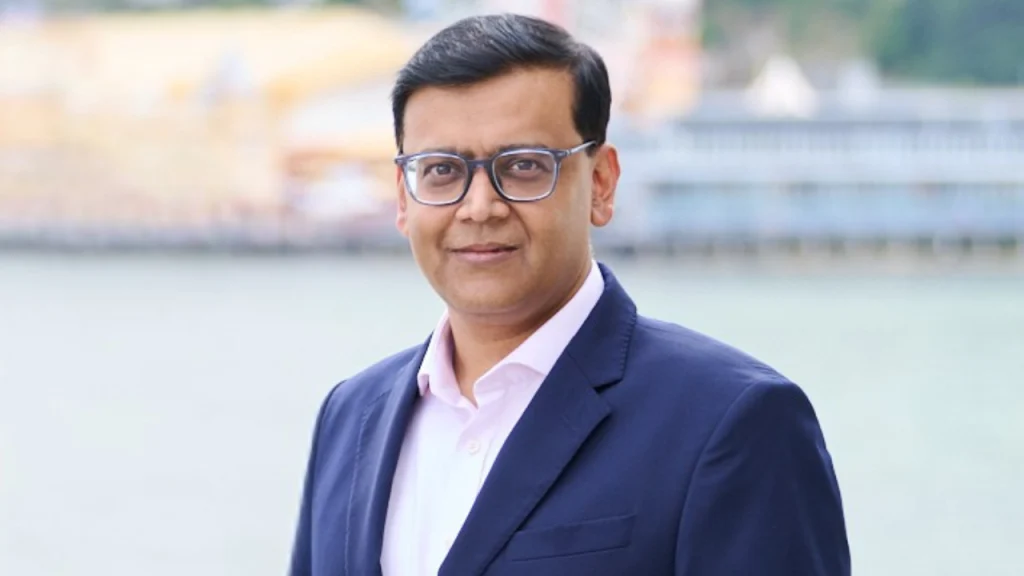
Saurav Banerjee, Co-Founder, former Co-CEO of NDTV and seasoned venture capitalist, is spearheading the latest fundraise for the league.
Systematic de-risking
After the ETPL’s ICC sanction was secured in late 2024, the league has methodically moved through its critical milestones: all three partner boards actively engaged, with Cricket Ireland’s Chair Brian MacNeice serving as ETPL Board Chair; Warren Deutrom, the former long-time CEO of Cricket Ireland, now full-time as Chair of Rules X; all six franchises sold; a confirmed international player pool; and operational planning well advanced with the franchise workshop completed.
A recent structural decision also broadened the league’s reach: all ICC Associate Member nations’ players will be treated as “local” players within the ETPL framework, opening the competition to cricketers from across Europe and beyond — and generating interest from a wider set of countries and communities.
Bachchan sees this development potential as core to the ETPL’s purpose. “The greatest victory for ETPL will be if you see some players that have come through the ranks, burst onto the world stage, and get the opportunity to showcase their talent as some of the best in the world. I think that’s possible.” He pointed to an unexpected moment during a recent film shoot in Poland, where he inaugurated the country’s first cricket ground — which was named in honour of his father, the legendary Amitabh Bachchan: “When I was there, people from the cricketing bodies said, ‘ETPL — we’d love to get involved.’ I thought: ‘Poland, cricket, ETPL? Wow.’ These are great signs. And these are not just players from the Indian diaspora. These are local Polish players.”
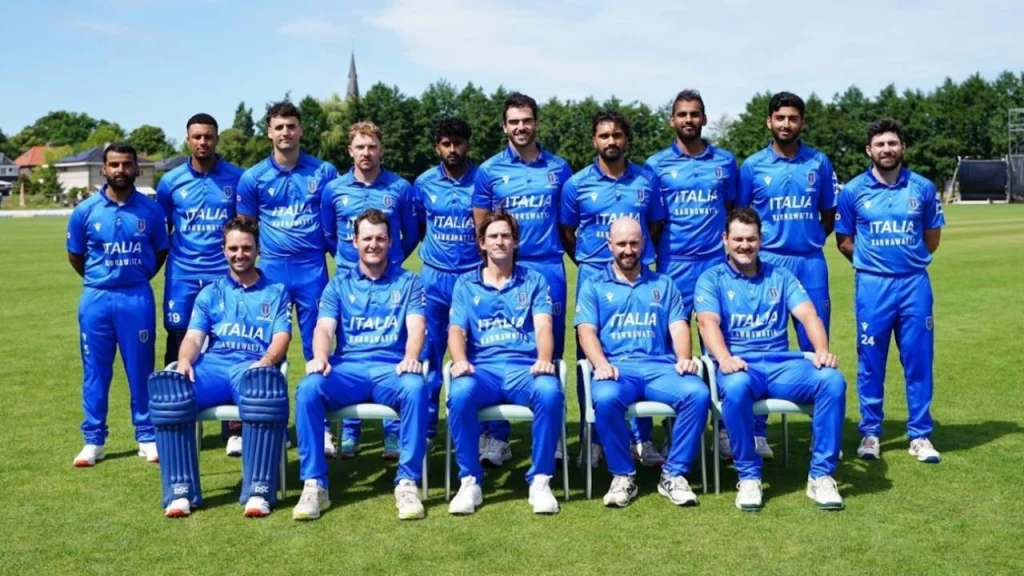
Bachchan’s long-term ambition extends well beyond the inaugural six-team format. “My dream is it becomes a pan-European tournament. We currently have three countries, six teams. In time to come, after year three, we’d love to expand — God willing, everything goes well.”
Paths to monetisation
For a new league launching outside the Indian subcontinent, the commercial model must be built deliberately. The ETPL is pursuing a multi-front approach across both broadcast and sponsorship.
For broadcast, the UK and European time zones have a strategic advantage — matches can be positioned to target both European and South Asian audiences, a flexibility that leagues based in the Americas or Australasia cannot easily replicate. “We are moving towards broadcast partnerships in all key territories — local, India, UK, and the rest of the world, including the Americas, Middle East, and other parts of Asia,” Banerjee said. “We’re deep in discussions and have received offers from multiple broadcasters. Our priority in our early years is to maximise audience to grow the brand and the platform.”
On sponsorship, the ETPL can draw on lessons from leagues that have built commercial ecosystems from scratch. The Caribbean Premier League constructed its entire financial model around regional sponsors and cultural authenticity, generating over $225 million in annual economic impact. The San Francisco Unicorns in Major League Cricket demonstrated that a single franchise, through Silicon Valley networks and diaspora positioning, could build a sponsorship roster rivalling or exceeding established Big Bash clubs — without relying on significant broadcast revenue. Both of these case studies were recently featured in cricexec.
The ETPL is positioned to pursue all three approaches: local European sponsorship, diaspora-targeted partnerships across its host markets, and broader broadcast-driven sponsorship as audiences are established.
Skin in the game
Bachchan’s involvement in the ETPL is consistent with a pattern across his sports career: finding opportunities where he can change the landscape, not simply participate.
“I’ve realised that passion and belief take you so far,” he said. “After that, you have to have a business plan. Passion is great to get you started, but once you’re up and running, it has to be sustainable. I very firmly believe that Europe and the ETPL can become very, very big.”
His level of operational involvement is unusually intense for a celebrity co-founder. He describes calls with franchise partners — some based in Australia, some in America, some in Europe — that run until 4:00 AM, often followed by a 7:00 AM start on a movie set. In his other sports ventures, he has previously approved daily player menus and vetted social media posts each morning by 8:00 AM. The micromanagement has evolved, but the ethos has not.
“There are a lot of celebrities available — a recognisable face, they’ll wave, and it’s great. But the glamour quotient dissipates after the first or second time. Then it’s, ‘What are the numbers? What’s the work?'” he said. “I’m not somebody who’s going to be there and just wave hands. I’m here to do the work. I take ownership of it and responsibility for it. The great leaders I admire all lead from the front.”
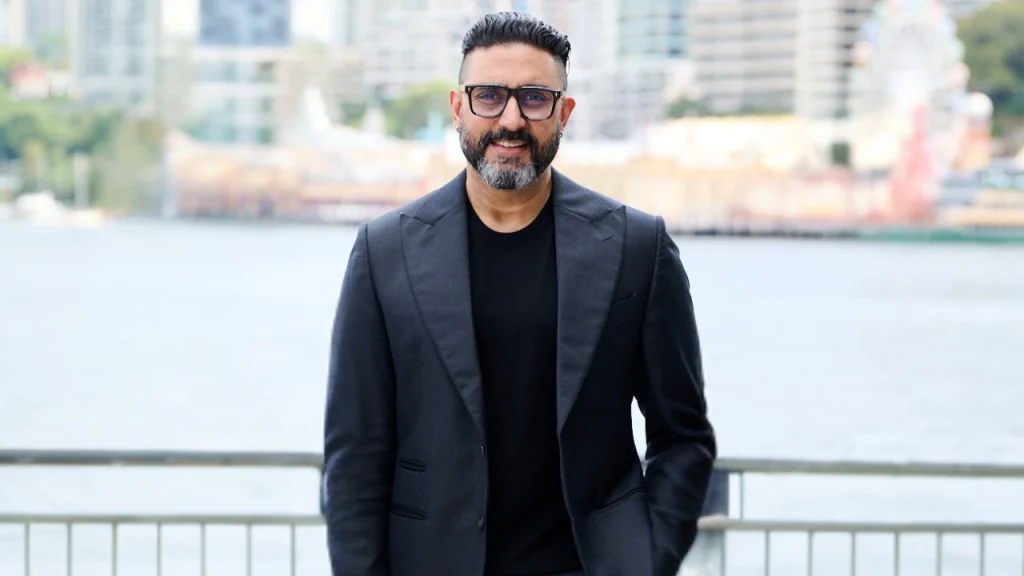
When Bachchan picks up the phone — whether to potential partners, broadcasters, or sponsors — the message is consistent. “I keep things very simple. If something excites me — and look, I’m a film actor from Mumbai, cricket business is a completely different world — but if I can get enthused by it and see sense in investing and participating, others can too. And when they know I’ve put my own money into it, that I’m not skirting the issue, that I’ve got skin in the game — it lends a lot of credibility. I will do whatever it takes. I won’t leave any stone unturned to make this the product I believe it should be.”
Bachchan, characteristically, is clear-eyed about what lies ahead. “Anything worth doing is going to be difficult, and you’re going to have to work hard on it,” he said. “In fact, if something’s coming very easy to me, I get a bit suspicious — ‘What’s going on? Why is everything so easy?'” But the difficulty, he said, is precisely what gives him confidence in the team he has around him. “We have four co-founders who all believe in this vision. We have franchise owners who are greats of the game. We have boards that are fully committed. And we have a business plan that is designed to be sustainable, not just exciting.”
And then, for a moment, we’re no longer hearing from the sports mogul and global superstar, but rather the boy at a boarding school in Switzerland — the one who fell in love with sport long before he ever stepped in front of a camera. “I’m very consumed by this whole thing. I really, really believe in it,” Bachchan says. “I can’t wait for that first ball to be bowled.”