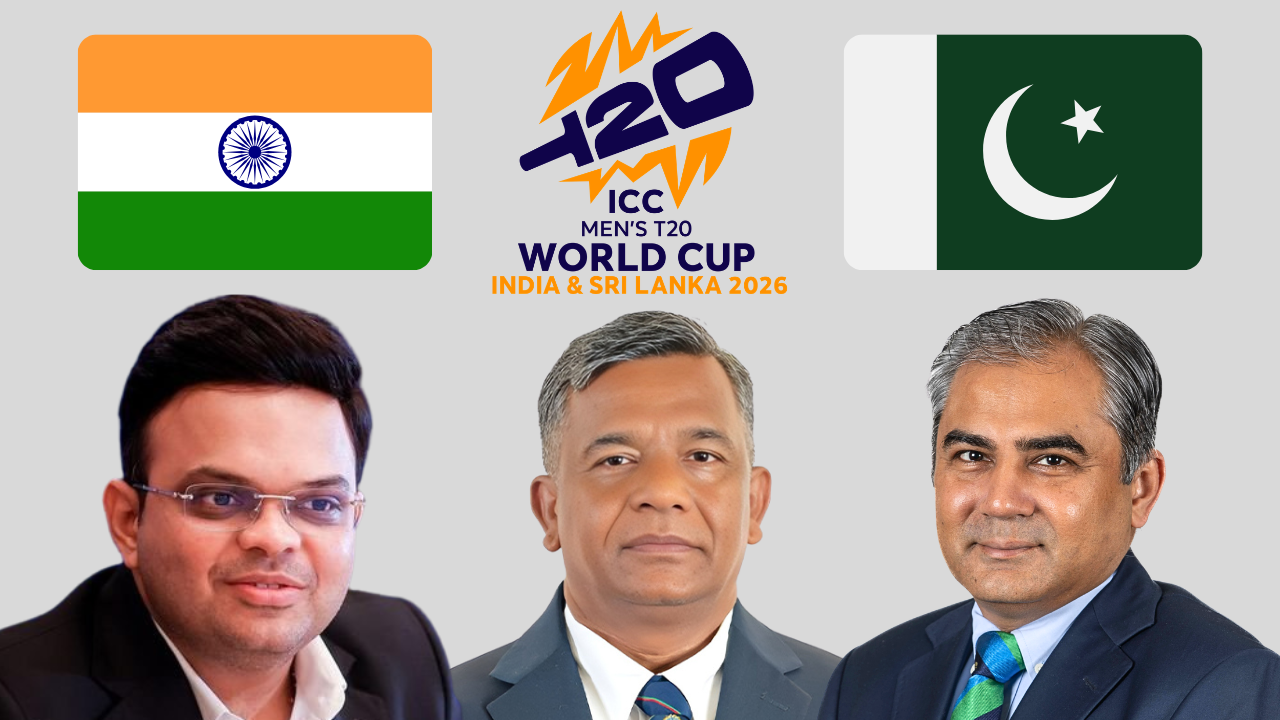
Cricket’s fiercest rivalry returned to the spotlight in Colombo, but the drama continued to extend beyond the boundary ropes.
As India and Pakistan squared off at the R. Premadasa Stadium, senior administrators from across Asia gathered in what was seen as a carefully orchestrated effort to ease tensions within the global game. According to a report by PTI, the ICC Chairman had invited Pakistan Cricket Board chief Mohsin Naqvi to attend the high-profile encounter, setting the stage for discussions on the sidelines.
ICC push for diplomatic reset at India–Pakistan clash
Naqvi travelled to Colombo ahead of the Group A fixture and was accompanied by senior PCB officials, including Pakistan Super League CEO Salman Naseer and Chief Operating Officer Sumair Ahmed. The visit followed a turbulent build-up marked by boycott threats and inter-board strain.
A source told PTI, “The Sri Lankan board has invited officials from other boards as well but the reason for Naqvi going is to have discussions with ICC Chairman, Jay Shah and other officials on the sidelines to break the ice after the boycott fiasco,” indicating that the visit was about more than just watching the game.
Before departing, Naqvi met Pakistan Prime Minister Shahbaz Sharif to discuss the broader cricketing and diplomatic landscape. The same source told PTI, “Naqvi will be in a position to have productive talks in Colombo, having gotten clearance from the Premier,” underlining that the PCB chairman arrived with a mandate to engage in dialogue.
Invitations were extended to officials from multiple boards, including the Bangladesh Cricket Board, as the ICC sought to project unity among its major Asian stakeholders.
Aminal Islam declines invitation despite earlier intent
However, Bangladesh Cricket Board president Aminul Islam ultimately chose not to attend the marquee fixture. BCB officials verified to Cricbuzz that he changed his plans after returning from an Asian Cricket Council meeting in Kuwait, opting instead to head back to Dhaka.
Iftekhar Rahman, chairman of the BCB umpires committee, explained the reasoning when he told Cricbuzz on Saturday, “I spoke with Aminul Islam. Since Bangladesh isn’t in it, he said, ‘Why should I go there just to watch the match?’ So he refused,” clarifying that Bangladesh’s absence from the tournament weighed heavily on the decision.
Islam had earlier indicated that the ICC wanted representation from key Asian boards present at the ground. “The ICC has taken a decision. The major stakeholders of the ICC are these five Asian countries (India, Pakistan, Sri Lanka, Bangladesh and Afghanistan) and for the India-Pakistan match on the 15th in the World Cup, they want representatives of all five Asian countries to be present at the ground together, watch the match together and talk to one another,” he told Bangladeshi newspaper Prothom Alo.
He had also described the initiative as an opportunity to ease tensions, telling Prothom Alo, “You can consider it as something like that (an ice breaker between us),” in reference to potential thawing of relations between boards.
Political and cricketing tensions shape tournament backdrop
The administrative manoeuvring followed a contentious period in which Pakistan initially refused to face India in solidarity with Bangladesh, after Dhaka declined to travel to India for its scheduled fixtures over security concerns. Bangladesh were subsequently replaced in the tournament lineup, and after high-level engagement involving ICC officials and board representatives in Lahore, Pakistan reversed its stance and agreed to play.
With the diplomatic groundwork laid, the India–Pakistan clash went ahead as scheduled in Colombo, drawing global attention both for its sporting stakes and its off-field symbolism.
India secure 61-run victory as officials watch on
On the field, India produced a commanding performance to defeat Pakistan by 61 runs. Batting first, India posted 175 for 7, with Ishan Kishan anchoring the innings through a brisk 77 off 40 deliveries.
Pakistan’s reply faltered early, slumping to 13 for 3 within the first two overs as the Indian pace attack struck swiftly, with Hardik Pandya removing the first batter before Jasprit Bumrah accounted for the next two. Both bowlers eventually finished with two wickets each, tightening India’s grip on the contest.
Chasing 176, Pakistan were eventually bowled out for 114 in 18 overs. Usman Khan top-scored with 44, while Shaheen Afridi made 23. Shadab Khan contributed 14 and Faheem Ashraf added 10, but the innings never recovered from the early collapse.
Among the spinners, Axar Patel returned figures of 2 for 29, Varun Chakravarthy took 2 for 17, Kuldeep Yadav finished with 1 for 14, and Tilak Varma claimed 1 for 11 to seal a comprehensive Indian victory.
As India celebrated a decisive win on the scoreboard, the presence of senior administrators in the stands underlined that this contest carried implications well beyond cricketing rivalry — reflecting a broader attempt to stabilise relationships within the international game.