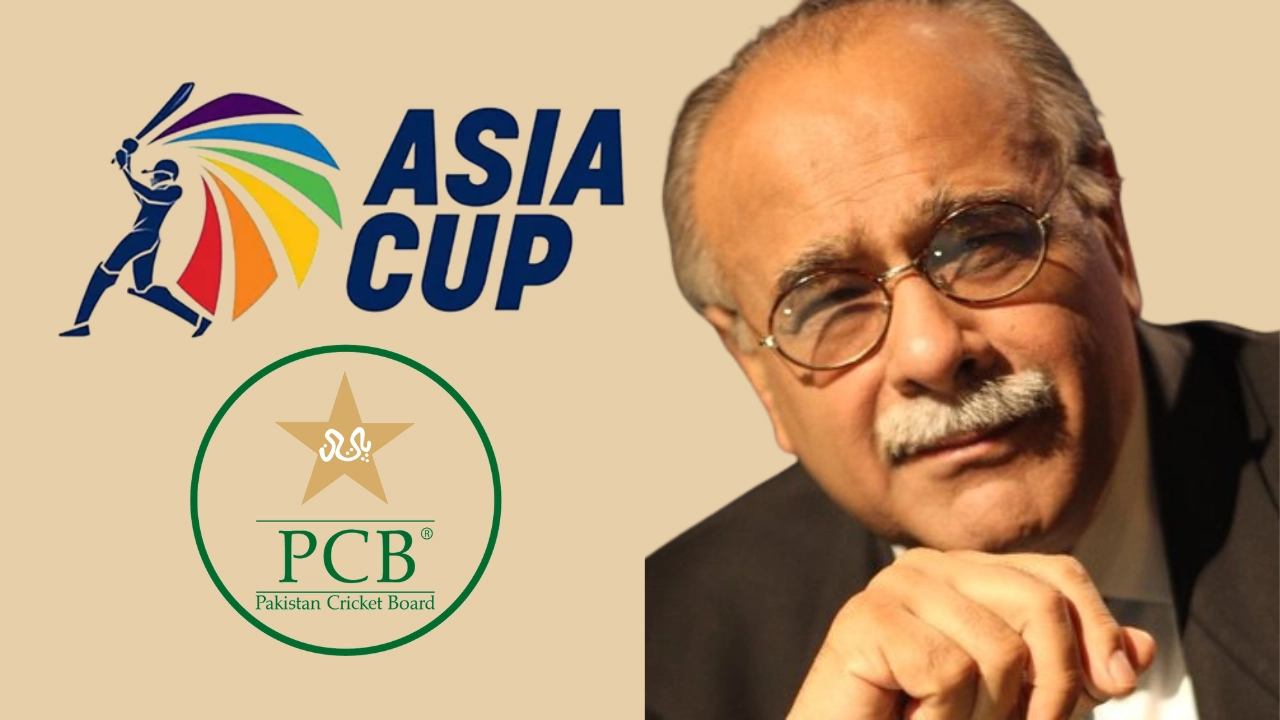
Handshake row sparks Asia Cup crisis
The 2025 Asia Cup was plunged into controversy when Indian players declined to shake hands with their Pakistani counterparts after a group-stage match in Dubai. The Pakistan Cricket Board (PCB) demanded action against match referee Andy Pycroft, escalating tensions to the point where a boycott of the tournament was considered.
Sethi steps in as boycott looms
Speaking on Samaa TV, former PCB chairman Najam Sethi described the atmosphere inside the board as volatile, with a decision to withdraw already being discussed.
“The decision was already taken. The mood was such that, ‘under public pressure, let’s boycott. Let the Asia Cup go to hell, let the ICC go to hell.’ My attitude has always been that you should stay within legal boundaries and not leave the international arena. When I was called, my friends told me, ‘Don’t go, don’t support him.’ I hadn’t gone to support Mr. Mohsin Naqvi. I went to help the Pakistan Cricket Board.”
Sethi warned that such a move could have backfired badly.
“If what he was attempting had succeeded, Pakistan would have suffered irreparable damage. We could have been sanctioned by the Asian Cricket Council (ACC), penalized by the International Cricket Council (ICC), foreign players might have refused to play in the PSL, and we stood to lose $15 million in ACC broadcasting rights. It would have been an existential crisis for PCB.”
At a press conference, PCB chairman Mohsin Naqvi explained the board’s stance following the incident.
“As you all know, there has been a crisis going on since 14th September. We had objections about the role of the match referee (Andy Pycroft). Just a short while back, the match referee had a conversation with the team coach, captain and manager. He said that this incident (no handshakes) should not have happened. We had also requested the ICC earlier to set up an inquiry on the code violation during the match. We believe that politics and sports can’t go together. This is sports, and let it remain a sport. Cricket should be separate from all this.
I requested Sethi saab and Ramiz Raja saab. If we had to go for a boycott, which was a very big decision – the prime minister, government officials and lots of other people were also involved, and we got their full support. We were monitoring the issue.”
ICC pushes back over protocol breach
The PCB claimed that match referee Pycroft had issued an ‘apology’, but the ICC clarified that he had only expressed ‘regret’ over a misunderstanding. The governing body also accused PCB officials of a ‘serious breach’ of protocol after the team’s media manager recorded a meeting with Pycroft and Pakistan’s staff in the restricted Players and Match Officials Area (PMOA).
The ICC stood firm in its support for Pycroft, rejecting PCB’s request for his removal and stressing the importance of upholding confidentiality rules in match-related interactions.
“This wasn’t about individuals”
Sethi emphasized that his intervention was about protecting Pakistan cricket rather than siding with personalities.
“This wasn’t about individuals. This was about the integrity of Pakistan cricket. Had Pakistan withdrawn, it could’ve led to long-term diplomatic and financial fallout.”
A tournament insider, quoted by Hindustan Times, added:
“This is not the end of the story.”
The same insider confirmed:
“There are ongoing discussions at the ICC and ACC level about how to handle such situations in the future.”
Sethi’s: I don’t quit, fight for rights
Sethi further revealed that PCB officials were determined to boycott if the ICC didn’t act.
“This was a crisis that could have cost Pakistan dearly. The PCB was adamant that we should boycott the tournament if the ICC didn’t apologise or investigate the incident.”
But he maintained his approach was different.
“But my point of view has always been that we should not quit, we should fight for our rights.”
Reflecting on the eventual outcome, he said the decision to continue was the only rational option.
“I think we took the logical step, and Pakistan is still in the tournament.”
What began as a heated standoff over a handshake ended in a compromise that kept Pakistan in the Asia Cup. But with accusations, clarifications, and disciplinary questions still unresolved, the episode has exposed deeper fault lines between the PCB and ICC — and the fallout may not be over yet.