A World Cup flashpoint that could spill beyond Bangladesh
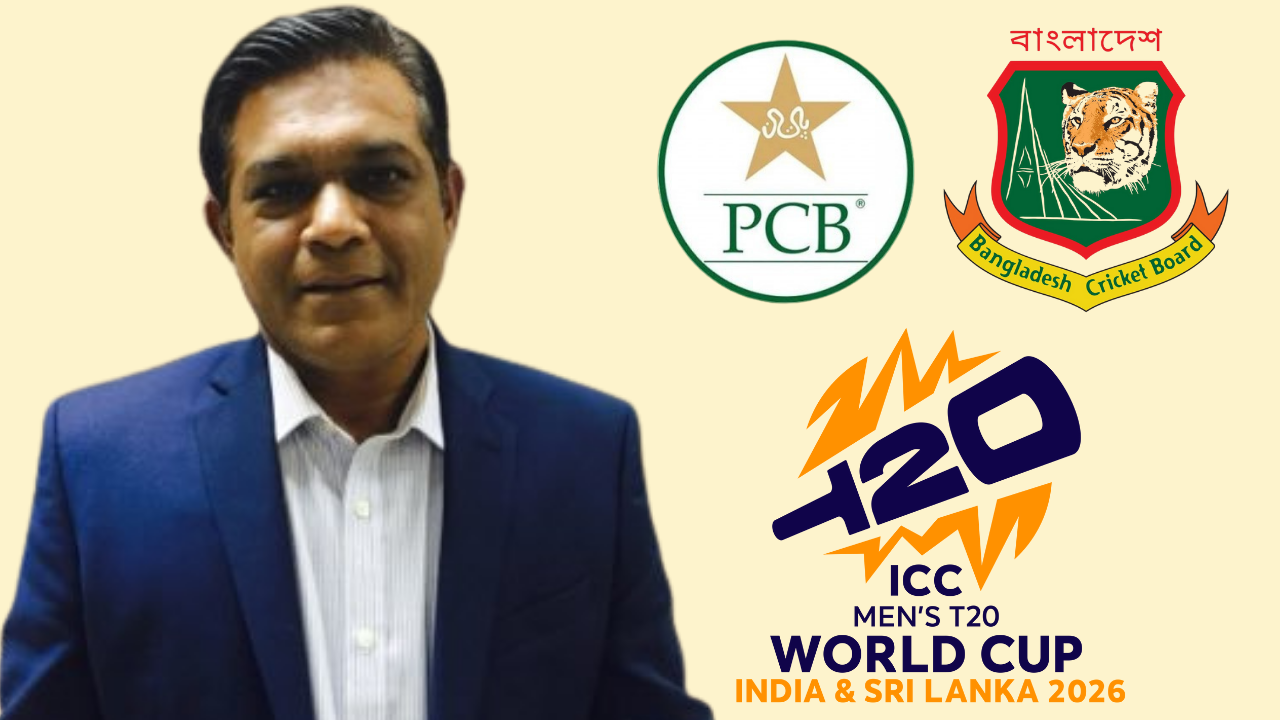
The Bangladesh-ICC standoff over playing matches in India has quickly turned into a bigger conversation about power, politics, and leverage in world cricket. And now, it has drawn an explosive intervention from former Pakistan captain Rashid Latif, who believes Pakistan should step in and escalate the pressure.
Speaking on the YouTube channel CaughtBehindShow, Latif framed the controversy as more than a scheduling dispute, arguing that this moment could reshape how cricket’s major decisions are made.
“If Pakistan and India don’t happen, 50 per cent of your World Cup is gone. This is a great opportunity to challenge the existing cricket order,” Rashid Latid said on the YouTube channel CaughtBehindShow.
Why Latif believes Pakistan should stand with Bangladesh
Bangladesh’s position has become one of the biggest developing stories ahead of the Men’s T20 World Cup, scheduled to be held in India and Sri Lanka from February 7 to March 8 across eight venues. Bangladesh have been placed in Group C alongside England, Nepal, Italy and the West Indies, while Pakistan are in Group A with India, Namibia, the Netherlands and the USA.
The immediate trigger for the crisis is the ICC rejecting Bangladesh’s request to shift its matches out of India to Sri Lanka, while also issuing a 24-hour deadline for the Bangladesh Cricket Board to confirm its participation after consulting its government.
Latif believes Pakistan should respond directly rather than staying on the sidelines.
“Pakistan should say they stand with Bangladesh and refuse to play the T20 World Cup. This is the time to take a stand. You need a strong heart to do it,” he added.
‘No danger’ assurance sparks Latif’s strongest criticism of ICC
One of Latif’s sharpest objections is directed at the ICC’s security assurance, which dismissed Bangladesh’s concerns and maintained the tournament schedule would remain unchanged.
“It doesn’t feel like a good decision. Today, the ICC says there is no danger to Bangladeshi players in India. No agency in the world can say there is no danger — how can the ICC say that?”
Latif argued that even the strongest security systems in the world cannot offer absolute certainty, and warned against pretending otherwise.
“Even in the most secure places, no one can give such a guarantee. Hopefully, nothing happens to any team,” he stated.
A claim of political influence and Pakistan’s leverage
Latif also presented the dispute as politically influenced, suggesting the outcome reflects forces beyond cricket administration.
“This is a political move — from Amit Shah to Jay Shah,” he said.
In his view, Pakistan still holds significant leverage because of how central a Pakistan-India fixture is to the commercial and global appeal of an ICC tournament.
“The trump card is still with Pakistan. Bangladesh ‘s stance is right. Pakistan won’t get a better opportunity than this,” he continued.
Latif insisted that if Pakistan were to withdraw, the impact would be immediate and massive for the tournament itself.
“Pakistan not playing would be like stopping the World Cup. Pakistan is the key,” he noted.
The cost of a boycott, and why Latif says it’s still worth it
Latif did not dismiss the risks involved for Pakistan if it refuses to participate in an ICC event. He acknowledged that the consequences could be serious, including future penalties.
“Yes, Pakistan could suffer in the future. There could be sanctions if Pakistan refuses to play ICC events. But there is no use of just words — now is the time to show who you support,” he added.
Bangladesh’s final call could decide whether this escalates
The next move, however, still depends on what Bangladesh ultimately decides after the ICC ultimatum. Latif suggested that Pakistan’s ability to act in coordination would depend on the strength of trust between the two boards.
“If there is trust between Pakistan and Bangladesh, this can be done. Let’s wait and see what decision Bangladesh takes in response to the ICC’s ultimatum,” he said.
He also warned that if Bangladesh backs down and participates in India, it may trigger backlash not just within Bangladesh but across the region.
“If they buckle and play the World Cup, both Pakistan and Bangladesh will face criticism from all sides, (“har koney se thappad padenge”),” he concluded.
Whether or not the PCB will act on Latif’s call remains to be seen, but the stakes are unmistakably high. With tournament logistics underway and Bangladesh’s position still uncertain, the coming days could shape not only the future of this T20 World Cup, but also the broader balance of power in international cricket.