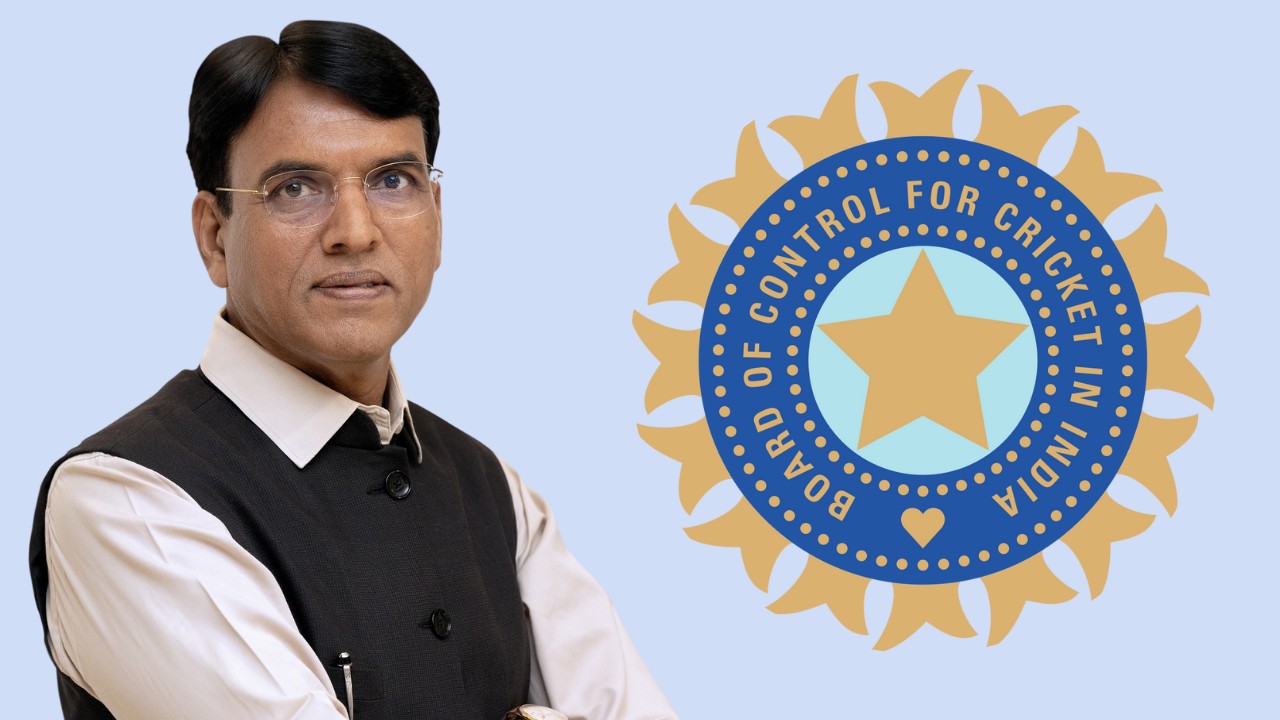
The Board of Control for Cricket in India (BCCI) has long operated outside the boundaries of government-regulated sports governance. But that autonomy may be nearing a turning point.
Sports Minister Mansukh Mandaviya reaffirmed in Lok Sabha that the BCCI currently does not hold recognition as a National Sports Federation (NSF) — a position the board has maintained for decades. That designation, however, is expected to change with the full implementation of the National Sports Governance Act next year.
Financial independence kept BCCI outside the NSF framework
The BCCI’s exclusion from the NSF list has never been a secret. Its financial independence, unparalleled among Indian sports bodies, has allowed it to operate without central government funding or oversight. Unlike most federations that rely on public money, the BCCI has remained self-sustaining — and, for that reason, outside the traditional recognition system.
But that shield of autonomy could weaken as the new law redefines what it means to be a national sports body in India.
Olympic cricket and new obligations ahead
With cricket officially added to the Olympic roster for the 2028 Los Angeles Games in the T20 format, the BCCI will be required to register as a recognised NSF under the new governance framework. Without that recognition, the board may not be able to meet eligibility criteria or access certain official platforms necessary for Olympic participation.
The National Sports Governance Act — passed by Parliament in August — aims to bring more accountability to Indian sports administration. Among its key features is the establishment of a National Sports Board (NSB), which will set standards, enforce oversight, and determine which federations receive recognition and central funding.
Government eases RTI concerns, but insists on accountability
One of the BCCI’s primary concerns with formal recognition has been the potential applicability of the Right to Information (RTI) Act. The board has strongly opposed being brought under RTI, arguing that it operates without any financial aid from the government.
To address that concern, the sports ministry amended the RTI-related provisions of the new law — restricting its application only to those sports bodies that depend on government grants or assistance.
Still, Mandaviya made it clear that accountability will remain non-negotiable. Sports federations that receive more than ₹1 crore (approx. US$ 110K) in annual grants will continue to have their accounts audited by the Comptroller and Auditor General (CAG) of India.
Parliamentary question highlights BCCI’s unique status
The clarification from Mandaviya came in response to a question by Mala Roy, the Trinamool Congress MP from Kolkata Dakshin, who asked whether the government planned to take control of major sports bodies like the BCCI and the financially troubled All India Football Federation (AIFF).
Mandaviya reiterated that sports federations are voluntary organizations, expected to follow good governance practices — but confirmed BCCI’s current standing.
“Further, Board of Control for Cricket in India (BCCI) is not recognised as a National Sports Federation (NSF),” Mansukh Mandaviya said in the Lok Sabha.
A shift in status seems inevitable
While the BCCI’s independence has long defined its identity in Indian sport, the direction of policy is now pushing toward greater alignment and standardization. With the Olympic spotlight approaching and the law set for implementation early next year, the board may have no choice but to formalize its role within India’s broader sports governance framework.