ABU DHABI — The auction room fell when the first round of bidding hit the ten-minute mark. What had started as a straightforward bidding session for Australian all-rounder Cameron Green had transformed into a masterclass in auction psychology, with three franchises locked in a high-stakes game of poker that would eventually see the 26-year-old become the most expensive acquisition of the day at ₹25.20 crore.
The IPL 2026 mini-auction, held at the Etihad Arena in Abu Dhabi, was always going to be different. With most teams entering with settled rosters and specific gaps to fill, the dynamics were unique from the start. But nobody quite predicted how the afternoon would unfold, or that by the end of it, two uncapped Indian players would command price tags of ₹14.20 crore each.
The Green machine: a bidding war for the ages
The Cameron Green saga began with promise and ended in drama. Entering the auction with a base price of ₹2 crore, the Western Australian’s credentials were impeccable: 452 runs and six wickets for Mumbai Indians in 2023, a solid 2024 season with Royal Challengers Bengaluru, and fresh off a return to international cricket after back surgery. Despite a registration mishap that listed him as a batter rather than an all-rounder, franchises knew exactly what they were getting.
Kolkata Knight Riders and Rajasthan Royals opened the bidding, pushing the price steadily upward. The two teams traded bids with increasing intensity until the price hit approximately ₹12 crore. Then, maybe unsurprisingly, Rajasthan withdrew from the contest and the audience for a second thought it might be over.
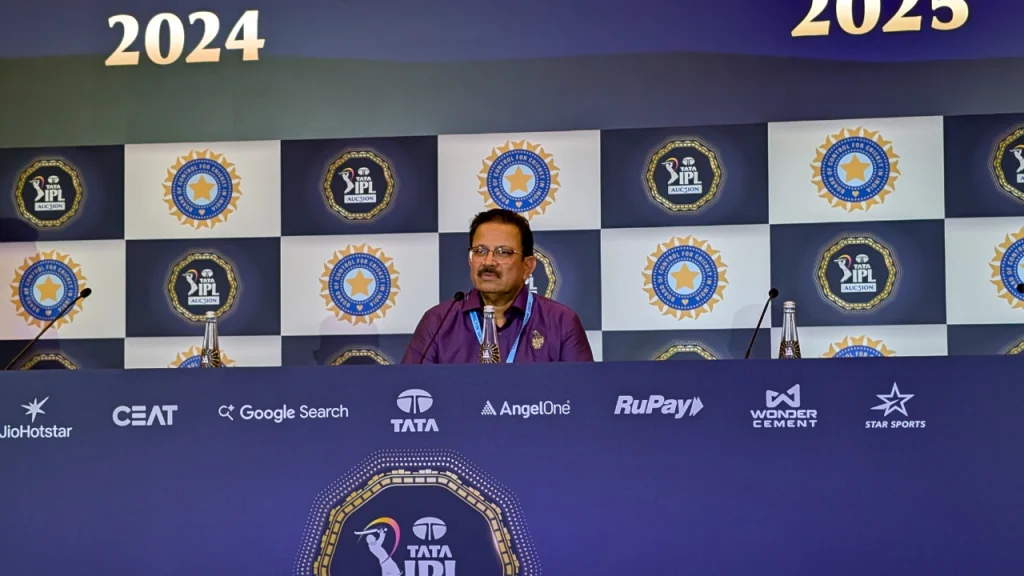
Venky Mysore, CEO of KKR, later revealed what was going through his mind at that moment. Speaking in the post-auction press conference, he admitted there was no sense of premature celebration. His team had done their homework and anticipated every possible scenario, including the surprise that came next.
Chennai Super Kings, who had been conspicuously quiet through much of the early auction, suddenly raised their paddle. What followed was an extended back-and-forth between CSK and KKR, each increment raising the stakes higher. The room watched, transfixed, as the price climbed past ₹20 crore, then ₹23 crore, then ₹25 crore.
When asked about the dynamics of that crucial stretch, Mysore was diplomatic but candid about his team’s preparation and resolve. The surprise for KKR wasn’t CSK’s entry into the bidding, but rather Rajasthan’s earlier involvement given their limited purse. As for CSK’s strategy, Mysore suggested it was to warm up the room and test KKR’s limits, though ultimately both teams were genuine contenders for Green’s services.
Manoj Badale, lead owner of Rajasthan Royals, offered his perspective on why his team dropped out relatively early despite initial interest. When questioned about their strategy, Badale was frank about the reality facing his franchise. With Cameron Green widely expected to command top dollar, Rajasthan knew they were up against teams with significantly larger purses. They made their play given the high quality of the player, tested the waters, and when it became clear the price would exceed their budget, they stepped aside.
For KKR, landing Green at ₹25.20 crore represented both a statement of intent and a calculated risk. With Andre Russell transitioning to a power coach role after his retirement from playing, the franchise needed a world-class all-rounder who could contribute with both bat and ball. Green, despite missing the 2025 edition due to injury, fit the profile perfectly. The hefty price tag also means Green will reach the maximum overseas player salary cap of ₹18 crore, with the franchise absorbing the difference.
Mysore emphasized that KKR had a limit in mind and would have withdrawn if the bidding had gone higher, protecting their ability to address other roster needs. But ultimately, they secured their primary target within acceptable parameters.

The entire episode served as a microcosm of the modern IPL auction: intense preparation, psychological warfare, and the willingness to commit significant resources for the right player at the right time.
The domestic revolution: India’s new cricket millionaires
If Cameron Green’s acquisition was the headline act, the record-breaking deals for uncapped Indian players were the storyline that defined the auction’s broader narrative. By the time the gavel fell on the final player, two young Indians had shattered previous records, each securing identical price tags of ₹14.20 crore.
Prashant Veer and Kartik Sharma, both acquired by Chennai Super Kings, became the most expensive uncapped players in IPL history. The previous record had stood at significantly lower levels, making CSK’s aggressive pursuit of both players a clear signal about the franchise’s strategic direction.
Stephen Fleming, head coach of CSK, explained the rationale behind the investments. The franchise had been watching both players closely, with Kartik Sharma having already trained with the team the previous year. CSK’s scouting network had identified them as possessing specific skill sets that aligned perfectly with the team’s needs, particularly after the strategic trade of Ravindra Jadeja to Rajasthan Royals in exchange for Sanju Samson.
Fleming emphasized the discipline required in auction strategy, acknowledging the difficulty of watching talented players go to other teams at low prices while sticking to a predetermined plan. CSK had earmarked these players as key targets and committed to securing them regardless of the cost. The philosophy was clear: identify the right players for your system and invest accordingly, rather than chasing every available talent.
The trend wasn’t limited to CSK. Delhi Capitals made Auqib Nabi Dar one of the auction’s major stories with an ₹8.4 crore investment. Hemang Badani, Delhi’s head coach, spoke about the extensive scouting infrastructure that now underpins franchise decision-making. Teams are tracking players across domestic competitions, from Mushtaq Ali Trophy matches to Under-19 tournaments, building comprehensive profiles that justify significant financial commitments.
Badani noted that Dar had been on their radar for some time, offering versatility at the top of the order. The price tag, he suggested, reflected not just Delhi’s interest but also competition from other franchises who had similarly identified Dar’s potential.
The broader implications of these deals extend beyond individual players. Shashwat Goenka, owner of Lucknow Super Giants, and Fleming both spoke about the evolution of T20 cricket and how it’s producing a new generation of fearless athletes. These young players, raised on T20 from their formative years, approach the game with a mental freedom that experienced campaigners sometimes struggle to match.
Fleming articulated this shift eloquently. Where experience once seemed paramount, the new breed of T20 player brings technical skills honed specifically for the format, combined with an absence of baggage or overthinking. They simply play the game at the speed it demands, unencumbered by past failures or the weight of expectation.
The salary cap structure also played a role. With each franchise required to spend approximately ₹120 crore, and with proven international stars commanding premium prices, investing heavily in promising domestic talent became both strategically sound and financially necessary. No franchise wanted to return money to the pool, and with limited slots available, the competition for identified talents drove prices skyward.
Strategic chess: The rest of the auction landscape
Beyond the headline-grabbing deals, the auction revealed the strategic imperatives driving each franchise. With most teams entering with largely settled rosters, the focus was on plugging specific gaps rather than wholesale rebuilding.
Several international acquisitions highlighted this targeted approach. Sunrisers Hyderabad secured Liam Livingstone for ₹13 crore after competitive bidding, adding batting firepower and spin bowling options. Gujarat Titans brought in Jason Holder for ₹7 crore, addressing their need for a pace-bowling all-rounder. Lucknow Super Giants added Josh Inglis for ₹8.60 crore, strengthening their wicketkeeping and batting depth.
Mumbai Indians entered the auction with the smallest purse in IPL history, a situation that reflected their satisfaction with the previous year’s squad building. Akash Ambani, the team’s owner, described it as a unique challenge that ultimately demonstrated confidence in their existing roster. With only one overseas slot to fill, Mumbai prioritized not just skill but personality and team chemistry.
Their acquisition of Quinton de Kock exemplified this philosophy. De Kock, who had previously been part of Mumbai’s championship-winning sides, and was a critical member of the MI New York’s championship winning side this past summer in the MLC, represented more than just his on-field contributions. His relationship with current wicketkeeper Ryan Rickelton factored significantly into the decision, with Ambani noting that Rickelton looks up to de Kock. The move also reflected a conscious effort to rebuild Mumbai’s local connection, with several Maharashtra-based players joining the squad.
Royal Challengers Bengaluru adopted a similar targeted approach, securing Venkatesh Iyer and Jacob Duffy at what Mo Bobat, RCB’s Director of Cricket, described as bargain prices. Both players brought experience and specific skill sets, with RCB’s strategy focusing on strengthening squad depth rather than pursuing marquee names.

The theme of value and strategy permeated throughout. Lucknow Super Giants expressed pleasant surprise at acquiring Wanindu Hasaranga and Avesh Khan at base price, deals that Goenka characterized as significant wins given both players’ proven capabilities.
The human element: Managing expectations and opportunity
As the auction concluded, attention inevitably turned to the human impact of the eye-watering sums involved. Several franchise executives addressed the question of how young players, suddenly commanding eight-figure price tags, would handle the pressure and expectations.
Akash Ambani reminded players that the auction is fundamentally about demand and supply rather than an absolute measure of value. He advised them not to wear the price on their heads, emphasizing that auction dynamics depend on timing, available slots, and which teams are looking to fill specific needs. His message was clear: remember what earned those prices and don’t let the figures become a burden.
Mahela Jayawardene, head coach of Mumbai Indians, offered perspective from his experience with Sri Lankan players facing similar situations. Speaking about Matheesha Pathirana’s substantial deal, he advised prioritizing physical health and managing expectations. The key, he suggested, was maintaining the joy in playing cricket rather than becoming burdened by price tags or external pressure.
The coaching staffs also recognized their role in managing these dynamics. With uncapped players earning such significant sums, they’re virtually guaranteed spots in the playing eleven, which brings both opportunity and added scrutiny. The challenge becomes creating an environment where these young talents can express themselves freely while navigating the intense spotlight of the IPL.
Looking ahead: The changing landscape of cricket commerce
The 2026 mini-auction may be remembered as a watershed moment in how franchises value domestic talent relative to international stars. While Cameron Green’s ₹25.20 crore deal captured headlines, the broader story was the unprecedented investment in Indian uncapped players.
This shift reflects several converging factors. The IPL’s founding principle of developing domestic cricket has matured into a robust scouting infrastructure across franchises. The emergence of T20 specialists who’ve grown up playing the format has created a talent pool uniquely suited to the IPL’s demands. And the salary cap requirements, combined with limitations on overseas players, have made strategic investment in domestic talent both necessary and potentially more valuable.
Varun Aaron, bowling coach for Sunrisers Hyderabad, captured the essence of this new reality with a simple observation: “sometimes the price tag doesn’t reflect the quality of the player.” In an auction where dynamics shift based on team needs, remaining purse, and strategic positioning, a player’s ultimate value emerges from their performance rather than their price.
As franchises departed Abu Dhabi to begin preparing for the 2026 season, the auction’s outcomes suggested a league still evolving in its approach to talent acquisition. The balance between proven international stars and emerging domestic talents continues to shift, with franchises increasingly willing to bet big on the next generation of Indian cricketers.
For the players themselves, from Cameron Green navigating the expectations that come with being the day’s most expensive acquisition, to Prashant Veer and Kartik Sharma suddenly carrying the weight of historic price tags, the real test lies ahead. The auction room drama has concluded, but the chapter it’s written in IPL history is only beginning.
Full Auction Results
For full auction results and team rosters post auction, see here.