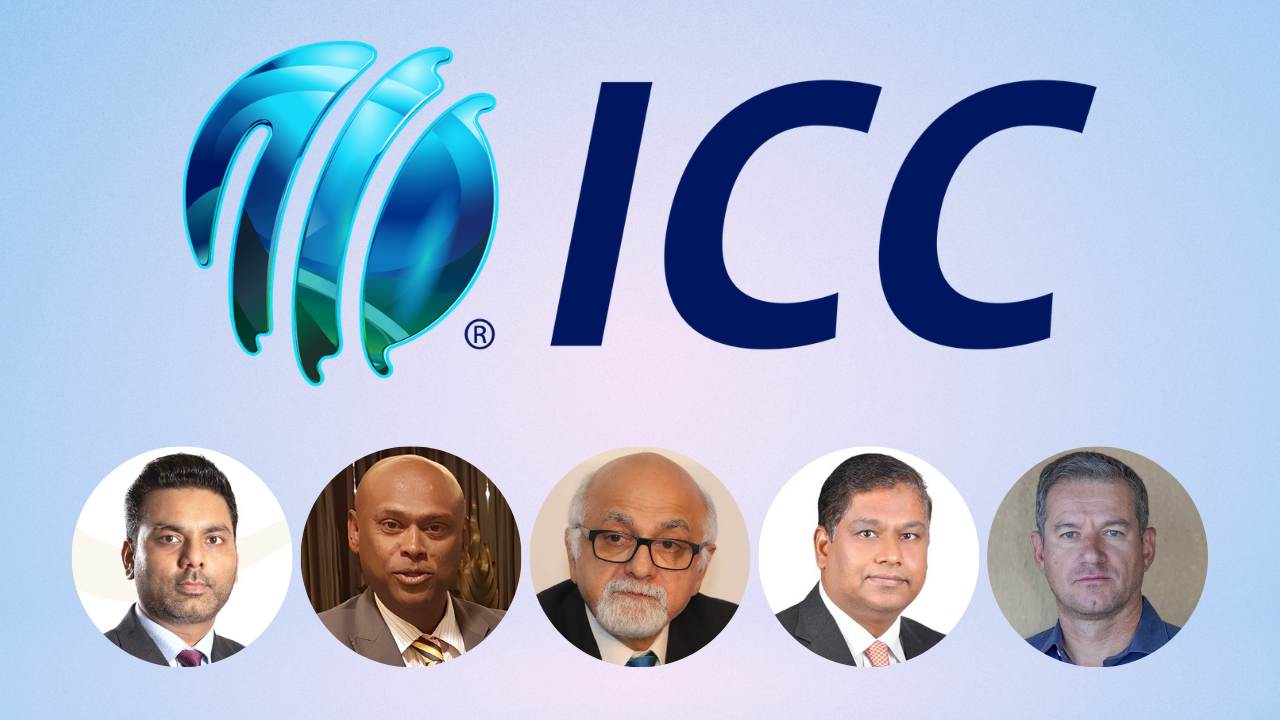
The International Cricket Council‘s Annual Conference in Edinburgh next month will carry more weight than its agenda might suggest. On July 8, forty-three Associate Members will elect three Directors to the ICC Board — a vote that will determine not just who holds those seats for the next two years, but whether Associate cricket’s governance reflects the breadth of the global game or continues to concentrate influence in one region. According to a report by Cricbuzz‘s Vijay Tagore, five candidates are in contention after the June 7 nomination deadline passed with fewer entrants than anticipated.
Five candidates, three seats and a smaller field than expected
Neil Speight of Bermuda and Sankar Renganathan of Sierra Leone had both been expected to enter the race, but neither submitted nominations before the deadline. The field that remains is compact — five candidates for three available positions — and that compression has changed the mathematical shape of the contest significantly. In the previous election, eleven candidates divided the voting pool and Mahinda Vallipuram of Malaysia secured a seat with a relatively modest tally. With only five names now in contention, votes are less likely to fragment, and the threshold for victory is expected to rise accordingly. Based on earlier patterns, clearing twenty votes could prove decisive, though every ballot will carry strategic weight in a tighter race.
The five candidates and what they bring
The five candidates represent a spread across three continents, though the field remains heavily weighted toward Asia. Mubashir Usmani of the United Arab Emirates and Mahinda Vallipuram of Malaysia are both sitting ICC Directors seeking to extend their tenures on the Board. Imran Khwaja of Singapore brings the most institutional seniority of the group — a sitting ICC Director and the deputy chair of the world body, he carries both experience and the weight of his current position into the contest. Gurumurthy Palani of France, while not a current Board Director, already holds a formal role within ICC structures as the Associate Members’ representative on the ICC Chief Executives’ Committee. Dr Rudie van Vuuren of Namibia completes the field as the sole African candidate, representing a continent with eleven eligible voting nations behind him.
Geography is the election’s defining tension
All three sitting Associate Directors on the ICC Board are from Asia. The composition of the current field — three Asian candidates, one African and one European — means the election is as much a referendum on regional representation as it is a contest between individuals. The forty-three eligible voting nations are spread across five regions: fourteen from Asia including six from the Middle East, eleven from Africa, ten from Europe, six from East Asia Pacific, and two from the Americas. Each eligible member carries three votes, producing a total pool of 129 ballots. Whether those ballots flow along regional lines, consolidate behind incumbents, or produce a more geographically diverse outcome will define the character of this election.
Two nations sit out as suspensions hold
The United States and Canada will play no part in the vote. Both boards remain under suspension, removing two Americas representatives from the electorate entirely. Brazil and Costa Rica are the only Americas nations eligible to participate, leaving that region with just six votes between them. The absence of USA and Canada, two of the more prominent Associate nations by profile if not by current standing, is a reminder of the governance pressures that continue to run alongside the competitive progress Associate cricket has made in recent years.
What is at stake beyond the result
Associate cricket’s profile has risen sharply on the back of strong performances at ICC tournaments, with the recent T20 World Cup drawing particular attention to the depth developing across non-Full Member nations. That visibility has sharpened expectations around what Associate representation on the ICC Board should deliver — development funding, competitive access, and a genuine voice in decisions that shape the global calendar and commercial direction of the game. The three Directors elected on July 8 will serve two-year terms on one of sport’s most consequential governing boards. The election will not only confirm who those individuals are but will signal how Associate Members collectively weigh continuity against broader representation at a moment when their place in the game has never been more visible.