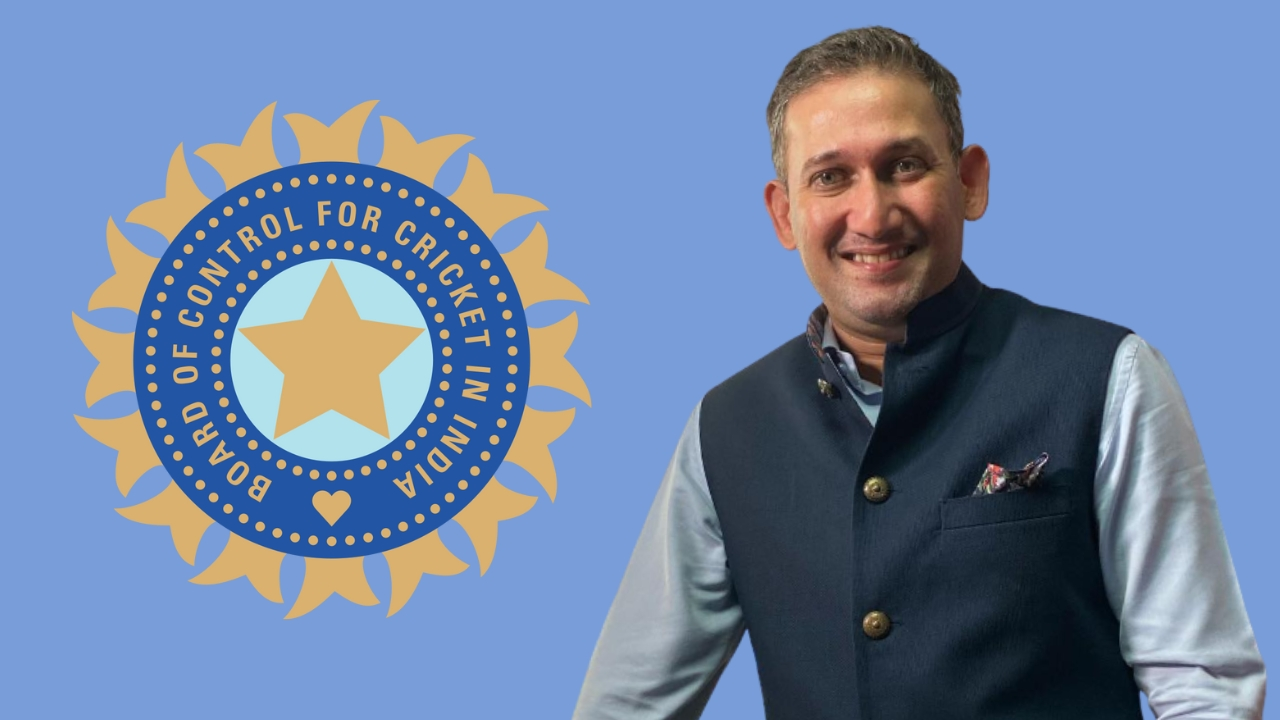
India’s selection leadership is back in focus following a formal request from chief selector Ajit Agarkar to continue in the role through the 2027 ODI World Cup, according to a report by Times of India.
The development arrives at a time when India’s white-ball success has created stability on the field, but key decisions off it are beginning to shape the next competitive cycle.
Transition phase reshapes selection priorities
The current phase of Indian cricket has been defined not just by results, but by transition. Senior players have stepped away from formats at different stages, forcing an ongoing recalibration of squad structures across Tests, ODIs, and T20Is.
Rohit Sharma and Virat Kohli remain active in the 50-over setup, while Ravichandran Ashwin has retired from international cricket. With the 2027 ODI World Cup still some distance away, the long-term role of senior figures remains uncertain and dependent on form, fitness, and emerging options.
This evolving landscape has placed added responsibility on the selection group to balance continuity with regeneration.
Extension request comes amid strong limited-overs results
Agarkar’s tenure, which began in June 2023, has coincided with a highly successful period in white-ball cricket. India have secured multiple ICC titles during this phase, including two T20 World Cups and a Champions Trophy, alongside a dominant win record in limited-overs matches.
The board had already extended his contract in 2025 following earlier tournament success, underlining confidence in the direction of the selection process at the time.
The latest request now raises the question of whether that continuity should be carried through another full ICC cycle.
Test results present contrasting picture
While results in white-ball formats have been consistent, performances in Test cricket have been less convincing. India have endured successive series defeats at home and also suffered a loss in the Border-Gavaskar Trophy away from home.
This contrast has added a layer of complexity to the evaluation of the current selection regime, particularly as the team continues to manage transitions across formats.
Lack of succession clarity complicates decision
The absence of a clearly established successor appears to be a significant factor as the BCCI considers its options.
As per Times of India, a former India cricketer from the West Zone had earlier emerged as a potential candidate for the role, but there has been no concrete progress on that front. Internal discussions have taken place, though no final decision has been reached.
With no immediate alternative in place, the board must weigh the benefits of continuity against the need for fresh direction.
Decision timeline remains open
The matter is still under consideration, with no official response yet from the board on Agarkar’s request.
As India navigates an important phase that includes World Test Championship commitments and early planning for the 2027 ODI World Cup, the outcome of this decision is expected to play a key role in shaping the team’s long-term strategy.
For now, the choice remains between extending an already successful tenure or initiating a transition at a critical juncture.