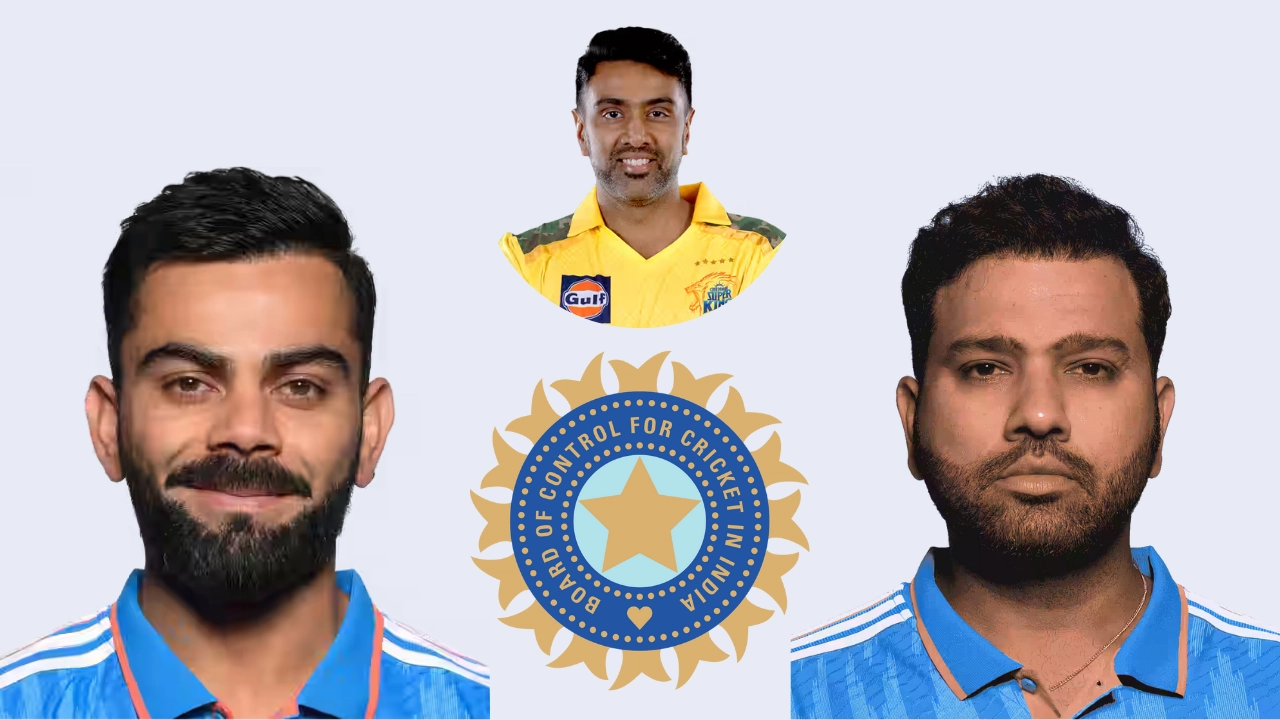
Ashwin questions BCCI’s treatment of senior players
Indian cricket’s transition phase has stirred controversy with veteran spinner Ravichandran Ashwin openly questioning the BCCI’s communication and planning around the exits of Virat Kohli and Rohit Sharma. In a candid critique on his YouTube channel, Ashwin emphasized the need for sensitivity and transparency while dealing with legendary players.
“On one side is selection, on the other side is Kohli and Rohit. These are two sides of the same coin. Upon examining the selection, it is clear that the selectors are moving forward. However, in this process, they have two players who are nearing the end of their careers. However, one thing I would like to mention is that you need to improve the way you handle such players. It is very easy to say that they have grown old and they should retire. One of the reasons we feel this way is that we see many young players in the IPL performing well, and we believe they can replace these experienced players. However, during this process, one thing we often overlook is solid communication and knowledge transfer. I request that this be addressed in the future.”
Ashwin highlighted the lack of institutional knowledge transfer in Indian cricket, especially during crucial leadership transitions.
“Knowledge transfer, or KT, doesn’t mean Kohli and Rohit will be teaching Shubman Gill and Abhishek Sharma new shots; rather, it will show them how to handle pressure situations and deal with injuries. The way Kohli and Rohit batted in the 2023 ODI World Cup, they have nothing to prove, but does the KT have any space? There is actually no space for KT in Indian cricket because there is no transition phase. Rahul Dravid was a coach at one time, then Gautam Gambhir took over. We did not have any template that, after Dravid, Gambhir would be the coach, so taking a KT from Dravid was not possible. And after Gambhir, for whom will the KT go? If there is no roadmap from the management side, this cannot happen from the players’ side.”
He also criticized the timing of any potential discussions about their future roles in the ODI setup:
“I really hope the conversation has already taken place with Kohli and Rohit. But if it happened now, why didn’t it happen during their retirement from T20Is in the World Cup last year? Had they been told then, they would have said, ‘Okay, boss, do we want to play because this is what the team wants to take a direction and this is what the choices are?’ But this leaves a lot of uninformed space, which leads to speculations. And there shouldn’t be speculations. It should have been a straight conversation. If the communication is not clear and transparent, and if it is not done with a forward-looking vision, it leaves players in a very vulnerable position.”
Ashwin: Kohli and Rohit deserve respect and clarity
Ashwin further urged the BCCI to treat Kohli and Rohit with the respect their contributions warrant, especially with the 2027 ODI World Cup still two years away.
“Given the magnitude of their contribution to Indian cricket, there was a need for communication, not only to them, but also to everyone, explaining how we communicated and what it entails. There are still two years until the World Cup, and if they do make it, I will take my hat off to both of them, because that would require immense commitment, as they won’t get much cricket beyond the IPL. For them to achieve it, they need that opportunity, and they have deserved that respect. So that sensitivity was required.”
Ashwin’s closing remarks reinforced the need for long-term planning and empathetic leadership within Indian cricket. As the countdown to the next World Cup continues, his call for clarity and respect serves as a reminder that managing transitions isn’t just about strategy — it’s about people.
Harmison warns of fallout between Agarkar and senior players
Meanwhile, the transition has put chief selector Ajit Agarkar under scrutiny, especially after removing Rohit as ODI captain and remaining non-committal on Kohli’s future. Former England fast bowler Steve Harmison weighed in on the situation during an appearance on talkSPORT Cricket.
“Unfortunately, I think there might be a messy end for Ajit Agarkar there. If anybody is going to win here I think it is the former captains rather than the former all-rounder. But it all depends on, if Agarkar is saying this, just to fuel the fire of Kohli and Sharma, then fair enough. You put your cards on the table and see what comes.”
Harmison pointed out the greater legacy and influence that Kohli carries in ODI cricket compared to Rohit, issuing a strong warning about potential repercussions.
“I think Kohli has got a little bit of skin in the game. Runs in the bank, his reputation. Sharma, not as much. Sharma’s a little bit older. He’s not been as influential in 50-over cricket as Virat has. If Virat turns around and says, ‘All right, you go to the 50-over World Cup without me and leading up to it, let’s see when you’re chasing 350 in 50 overs to win against Australia or England, and you haven’t got that bloke who averages 90 winning games at number four, see where your teams at’. There could be a messy end in that way. There could also be words that have been misunderstood in translation.”
Harmison’s remarks reflect the growing concern around how India’s top brass is managing the transition of its senior players. As the 2027 World Cup approaches, the handling of icons like Kohli and Rohit will likely shape both team dynamics and public sentiment, putting the BCCI and selection committee under increasing pressure to maintain clarity and cohesion.
Domestic cricket clause adds pressure
Harmison also tried to interpret Agarkar’s call for senior players to participate in domestic cricket, suggesting it might have been taken out of context.
“He might just have said I want them to play because they are not going to be playing. That’s the problem. They’re not playing Test cricket, they’re not playing T20 cricket. They’re only going to play the IPL. And if 50-over cricket is at the back end of the year, not when the IPL is, we could do with them playing a couple of domestic games. That could possibly be the way it was put across by Agarkar and it has been blown out of proportion.”
The current situation reflects deeper structural issues in Indian cricket’s transition planning and communication. As the team navigates the road to the 2027 World Cup, the handling of legends like Rohit Sharma and Virat Kohli — alongside selectors’ strategic decisions — will play a defining role in shaping the narrative ahead. Whether harmony can be restored between the administration and its senior players, or whether tensions will escalate further, remains a crucial storyline to watch in the coming months.