As franchise cricket grows faster than ever, so too does the crisis beneath it: players not getting paid.
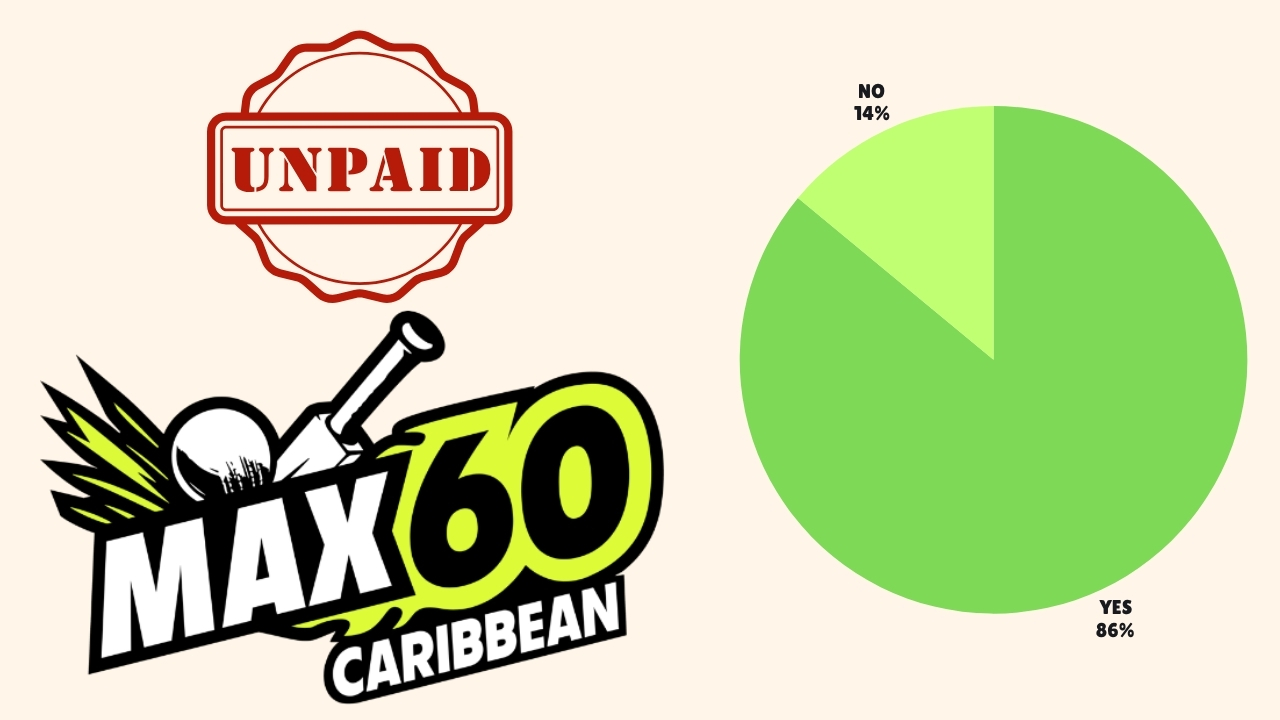
Now, in the third straight cricexec poll showing near-unanimous concern, 86% of global cricket executives say national board and ICC-sanctioned events should be required to place player payments in escrow to guarantee payouts.
The poll follows a string of explosive stories on non-payment, including cricexec’s exposé on the Max60 league debacle, where players staged a boycott and matches were canceled due to unpaid salaries—despite the tournament being officially sanctioned and globally broadcast.
It also follows growing advocacy from key industry figures like World Cricketers’ Association (WCA) CEO Tom Moffat and former West Indies captain Carlos Brathwaite, both of whom have publicly called for escrow reforms.
The verdict from industry leaders is now clear: the problem isn’t isolated. It’s systemic. And the solution starts with financial accountability.
“This isn’t about millionaires—it’s about trust.”
In a powerful guest post titled “The Crisis of Cashless Cricket,” published today on cricexec, World Cup winner Carlos Brathwaite laid bare the cost of cricket’s payment failures:
“In 2024, I personally had three franchise contracts where payments were delayed 6 to 8 months. As I write this in July 2025, I’m still owed money from one of them. And if this is happening to me, imagine what it’s like for a young local player making his debut.”
Brathwaite didn’t just raise questions—he suggested a solution that Moffat had floated in a guest post for cricexec:
“Should the ICC… mandate that all player salaries (plus a buffer—say 10% for operational costs) be held in escrow before a ball is bowled?”
According to the 86% of executives who voted yes in this latest cricexec poll, the answer is a resounding yes.
“Worthless pieces of paper”—contracts without protection
This new poll builds on two previous ones published by Cricexec in July:
Poll #1 (July 11): 91% of executives said non-payment in sanctioned events is unacceptable
Poll #2 (July 18): 93% said national boards should face penalties when players aren’t paid in leagues they sanction
In both cases, the context was the same: mounting cases of delayed or missing payments from tournaments that are fully sanctioned, yet poorly regulated.
The most high-profile example? Oman’s national team. Despite a guaranteed $225,000 prize pool from the 2024 T20 World Cup, Oman players report that they had still received nothing more than a year later. Some even lost their spots in the national team or were forced to leave the country after speaking up.
WCA CEO Tom Moffat, in his guest post for Cricexec, didn’t mince words:
“This isn’t an isolated or new issue. It’s another example of an officially sanctioned cricket event treating player contracts like worthless pieces of paper.”
From theory to mechanism: Why escrow accounts matter
Escrow accounts—where funds are deposited in advance and released upon performance—are standard practice in many global sports and industries. They eliminate excuses. They make payment conditional, not optional.
In his original guest post, Moffat laid out a three-pronged reform plan to address the crisis:
- Penalties for boards that sanction leagues with non-payment histories
- Standard dispute resolution clauses in all player contracts
- Escrow account requirements for all sanctioned leagues
This latest poll was a direct response to that third proposal—and the 86% support suggests it may be the most practical and universally supported reform yet.
“Professional cricket is built on contracts,” Moffat wrote. “And any well-managed sport should be striving for stability—achieved through fair and balanced contracts—and an ability to enforce them efficiently.”
The Max60 meltdown: A live case study
The Max60 tournament in the Cayman Islands made global headlines this week after players refused to take the field due to unpaid wages.
According to a cricexec investigation, many players received only 10–30% of their agreed salaries, despite promises and contracts. Some were still owed money from the previous season. Despite heavy promotion and broadcast deals in the U.S., India, UK, Australia, and more, players were forced to walk off.
Moffat called it “unreasonable for anyone to expect [players] to continue to turn up and put on the show if the terms of their contracts have flagrantly been breached.”
Brathwaite added in his post:
“We’re quick to showcase our growth as a sport through shiny new leagues, but late payments leave a stain—not just on tournaments but on cricket itself.”
Is the ICC listening?
The ICC already has mechanisms in place to vet league organizers, issue anti-corruption approvals, and require No Objection Certificates (NOCs) for international players.
“So why not simply require that money to pay players and staff is actually available and protected?” asked Brathwaite.
According to the WCA, the ICC’s existing policies—like the 21-day prize money payment rule—are toothless without enforcement. In fact, multiple ICC events since 2024 have seen delayed or partial payments, despite new agreements between ICC and WCA.
“The ICC’s member-driven governance system has kept stronger proposals—like escrow accounts—stuck ‘under review’,” noted other industry sources.
A turning point for cricket governance?
Three cricexec polls. Three clear results:
91% say the status quo is unacceptable
93% say boards must be held accountable
86% now say player payments should go into escrow
Together, they reflect a sport at a crossroads—booming in revenue, yet broken in trust.
“This isn’t about millionaires chasing more millions,” Brathwaite concluded. “It’s about protecting young dreams, community trust, and the basic principle of doing what we said we’d do—paying people for their work.”
For those watching closely—executives, players, fans—the roadmap for reform is clear. The question is no longer what needs to be done. It’s who will do it—and when.
And whether the next sanctioned league delivers on its promises—or becomes another cautionary tale.
Related Reading:
Max60 Fallout Escalates: Legal Action Looms
Sanctioned but Still Unpaid – WCA CEO Guest Post
Carlos Brathwaite: The Crisis of Cashless Cricket – Guest Post
Cricexec Poll: 91% Say Non-Payment Crisis Is Unacceptable
Cricexec Poll: 93% Back Penalties for Boards When Players Aren’t Paid