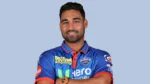
A months-long undercover operation has put the spotlight on the potential value — and vulnerability — of inside information in Indian cricket after a former Ranji player allegedly supplied an accurate Delhi Premier League (DPL) playing XI before its official announcement.
According to an undercover investigation by Tehelka, former Nagaland cricketer Rachit Bhatia negotiated with a reporter posing as a bookmaker over advance team information, culminating on August 3, 2026, when he allegedly provided the Central Delhi Kings lineup ahead of their match against North Delhi Strikers. Bhatia also made a series of far-reaching claims during the operation involving the IPL, spot-fixing and payments linked to cricket selection.
The Delhi & District Cricket Association (DDCA) has since taken the matter to the Board of Control for Cricket in India (BCCI), while emphasizing that the allegations remain unverified and have not been established by a competent authority.
How the DPL playing-XI operation unfolded
The operation began in December 2025, when Bhatia met the undercover reporter at the Dhaka Cricket Academy in North Delhi. Their discussions developed into negotiations over obtaining playing-XI information before it became public, with the proposed arrangement initially spanning both the IPL and DPL.
Bhatia discussed using a player contact as the source of the information and communicating discreetly through Snapchat rather than conventional calls or WhatsApp. He also described providing two possible combinations depending on whether a team batted or bowled first, accounting for the Impact Player rule.
The plan eventually shifted toward Central Delhi Kings. Ahead of their July 31 match against West Delhi Lions, Bhatia supplied a lineup that did not match the final XI. He made another attempt before the August 2 match against Purani Dilli 6, but subsequently withdrew that information after what he described as a late change following rain.
August 3 produced a different result.
At around 6pm, before Central Delhi Kings faced North Delhi Strikers at Arun Jaitley Stadium, Bhatia allegedly supplied the reporter with two possible combinations. Central Delhi subsequently won the toss and chose to field, and the relevant lineup Bhatia had provided matched the officially announced team.
The information had originally been priced at INR 40 lakh (approx. US$41.84K) per DPL match, but the August 3 deal was ultimately settled at INR 3 lakh (approx. US$3.14K). Tehelka did not pay the money, telling Bhatia it wanted to settle payment after a proposed spot-fixing arrangement; Bhatia instead sought payment for the successful lineup disclosure before proceeding further.
Bhatia’s claims reach the IPL
The scope of the undercover conversations widened considerably as the operation progressed, moving from future arrangements into Bhatia’s account of what he claimed had happened during the previous IPL season.
Bhatia told the undercover reporter: “I fixed five matches during the 2025 Indian Premier League [IPL] season by passing inside information about the Chennai Super Kings (CSK) to bookies in London via Snapchat. I earned Rs 60 lakh per match, totaling Rs 3 crore for those five matches.”
Bhatia’s statements during the sting are allegations and are not presented as independently established findings. The investigation nevertheless moved forward with discussions about possible arrangements for the following season, with Bhatia initially expecting his player contact to be involved in both the IPL and DPL.
Bhatia said: “If you want to fix matches in IPL 2026, we need to get my player onto the team. Once he is selected, both match-fixing and spot-fixing become possible. The rate for spot-fixing in the IPL will be Rs 1 crore per match. Sharing inside information regarding the playing XI before the toss will cost Rs 60 lakh per match. This same player will also compete in the Delhi Premier League [DPL] this year. The rate for spot-fixing and providing the playing XI there will be Rs 40 lakh per match.”
Those plans changed after Bhatia said his contact would not be selected for the 2026 IPL season because of an injury. The proposed operation then shifted its focus to the DPL, where Bhatia eventually offered information involving Central Delhi Kings rather than the Purani Dilli 6 team discussed earlier.
Discussions move from information to on-field events
As the conversations continued, the reporter and Bhatia also discussed whether individual incidents within a DPL match could be manipulated. The exchanges explored slow batting and a possible deliberate run-out, as well as how Bhatia could communicate with his player contact when access to phones around matches was restricted.
The discussions also reached Bhatia’s own domestic playing career.
He told the undercover reporter: “I also engaged in spot-fixing during the 2018-19 Syed Mushtaq Ali Trophy, a tournament I played in. I deliberately bowled two wide balls, receiving Rs 8 lakh per ball from the bookies, making a total of Rs 16 lakh.”
In the more detailed undercover dialogue, Bhatia identified the matches as being against Andhra and Meghalaya while playing for Nagaland. Tehelka said it possesses footage of one of the wides referenced in the investigation.
Selection allegations stretch beyond franchise cricket
Another strand of the operation emerged when a woman accompanying the reporter posed as a prospective client interested in securing cricket opportunities for her child.
During those conversations, Bhatia claimed he had himself paid INR 15 lakh (approx. US$15.69K) for selection in Nagaland’s Ranji Trophy team. He said the original arrangement covered two four-day matches, but that he ultimately played six after performing well.
The discussion then shifted to school cricket.
Bhatia said: “Presently, I work as a national selector and coach, forming a Delhi school cricket team from local students to compete in national school tournaments. I manage three age groups—Under-14, Under-17, and Under-19. Alongside two other selectors, I choose the Delhi team, and the rate for selecting a child is between Rs 7 and 8 lakh.”
The longer exchange contained further allegations about payments connected to selection and playing opportunities. Like Bhatia’s other statements during the sting, those claims have not been independently established.
DDCA takes matter to BCCI
The investigation has now moved beyond the undercover operation itself, with DDCA seeking guidance from cricket’s national governing body.
The association said in an official statement: “DDCA would like to clarify that the allegations referred to in these reports are unverified and have not been established by any competent authority. The Association believes it would be inappropriate to draw conclusions about any individual, player or franchise based solely on such allegations.”
DDCA has shared the information that came to its attention with the relevant authorities.
“Given the seriousness of the matter, DDCA has written to the respective authorities and shared the information that has come to its notice, requesting that the matter be examined through the appropriate established processes,” the association said.
It added: “DDCA maintains a zero-tolerance approach towards any activity that may compromise the integrity of cricket and will extend its full cooperation to any inquiry undertaken by the competent authorities. Any action, if warranted, will be taken strictly in accordance with the findings of the appropriate authorities and the applicable rules and regulations.”
The association continued: “DDCA believes that it is important to distinguish between allegations and established facts and allow the due process to take its course. The Association remains committed to safeguarding the integrity, credibility and reputation of cricket in Delhi.”
DDCA details its response and safeguards
DDCA Secretary Ashok Sharma said that the association would cooperate with the next steps directed by the BCCI.
“We have written to the board. Whatever the BCCI asks us to do, we will do it. If the board asks us for video footage, we will provide that, too. Whatever the board requests, we will provide whatever is available to us. Now, as for whether the board takes it to the level of verifying their telephonic recordings, that won’t happen unless you involve the crime branch or Delhi Police,” Sharma told Hindustan Times.
Sharma also addressed the systems in place during the DPL.
“As for us, we had a special anti-corruption package of 30-35 lakh rupees (during the DPL). The board’s anti-SLOs had deployed specialised officers. They accompanied every bus and stayed in the hotels. We had already prepared in advance to prevent this kind of thing. So our SLOs were present with every team. They were stationed with all eight teams. Our budget of 30 lakh rupees was approved for this. And they were appointed directly by the Board. We always engage anti-corruption personnel directly through the Board. We never hire them privately,” Sharma added.
The question of individuals potentially connected to the allegations also remains subject to investigation rather than assumption.
“He is in our team, he is fully part of it, and he has played for the state from here… If fingers are pointed at him and an investigation takes place, then if he has done something, he will face the consequences. And if he hasn’t, he will come out clean,” Sharma noted.
Sharma said DDCA would wait for formal direction before determining what could be examined through the anti-corruption process.
“Why should we jump to conclusions right away? Once we receive an official letter from the BCCI, we’ll have our anti-corruption department check everything and verify all his details, phone records, and whatever else is possible at that time, because the anti-corruption department at that time belonged to the BCCI. So that entire system was managed by them. Whatever BCCI says and whatever the president says, we will abide by it,” Sharma said.
Vansh Bedi rejects link to Bhatia’s allegations
Central Delhi Kings wicketkeeper-batter Vansh Bedi, who has also been associated with CSK, subsequently responded publicly after his name was linked online to the investigation.
In a statement posted on Instagram, Bedi said: “I would like to clarify certain false and defamatory content circulating on social media and websites concerning me.”
He continued: “I categorically state that I am not the individual referred to by Ex-Ranji Trophy cricketer Rachit Bhatia in the Tehelka sting operation concerning alleged match-fixing involving a CSK player, nor do I have any involvement whatsoever in any such activity.”
Bedi added: “Any attempt to falsely link me with these allegations is highly defamatory. My legal team is taking appropriate civil and criminal action against those responsible. I request everyone to refrain from creating or sharing such false and defamatory content.”
Bedi had reported a separate corrupt approach
Bedi’s involvement in the DPL anti-corruption process also extended to a separate incident.
According to Times of India, Bedi reported an alleged fixing approach from a cricketer from Uttar Pradesh to the Anti-Corruption wing, and the approach was documented.
DDCA Secretary Ashok Sharma told Times of India: “Vansh Bedi promptly reported a corrupt approach to the Anti-Corruption wing from a player from Uttar Pradesh, who was also playing a T20 league in the state. We have attached SLOs with every team this year and all our arrangements have been watertight.”
After DDCA alerted the Uttar Pradesh Cricket Association, the UPCA banned the Meerut Mavericks cricketer concerned from participating in the UP T20 League.
The allegations emerging from the undercover operation now sit with cricket authorities for further examination. DDCA has sought BCCI guidance and committed to providing material requested through the established process, while the central claims made by Bhatia remain allegations rather than findings established by a competent authority.