
At first pass, it is not an obvious pairing. Indian cricket is the most populist mass-market property in the country — a sport whose economics are built on reach and the largest broadcast audiences on earth. Diamonds, by contrast, sit at the most rarefied end of the consumer pyramid: a category sold one stone at a time, to one buyer, over a lifetime of considered occasions. The two have historically lived in different aisles of the marketing world — and for good reason.
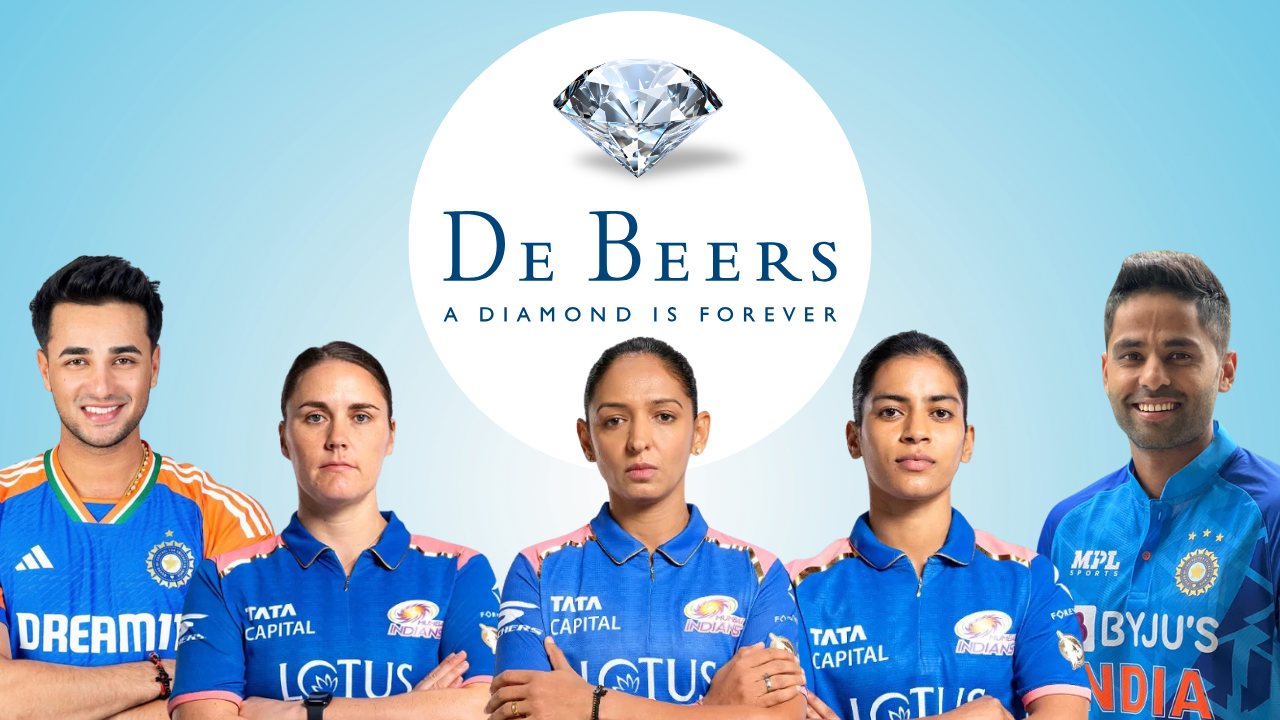
De Beers India has spent the past twelve months collapsing the distinction. Since IPL 2025, the company has been steadily assembling a cricket portfolio across men’s and women’s properties, on-air integrations and player ambassadorships. The story of how that portfolio came together — shared with cricexec by Toranj Mehta, De Beers India’s India Country Head for Natural Diamond Marketing — is also the story of how a category that has historically sat outside cricket found its way in.

A discovery, then a thesis
The starting point was the IPL 2025 anchor collaboration. De Beers had partnered with JioStar to dress eleven of Indian cricket’s leading women presenters in diamond jewelry across the tournament feeds — a fashion play first, designed to extend the brand’s visual presence into a property it had not previously occupied.
What followed surprised the team. “When we did that, we realised the kind of viewership we got for the collaboration was huge, and that it was creating a very positive rub-off onto us,” Mehta said. “We didn’t expect it, because we thought it was more of a male-dominated viewership. But there was a lot of female viewership we got out of that collaboration.”
The implication mattered. If a meaningful slice of a cricket broadcast audience was, in fact, female, then cricket was a market De Beers should consider entering on its own terms.
The thesis was sharpened by India’s win at the ICC Women’s World Cup, which Mehta cites as the second inflection point. “When the Indian women’s team won the World Cup, we saw a huge spike in the number of people getting interested in women’s cricket,” she said. For a brand “primarily targeted towards women,” that spike opened up what she describes as a route to “showcase what real natural diamonds are to women who are outside of just the fashion lifestyle realm.” That is the rationale that produced the Mumbai Indians partnership.
Inside the Mumbai Indians partnership
The MI Women collaboration became the platform on which De Beers extended its global “Love From Universe” campaign into Indian cricket. Its centrepiece is a digital film built around the Natural Diamond Intention Pendant, fronted by three of the franchise’s most visible players: captain Harmanpreet Kaur, all-rounder Amanjot Kaur and England international Natalie Sciver-Brunt.
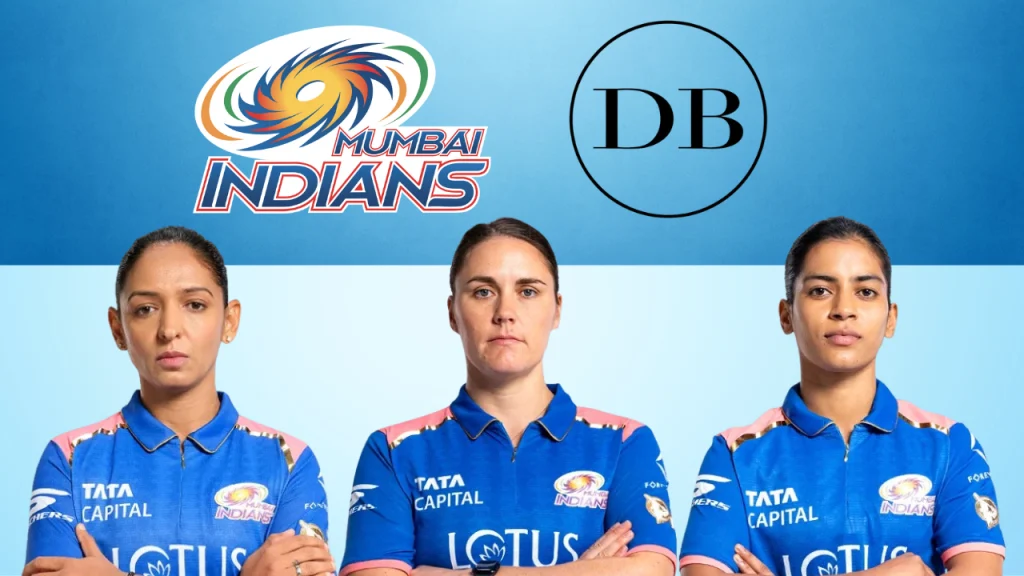
The film does not lead with cricket. It leads with off-field life — the players building vision boards for their 2026 goals, mixing the professional and the unguarded, from chasing the league trophy to wanting uninterrupted sleep, vacations and a plate of pani puri. The narrative then transitions onto the field, with the pendant cast as a symbol of focus that sits between the personal and the competitive. Each player was also gifted an Intention Pendant of her own, extending the campaign off-screen.
What links the campaign back to De Beers’s wider product story is the parallel Mehta draws between how a diamond is formed and what an athlete endures. “The kind of pressure you have to manage, the kind of expectations, especially if you’re representing your country, is tremendous,” she said. “To be able to stay sharp whilst playing your A game is something that not everyone can do — that’s where we draw the parallel between our diamond and the sportsperson.”
Picking spots
Cricket sponsorship in India tends to default to scale. De Beers has gone the other way.
“The moment you enter cricket, it’s not something small that you can do. The spends are massive,” Mehta said. “We have to be very mindful of where we want to enter and what we want to do. We choose what we do with cricket and how we do it very specifically, to our objectives. It is not a spray-and-pray kind of plan.”
That posture is closer to a portfolio investor’s than a sponsor’s: enter selectively, hold for the long term, and pick assets where the underlying product narrative does most of the work.
Why two men, in a brand built around women
The two men’s signings — Abhishek Sharma in March, Suryakumar Yadav in April — sit alongside the women’s portfolio rather than competing with it, and Mehta is candid that the decision to build out a male roster was responsive to a broader cultural shift.
“We’ve noticed a massive trend of men wearing diamonds now, especially cricketers,” she said. “And cricketers are very large trendsetters when it comes to fashion and style.”
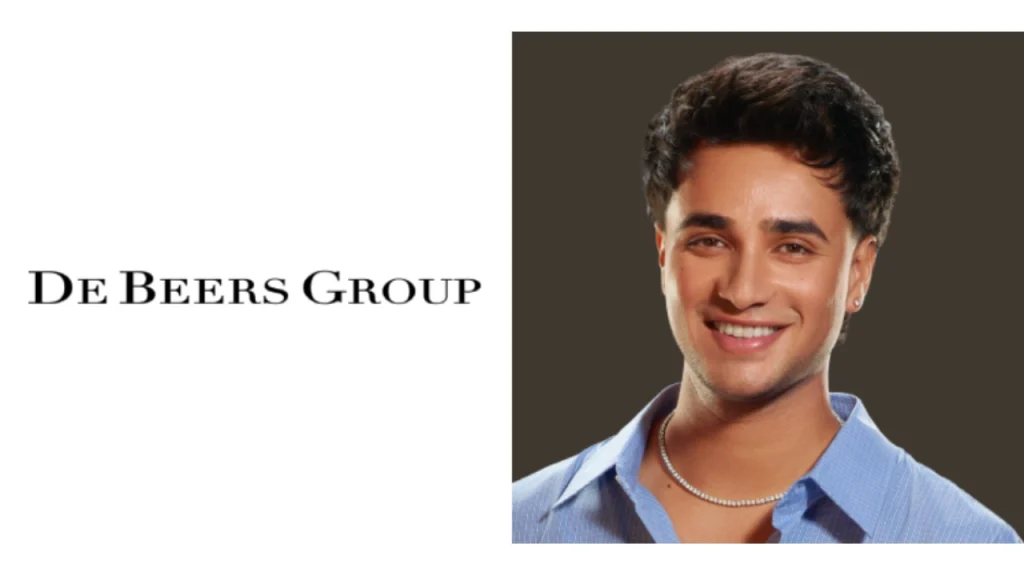
In Abhishek Sharma’s case, that trend was already legible in the player himself. “He wears a necklace which is full of diamonds, and he wears a stud which is a huge natural diamond,” Mehta said. “He’s extremely fashionable and stylish. He’s looked at as a trendsetter — not only by men, but women. He has a huge female following.” Read in those terms, the Abhishek signing is a market-following move at least as much as a market-making one: De Beers is meeting a male consumer behaviour that is already in motion, with a player who is already inside it.
Suryakumar Yadav’s resonance is different and more biographical. India’s T20 captain — a 2024 T20 World Cup winner — Yadav is being cast as a study in patience and pressure. “There is a lot about his story that really resonates with natural diamonds,” Mehta said. “He has struggled really for a long time to get to where he is, and that tells the whole story of resilience and timelessness we want to associate with natural diamonds. He has the capacity to bear that pressure and come out smiling. That’s something we wanted to associate with.”
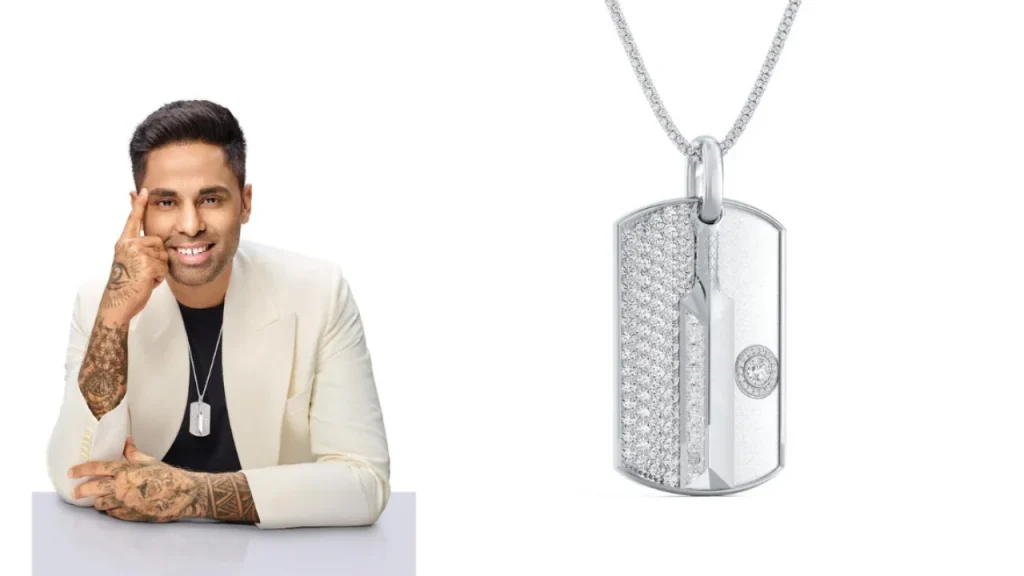
Across both signings, the casting was direct; specific players were identified and approached.
The idea, not the channel
Underneath the signings sits the philosophical move that lets a luxury brand sit comfortably inside a mass-market sport at all. Speaking on a panel at the Manifest Play conference in Mumbai a few weeks ago, Mehta put it plainly.
“When we look at luxury marketing, or even premium marketing, it’s not about which channel we use — it’s about what idea we are bringing to someone,” she said. The old reflex to keep luxury brands away from mass-audience sport, in her telling, belongs to an earlier and narrower definition of the category — one organised around channels of exclusivity rather than ideas of aspiration.
The work De Beers is doing across the portfolio is consistent with that. The Suryakumar Yadav announcement leaned on the lexicon of time, pressure and sustained development. The Abhishek Sharma campaign positioned him as reflecting “rarity, resilience, and inner fire.” In each case, the brand is reaching past occasion-based purchase — the wedding, the anniversary — toward something more continuous: a symbol of how an individual comes to be, not merely what they receive.
How they know it’s working
How does De Beers measure any of this? The answer is shaped by a structural feature of the business: unlike a single-brand jewellery retailer, the company does not own a captive store network in India through which to read sell-through.
Most of the read, Mehta said, comes off digital. “A lot of our collaboration just now is on social — and with anything we do digital, there are certain metrics we can easily track: reach, engagement, impressions, views. That gives us a clear indication of what is working and what isn’t.”
A second, more qualitative signal sits alongside it — organic pickup in media and PR, “discussions happening on the collaboration, on the styling of the cricketer, on the particular product. Whether there is some kind of discussion happening on diamonds, which is something we are interested in building.”
The third signal is more revealing of the model. With no proprietary retail footprint, the company reads the appetite of independent jewelers for in-store material tied to the campaigns. “There is definitely demand,” Mehta said. “Which is a great thing for us, because our objective is to get the word and the association out to as many people as we can.” For a brand without its own shop windows, jeweler demand is the closest available proxy for consumer pull — and at the moment, the proxy is moving in the right direction.
Why De Beers is staying
If there is a single sentence that captures why cricket is now an unavoidable category for De Beers, it is Mehta’s view of the medium itself. “The reach that cricket offers cannot be matched by anything else — especially the reach in IPL,” she said. “There is no other TV programme, no other activation, that can give you that kind of consistent eyeballs.”
Reach, though, is what any category with a budget can buy. What is harder, and what De Beers has been deliberately building, is a portfolio of long-term relationships rather than campaign-cycle hires — assets through which the brand can keep telling its own story.
“Our objective is always to be long-term and consistent partners with the people we sign up with,” Mehta said. “It is not about just the few months we are with them, because they represent something the brand stands for.”
That is a different posture from the one most categories take to Indian cricket, and it produces a different kind of portfolio. A year after the JioStar collaboration first surfaced an audience the brand had not been planning for, De Beers India has assembled one of the more methodical category plays in the market — a luxury house treating the sport not just as a reach vehicle, but as a narrative engine for the product itself.


