Los Angeles is not the headquarters of Knight Riders Group. That’s in India, where the flagship IPL franchise, Kolkata Knight Riders, has won three titles and operates as the hub of a cricket empire that now spans four countries and five teams. But right now Los Angeles — where Mysore sat down with cricexec for an exclusive conversation — matters more to Knight Riders Group’s long-term vision than almost anywhere else in the cricket world.
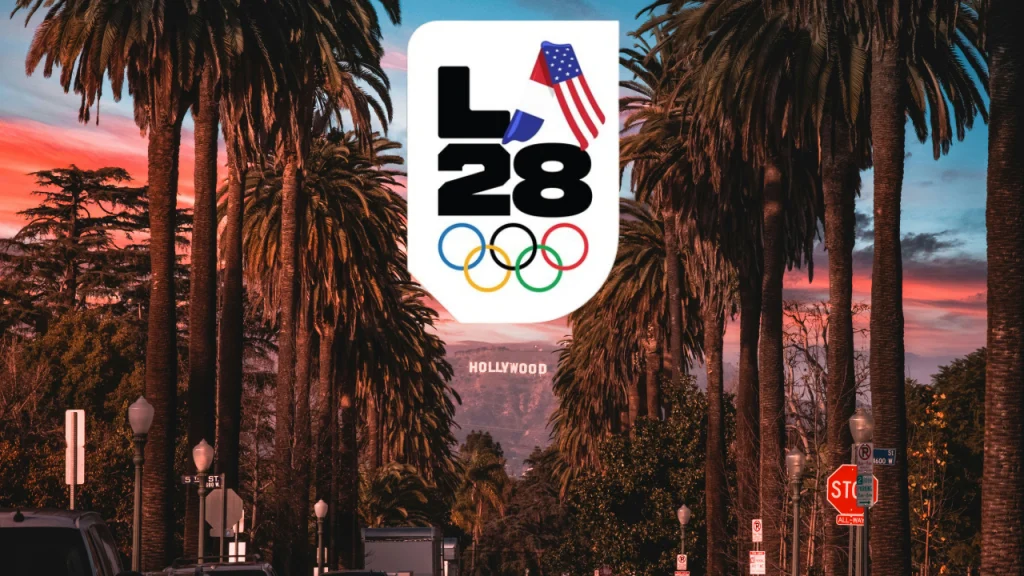
In two years, the city will host the Olympic Games, and for the first time since 1900, cricket will be part of the program. For those two weeks in the summer of 2028, Los Angeles will become the center of the cricket universe. And LA Knight Riders, the franchise Mysore oversees in America’s Major League Cricket, will be positioned at the epicenter — Hollywood’s cricket team in cricket’s Hollywood moment.
“The second-most watched sport coming to the number-one media market in the world,” Mysore says, teeing up the opportunity and the imperative: “What can you do with that?”
A passion project, not a business plan
When Shah Rukh Khan and his business partners—actress Juhi Chawla and her husband, businessman Jay Mehta—acquired the Kolkata franchise for $75 million in 2008, franchise cricket was largely unproven anywhere in the world.
While the IPL juggernaut may now seem inevitable in hindsight, at the time it was anything but. “It was about the passion,” Mysore recalls. “We didn’t see it as a business yet. Nobody could visualize what this could turn out to be—and nobody thought it would be where it is today.”
That initial investment was substantial in size, even for Khan and his partners, Mysore notes, “and it was not even a core business. If it was a media business, it may have been different. That was the mindset of how they entered into it.” Khan, the “King of Bollywood” and one of global film’s biggest stars, was venturing into new and unfamiliar territory, and the approach to managing it wasn’t immediately clear.
Mysore was recruited in 2010, three years after the acquisition, and his assignment was open-ended. Mysore recalls Khan explaining his motives: “This is not for me personally, this is not for my children. This is passion.”
“What do you want to do with it?” Mysore asked.
Khan’s reply was: “I have no idea, but I have a feeling you will tell us.”
“So that’s how it started,” Mysore recounts. The onus was on him to define the strategy.
The scaling question
Mysore’s first conclusion was simple but fundamental: scale was essential. “In my experience, especially in India, if you don’t have scale, you might as well not do it… So I asked: how do you scale a two-month product?”
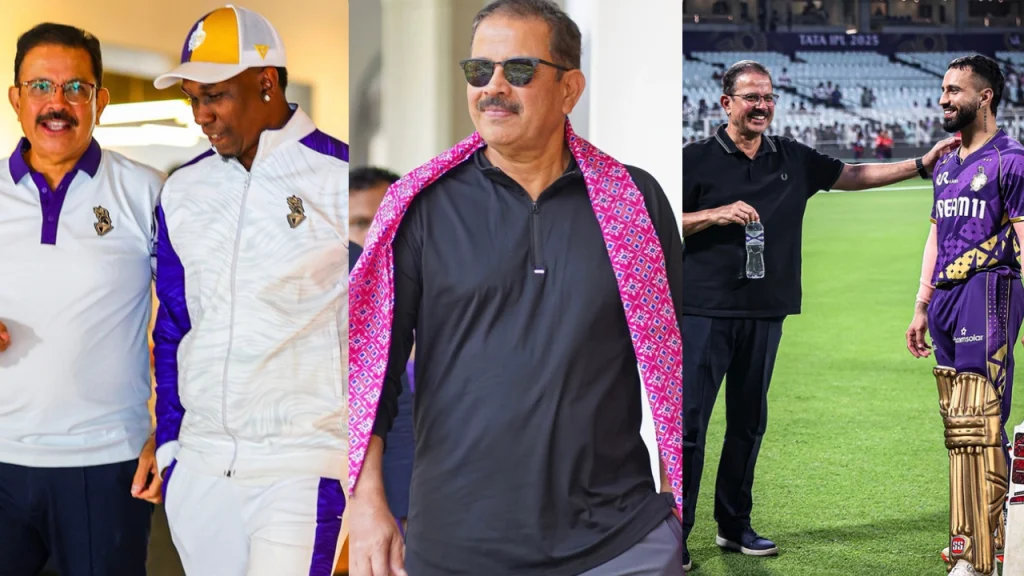
The answer was not obvious, and the constraints were real. “If you get into the granular side of the business, there are caps everywhere,” Mysore explains. “Media rights are locked in for five years. Sponsorship assets are limited. Ticket revenues can only be pushed so far.” The levers for growth within the IPL itself were finite. A two-month season, even a wildly successful one, could only generate so much revenue through traditional channels.
The solution, as he saw it, was to make the brand work year-round across multiple markets. “We said this has to become a global business. This has to become a global brand.”
The bet was that brand equity built at the outset would compound over time. “The two levers on which you build a franchise are your brand and your fan base,” Mysore says. Build those consistently across markets, and the financial returns would follow—even if some markets took years to reach profitability.
This expansion strategy was built on a prediction: “I said, I’m pretty sure many countries will copy the IPL,” Mysore recalls. “There could be opportunities to acquire franchises under a mother brand of Knight Riders. That is probably the confidence that I had, because that’s what I had put in place in my previous walk of life.”
Global business training
Mysore brought extensive experience to the question of how to scale globally. Before taking over Khan’s empires, he had spent over 21 years at the global insurer MetLife, working in Washington, Pittsburgh, and the company’s New York headquarters before being deployed to Indonesia and Hong Kong, to set up a joint venture in the early 2000s. The international rotations proved formative—they taught him how multinational corporations manage distant operations and maintain coherence across markets.
He eventually got the call he knew would one day come – to return to India to lead the company’s operations there as managing director of MetLife India Insurance Company.

After returning to India, Mysore’s career in the financial sector ascended to major heights. He held senior roles at Sun Life Financial as country head of the India division and vice president for Asia. He served on the boards of some of India’s largest conglomerates—Birla Sun Life Insurance, Birla Sun Life Asset Management, Gujarat Sidhee Cement, and Oberoi Realty. But the lessons from his early days managing internationally stayed with him.
“Managing from a distance is one of the biggest challenges,” Mysore says. The question that shaped his approach to Knight Riders was the same one he’d navigated at MetLife: “Your home base has to be strong, but then you ask: how do I manage from a distance? You’ve got to think global but act local. That’s the hardest part.”
Smart, controlled expansion
The expansion strategy was disciplined from the start, shaped by the ownership philosophy that has defined Knight Riders Group since its inception. In an era when IPL franchises are increasingly selling stakes to institutional investors or considering public offerings, Knight Riders Group has moved in the opposite direction. No private equity. No IPO. No dilution.
Mysore fields inquiries constantly from would-be investors. “Given my financial services background, there’s not a week that goes by without somebody I know or who is referred to me calling and saying, ‘can I invest this much?’ And I feel obligated to take that discussion to my stakeholders. The answer always is: what would we do with the money?”
The logic is straightforward. “If you don’t need capital, why raise it?” Mysore asks. “Private equity always comes in with a five-to-seven-year horizon. They want a clear line of sight on how they exit, and the exit route typically is an IPO.”
The preference from the Knight Riders Group’s principal stakeholders, as Mysore relays it, is to keep things as they are for now.
This independence has allowed Knight Riders Group to make long-term investments without the quarterly pressures that typically accompany institutional capital.
It has also meant being selective and thoughtful about which leagues to enter. For example, Knight Riders Group closely evaluated opportunities in SA20 and The Hundred but ultimately passed on both.
In South Africa, Knight Riders had actually signed up to participate in a previous incarnation of the country’s T20 franchise league that was put on hold before COVID.
When it was resurrected, the fit was no longer there. Besides not meeting the Knight Riders’ financial requirements, there was also the practical challenge of a schedule clash with the ILT20: “I can’t have two teams at the same time,” says Mysore. “One is tough enough.”
In England, the issue was valuation again. “It became a valuation exercise, and at those numbers it didn’t make financial sense for us.”
He’s cautious about models that require sustained losses without clear paths to profitability. “A spreadsheet is only as good as the assumptions you make,” he says.
The Knight Riders approach is different. “We don’t want to borrow, we don’t want to raise money outside. You tell me how much you want, I’ll put in the money. I want to sleep well at night.” The strategy has meant slower, more deliberate expansion but greater financial stability and operational control.
Building the empire while managing from the center
Knight Riders Group now operates five franchises: Kolkata Knight Riders in the IPL, Trinbago Knight Riders in the Caribbean Premier League (acquired in 2015) and in the Women’s CPL (launched in 2022), the Abu Dhabi Knight Riders in the ILT20 (launched in 2023), and the LA Knight Riders in Major League Cricket (launched later in 2023, although the commitment was made years before). Each operates with a focus on its local market but draws from shared resources—a structure designed to balance autonomy with operational efficiency.
“We’ve consciously created a core group,” Mysore explains. “The support staff is common. We’ve even managed to keep a core of three to five players – including Jason Holder, Sunil Narine, and Andre Russell – across teams, despite different player acquisition systems.”
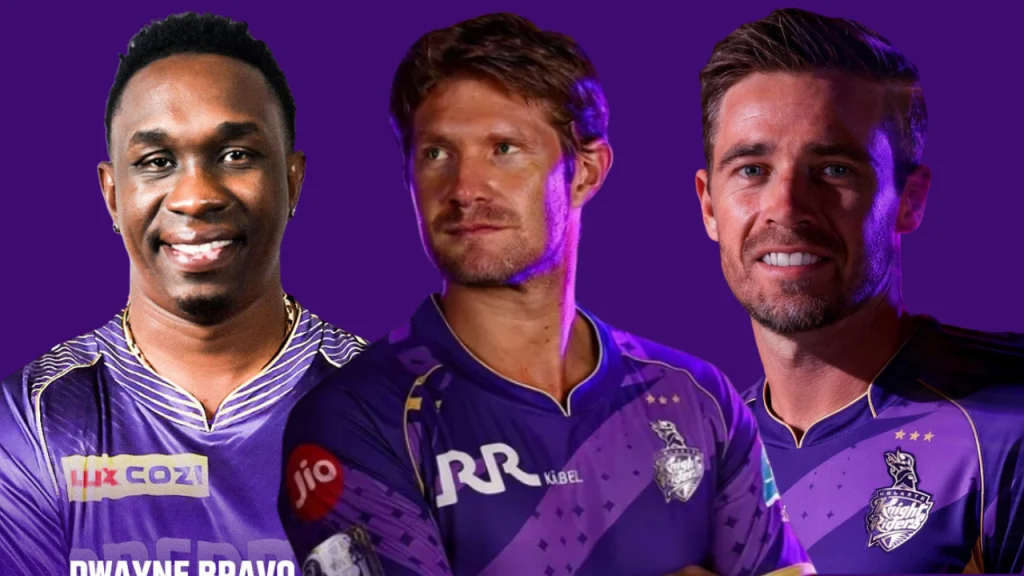
Dwayne Bravo, the former West Indies all-rounder, now serves as head coach for LA Knight Riders, Trinbago Knight Riders, and Abu Dhabi Knight Riders, shuttling between markets.
The organization has also recently hired Australian and IPL legend Shane Watson and Tim Southee to strengthen its coaching infrastructure.
“To look back and see that it’s not only been implemented but that it’s working—it validates the thought process,” Mysore says.
Mysore is happy with the way the Group’s current teams slot neatly into the global cricket calendar. “We have Kolkata Knight Riders in March through May, LA Knight Riders in June and July, Trinbago Knight Riders in August and September, Abu Dhabi Knight Riders in December and January,” he says. “That’s enough from my perspective, and from a brand perspective.”
He’s also candid about the portfolio’s economics, and the role the teams all serve. The year-round calendar serves the brand strategy, but not all franchises are profitable. While the CPL team, now over a decade old, has been turning a profit, the other teams, – all much newer – are still in investment mode.
The losses are acceptable, he suggests, as long as the strategy is sound and the investment disciplined. “We’re careful—we’re not throwing good money after bad investments. What it does is give us that platform on which we can build our fan base, build our brand globally” – particularly in emerging markets like the United States where cricket’s potential remains largely untapped.
Managing a global operation that spans India, the Caribbean, the Middle East, and North America requires more than financial and operational acumen. It requires relationships—with royalty in the Gulf states, with national leaders in Trinidad and Tobago, with sports executives in California. Mysore has spent years cultivating them, and spends lots of time on the road not only nurturing these relationships but evangelizing the sport: “Over the last 10-11 years, through introductions and associations that we have had, I meet with them, I talk to them, and they’re super intrigued by all of this.”
Red Chillies and the entertainment crossover
Mysore’s portfolio extends beyond cricket. Since 2013, he has also served as CEO of Red Chillies Entertainment, the multinational entertainment conglomerate owned by Shah Rukh Khan and his wife Gauri Khan. Headquartered in Mumbai, its film and TV businesses include creative development, production, marketing, distribution, licensing, merchandising and syndication of films in India and worldwide. The company also has a major visual effects division.
Mysore’s dual responsibility creates synergies that benefit both businesses. “At the heart of both is entertainment,” he says. But the challenges differ in important ways. Cricket, he notes, is “more predictable. Schedules are there, you know the contracts. From a cost standpoint or a budgeting standpoint, it’s more predictable, though a lot more complex.” Film, by contrast, requires more vigilance. “The challenge on the creative side of things is that if you’re not careful the budgets can go out of hand.”
His philosophy in managing Red Chillies mirrors his approach to building the cricket portfolio: manage risk carefully so setbacks don’t derail the larger strategy. “Films don’t fail—the business of films fails. I try to manage the business of films so you don’t lose your shirt, because then you’re afraid to take the next call.” No one can predict which films will succeed. “We’ve had films which we thought would be awesome which have flopped badly, and vice versa. When it flops, you don’t want to be in a situation where you’re stopped in your tracks.”
The disposition Mysore maintains with directors and stars, he notes, is respectful but firm—much like his approach to expansion decisions. “They understand where I am coming from. Although they don’t always like it. That’s okay. That’s my job.”
There are also commercial crossovers between the two businesses. “A big revenue stream for us is in-film branding,” Mysore notes. “We’ve done more as Red Chillies than any other company. Brand placement and activation—that accentuates the marketing side as well.” The model works both ways: brands pay for placement in Red Chillies films, then amplify that investment through their own marketing campaigns, which in turn promotes the films themselves.
Some sponsors—such as Nokia and BKT among others—have worked across both businesses, leveraging both the cricket franchises and film productions. The connection reinforces the Knight Riders brand in India, where Shah Rukh Khan’s celebrity amplifies every property he touches, while Red Chillies’ reach in Bollywood creates sponsorship opportunities that can benefit the cricket operation.
The Red Chillies connection also creates a natural bridge to Los Angeles, where the company has longstanding relationships with major studios including Sony, Paramount, and Netflix, which is an exclusive streaming partner. The Red Chilies visual effects business has also done outsourcing work for multiple Hollywood studios on a BPO model.
Los Angeles, the Olympics, and the American bet
Thus, of all the markets where Knight Riders Group has planted a flag outside of India, none carries more synergies and more long-term potential—and more uncertainty—than the United States. Major League Cricket is young, the audience is fragmented, and cricket competes for attention in a sports landscape dominated by the NFL, NBA, and MLB. But Mysore sees a foundation. “There is a ready-made market—the diaspora,” he says. The ambition is to expand beyond it. “If you can get the average American sports fan interested in cricket, the sky’s the limit. It has to be a long-term view and long-term play.”
He believes the format translates once Americans are exposed to it. “When you talk to American sports fans who have not yet been exposed to cricket, the more they get exposed, they pick it up very fast,” Mysore says. “I always invite them to IPL. Over the years people have come to IPL games. We give them jerseys and they’re blown away and say, ‘What have you created here?’ They do not realize until they see it live the extent to which cricket has gained traction.”
The franchise has begun to invest accordingly. Last summer, LA Knight Riders made its first full-time hire based in Los Angeles year-round: Mayank Dayal, the former head of marketing for the IPL’s Gujarat Titans and a longtime senior broadcast executive at many of India’s top networks—Sony, Viacom18, and Star. Dayal’s presence signals that this is no longer a remote operation managed from India but a local franchise with year-round ambitions in a city that will soon be the center of global sports attention. Mysore’s multinational experience has given him a keen sense of the right time to shore up local operations in a market, and that sense is telling him the time is now for Los Angeles.
The 2024 T20 World Cup, held partially in the United States, offered a proof point. “Halfway through the World Cup, the mainstream media in the US started covering it, which is always an indication that there is interest,” Mysore recalls. The Olympics will be a more concentrated catalyst. “It will be a massive boost for cricket in the US,” he says. “You’ll have people who don’t know anything about cricket coming to the Olympics. Our hope is that they’ll say, ‘Hey, there’s this cricket thing going on—let’s go see what it’s all about.’ It’ll make a big difference.”
Building without pressure
For 15 years, Mysore has operated on a theory that runs counter to emerging and prevailing wisdom in franchise sports: that patient capital and disciplined expansion can outperform aggressive growth funded by external investors.
The Olympics in 2028 will offer a crucial opportunity to the Knight Riders franchise. For two weeks, Los Angeles will host the second-most watched sport in the world, exposing millions of Americans to cricket for the first time. If even a small fraction of that Olympic audience converts into sustained interest, LA Knight Riders will be positioned to capitalize in ways no other franchise in American cricket can match. If it doesn’t translate—if the bounce fades and American audiences return to the NFL and NBA—then the question becomes: how long can you keep investing in a slower-growing market?
Mysore’s answer is that there’s no deadline. No investor is demanding returns on a predetermined timeline. The capital is patient because the ownership is patient, and the ownership is patient because they believe in the market, are passionate about the game, and don’t owe anyone an explanation.
What Mysore has built is already distinctive: a global sports brand that operates across four countries without debt, without institutional investors, and without the pressure to exit. The systems for managing from the center while acting locally have been tested and proven. The brand has been built methodically across markets. And the architecture is in place—for Los Angeles, and for wherever cricket’s growth takes the Knight Riders next.