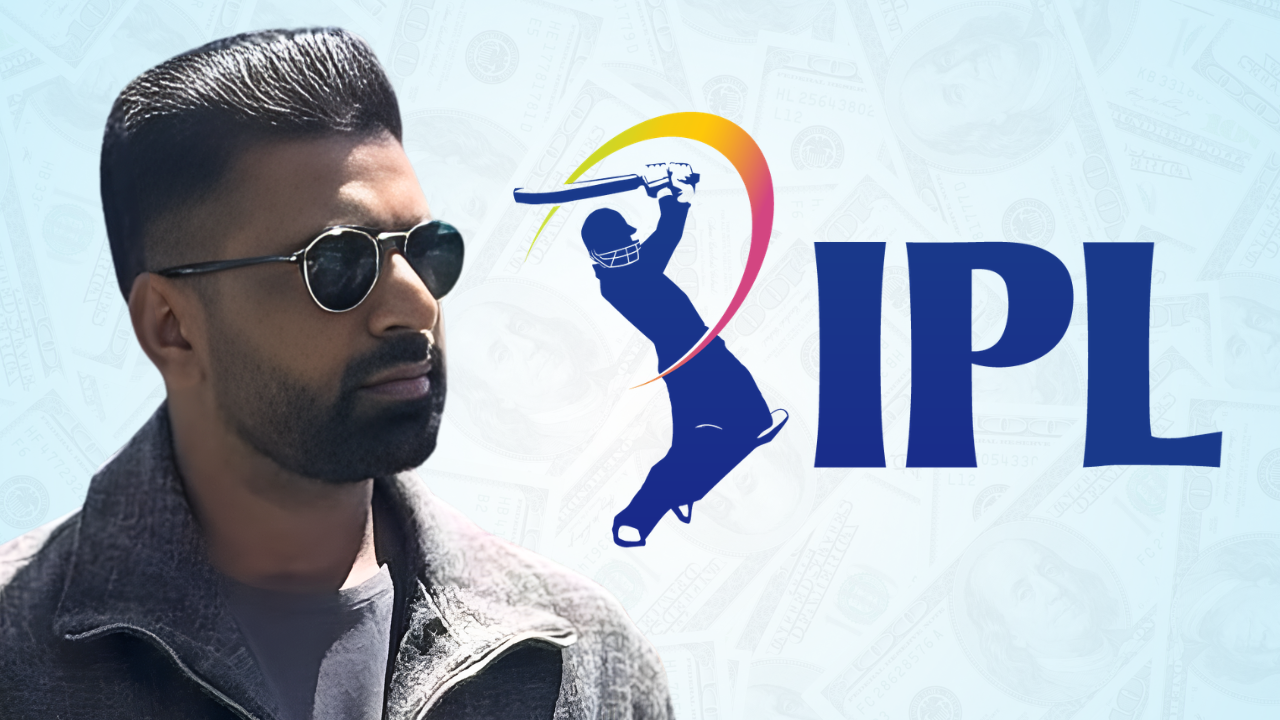
The IPL’s financial growth is moving faster than ever, but questions around how that value is distributed are beginning to surface again.
Former Chennai Super Kings (CSK) and Royal Challengers Bengaluru (RCB) player Abhinav Mukund has sparked fresh debate over player compensation, arguing that cricketers in the league are not being paid in proportion to its global standing, while speaking on The Great Indian Cricket Show on Doordarshan.
Rising valuations sharpen focus on player earnings
The discussion comes against the backdrop of a landmark moment for the league’s business ecosystem. On March 24, Rajasthan Royals were acquired by a US-based consortium led by Kal Somani for US$1.63 billion (₹15,322 crore), as cricexec reported previously. Later the same day, Royal Challengers Bengaluru were sold to an Aditya Birla Group-led consortium for US$1.78 billion (₹16,732 crore), as previously reported by cricexec.
Together, the deals pushed combined franchise valuations beyond ₹32,000 crore (approx. US$3.4 billion), reinforcing the IPL’s position among the most valuable sporting properties globally.
Yet, while franchise values continue to rise, player salaries remain confined within a structured system. Most top-tier contracts fall within the ₹10–18 crore range (approx. US$1.1M–US$1.9M), with even the upper ceiling rarely moving beyond the ₹20–25 crore bracket — approximately US$2M–US$2.6M in global terms.
“I feel IPL players are grossly underpaid. Listen, hear me out. Because the valuation of the league is so high. And if you look at other leagues around the world, the economics of it, you take baseball, you take F1, you can take any of these guys. In comparison to that, 20 crores or 25 crores is actually not that much. If you look at it in that way,” Mukund said.
Salary cap structure under scrutiny
For the 2026 cycle, each franchise is operating with a purse of ₹125 crore (approx. US$13M), a figure that has steadily increased but remains central to the IPL’s competitive balance.
Mukund, however, believes the cap itself is now part of the problem, particularly when viewed against the league’s scale and global positioning.
“If you are saying IPL is one of the top 4-5 leagues in the world, your players should also be paid like the top 4-5. It’s not even in the top 10 or top 20. And if a player is in the top 10, that is because of all the other endorsements. Not because of the IPL salary. So the salary should not be capped. I feel that IPL players could be paid more,” he added.
His argument highlights a broader dynamic: while IPL cricketers remain among the highest-paid in the sport, a significant portion of their overall earnings is driven by commercial endorsements rather than franchise contracts.
Revenue gap compared to global leagues
The disparity becomes clearer when viewed through reported financial benchmarks across major sports leagues. As per reported figures, the IPL’s total player salary pool stands at roughly US$120 million against annual revenues of around US$1.4 billion, meaning players receive approximately 8.5% of the league’s earnings.
In comparison, the English Premier League operates on a significantly different model, with total player wages of about US$5 billion from revenues of roughly US$8 billion — equating to around 63% being distributed to players. Similarly, in the United States, the NFL allocates approximately US$8.2 billion in salaries from revenues near US$20 billion, representing about 41%, while the NBA distributes close to US$5 billion out of US$11.3 billion, or roughly 44%.
Even in Formula 1, often cited as a closer structural comparison, teams collectively pay around US$330 million in driver salaries from revenues of approximately US$3.6 billion, translating to just over 9%.
Against that backdrop, the IPL’s sub-10% share stands out, reinforcing the argument that player compensation has not scaled proportionately with the league’s commercial growth.
At the same time, structural differences remain critical. The IPL operates across a two-month window, with players typically featuring in 14–16 matches, whereas leagues such as the EPL, NFL, and NBA run over extended seasons, influencing how revenue distribution and annual earnings are structured.
Franchise revenues and the case for higher spending
Mukund also pointed to franchise-level earnings to underline his position, suggesting that current player spending does not fully reflect the revenue potential of teams.
“An IPL team gets about 400 to 500 crores a year is what I have read, in the reports. I think at least about 100 to 120 crore that they are spending, there should be a little more, maybe double of that as the salary cap. Maybe 200-250 crores,” he said.
This implies annual franchise revenues in the region of ₹400–500 crore (approx. US$42M–US$53M), compared to player wage bills of around ₹100–120 crore (approx. US$11M–US$13M). Mukund’s proposal to raise the cap to ₹200–250 crore (approx. US$21M–US$26M) would represent a significant shift in how that value is shared.
Beyond franchise economics, the wider ecosystem reflects a similar disparity. The Board of Control for Cricket in India (BCCI) generates over ₹4,000 crore (approx. US$421M) annually from the IPL, while central player earnings remain comparatively limited.
Balancing parity and market value
Despite the growing scrutiny, the IPL’s salary cap system remains a core pillar of its structure. Designed to ensure parity among franchises, the auction-based model prevents wealthier teams from dominating player acquisition.
That balance has been instrumental in sustaining the league’s competitiveness and appeal, but it also places clear limits on how much players can earn directly from franchise contracts.
Mukund’s comments bring that trade-off into sharper focus — between maintaining competitive integrity and allowing salaries to better reflect the IPL’s financial scale.
A debate gaining momentum
As valuations continue to climb and global comparisons become more frequent, the question of whether IPL players are fairly compensated is unlikely to fade.
Mukund’s intervention adds fresh weight to a debate that sits at the intersection of sport, business, and structure — one that could shape how the league evolves in the years ahead.