
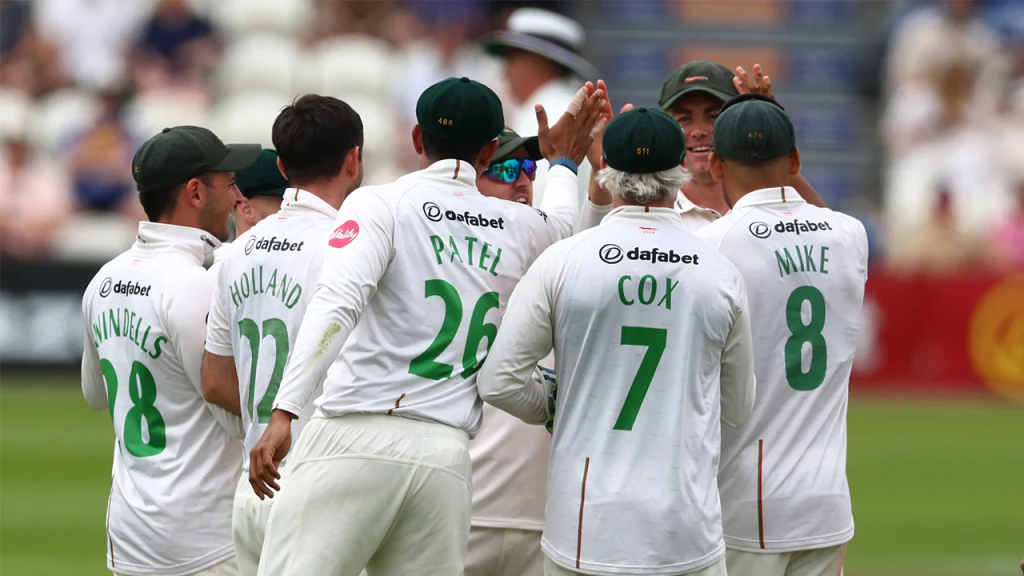
Leicestershire County Cricket Club’s rise during the 2025 season wasn’t just unexpected — it was something close to a sporting miracle. A club with one of the smallest budgets in the country, burdened by years of financial strain and operating at a structural disadvantage to almost every peer, somehow surged to the top of Division Two and earned promotion back into the top flight. They weren’t meant to be the story of the summer. They weren’t meant to be in contention. They weren’t even meant to be able to compete with the depth, firepower, and resources available to the larger counties.
And yet, there they were.
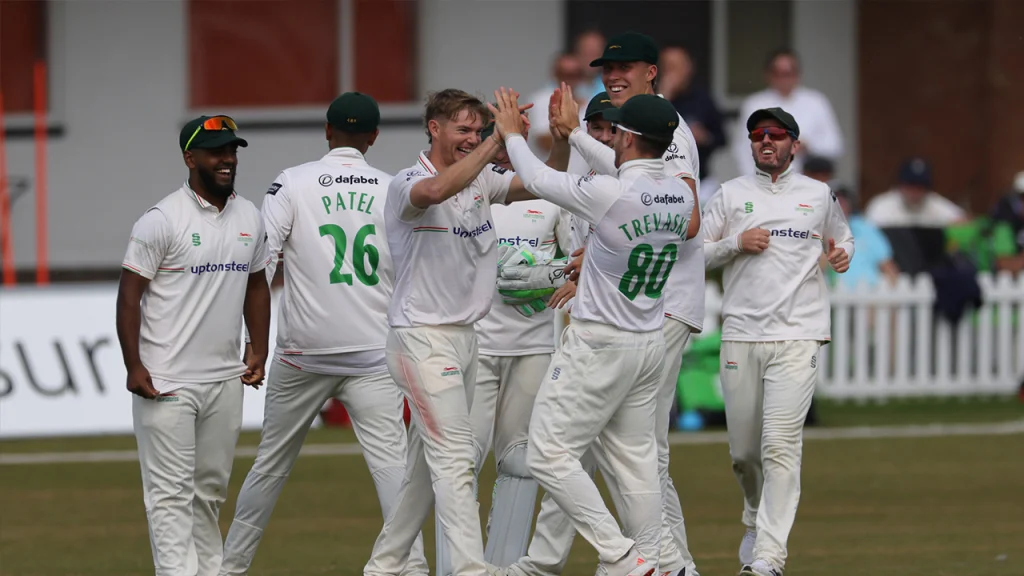
The promotion was significant for cricketing reasons, of course — performance, pride, validation for players and staff — but its timing made it seismic. It arrived exactly as English cricket entered its Hundred investment era, with the eight franchise deals beginning to reshape the domestic landscape. Most counties were preparing to use the new money to stabilise fragile balance sheets or patch over years of cost pressure. Leicestershire, against every expectation, was entering this moment not as a club needing rescue, but as one with momentum.
For Leicestershire, the timing also coincides with a change in leadership. Emma White, appointed CEO just weeks before promotion was sealed, steps into the role at a moment when the club’s trajectory is open to redefinition.

White arrives with experience across rugby, horse racing, venue operations and major events — sectors where success is measured not just by performance on the field but by the health of the business behind it. She brings that lens to Grace Road at precisely the moment the institution beneath the cricket team needs to be reconsidered, rebalanced, and rebuilt.
She is also quick to clarify where the recent cricketing success belongs.
“We’ve got the most amazing team in place,” she says. “Claude (Henderson, Director of Cricket), Alfonso (Thomas, First Team Coach) and James (Taylor, Assistant Coach and Batting Coach): those three have really upped the skill base of the team and rest of the backroom staff.”
Her job begins where theirs has delivered. The promotion to Division One provides momentum, credibility and a platform. The responsibility of White, her leadership team, and the board is now to build the architecture that allows that momentum to last.
A new CEO inherits an institution at a crossroads
To understand White’s new mandate, it’s important to understand what she walked into. Leicestershire is a proud club with deep roots in its community, but it has never enjoyed the structural advantages of the larger counties. It does not own a Test venue. It is not a Hundred host. Its immediate commercial ecosystem is smaller. And over the last decade, as the financial profile of other counties grew, Leicestershire often had to stretch to keep pace.
White’s candid assessment of the county cricket landscape reflects her broader experience across British sport. She sees a system that mirrors other sectors she has worked in: a national governing body, uneven resource distribution, and natural stratification.
“There’s a lot of similarities,” she says, comparing cricket to other sports. “The only unusual thing at the moment is the amazing sale of The Hundred, which has given every county cricket club such a boost.”
But that boost has not been evenly felt. The financial map of county cricket is clearer than ever.
“Some counties are host grounds of The Hundred,” she says. “And some are the Test match venues. So there are powerhouses within that landscape.”
For a county like Leicestershire, a smaller club whose strengths come from coaching culture, player development and community roots rather than mega-infrastructure, the danger is in trying to compete on terms that don’t fit. White is focused on playing the hand that Leicestershire has been dealt.
“You can’t look across the road with jealousy,” she says. “You’ve just got to make the most of the place you’re sitting in.”
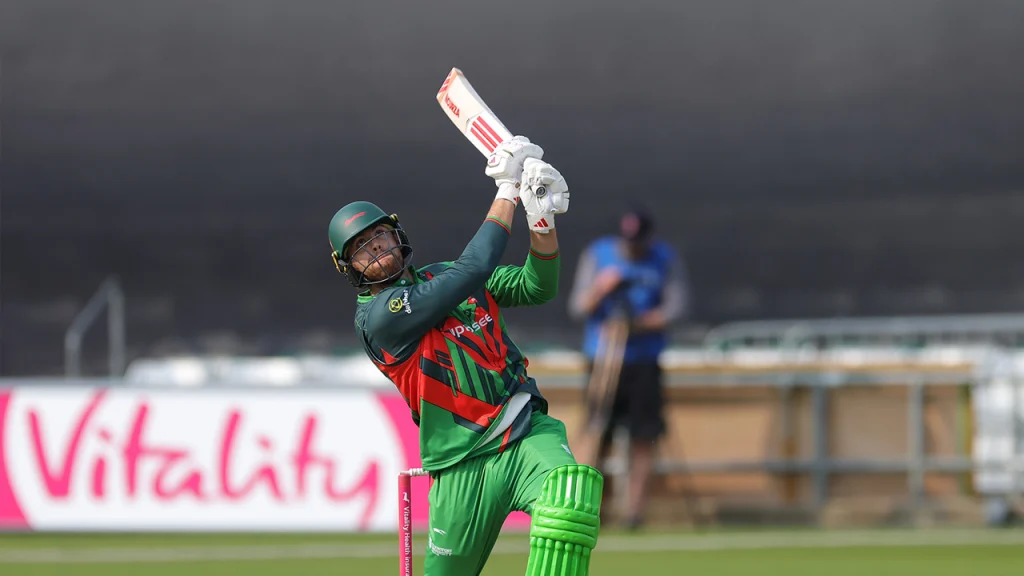
The optimal strategy for the club, then, acknowledges the structural differences in the system while emphasising the assets Leicestershire does have — a loyal fan base, a deep cricketing community, and a ground that, with modernisation, can become a more versatile venue.
But none of that can happen without disciplined financial management. And that brings the Hundred money into the picture.
The Hundred windfall — opportunity, temptation, discipline
The ECB’s sale of 49% stakes in each Hundred franchise delivered a historic financial injection into county cricket. The distributions were substantial enough to change strategic calculations everywhere — including Grace Road.

For a club that has spent years operating on fine margins, the sudden arrival of multi-million-pound capital is transformative. It could eliminate debt, accelerate facility upgrades, expand operations, and fund new programmes. But it could also allow counties to make the oldest mistake in sport: spending money before the business itself is ready to sustain the growth.
White refuses to take that risk.
“There is not a chance we are even looking to spend any of that Hundred money until we have a financially stable and sustainable business without it,” she says.
It is not an arbitrary stance. It is rooted in experience across sports where windfalls have been squandered. “This is a once-in-a-lifetime opportunity to have this money in the bank,” she says. “It has got to be spent so wisely for the future of cricket in Leicestershire.”
In practice, that means one thing. Besides paying off debt, which is already done, “right now, The Hundred money is locked away in a vault,” White says. “It shall not be touched until we get our business up and running and sustainable and almost vibrant.”
Once stability is built, however, White already knows where investment is needed, including marketing. “That money can come into growing the sport and the attendances within the area.”
The windfall, then, is not a strategy. It is the fuel for a strategy — one that must be constructed and justified first.
A commercial rebuild rooted in fundamentals
White’s commercial philosophy is grounded in simplicity — not because the work is simple, but because strategy becomes fragile when it becomes overly complicated.
“It’s a really simple plan,” she says. “It’s just really difficult to do.”
The essence is straightforward: strengthen the club as a business before trying to expand it. That means focusing on three priorities: revenue, facilities, and identity.

Revenue starts with building trust in the local business community: strengthening Leicestershire’s commercial presence, making it more visible, and wrapping it in and a compelling narrative. White sees enormous room for growth.
“We need to bring more businesses into the club,” she says. “And we need to be a valuable proposition for those businesses to come.”
Facilities, meanwhile, require targeted rather than sweeping investment. Grace Road does not need a transformation. It needs modernisation — spaces that feel fresh, flexible, and inviting across formats and events.
“Some of the facilities… are really tired,” she says. “But it doesn’t take much and it doesn’t take a lot of money to turn that around.”
Identity is the most intangible piece — and perhaps the most important. Leicestershire has a strong cricketing identity, but that identity hasn’t always translated into brand clarity or community presence. White hopes to change that, not with glossy campaigns but with consistency, storytelling, and connection.
“It’s relentless,” she says. “You need to keep knocking on the door and going back out to the community and making sure everybody knows that you’re actually here. But if we do that, and deliver great experiences when people get here – then I’m not worried at all about the outcome.”
Marketing and brand — and the first major partnership of 2026
One of White’s early observations was that Leicestershire needed to tell its story more powerfully. Its cricket heritage is rich, its community roots are deep, and its players and coaches have compelling journeys — yet the club’s marketing footprint did not reflect that.
White sees the club as more than a cricket venue. She sees it as a cultural space — a place that should feel alive throughout the year, not only on matchdays. To her, modern marketing is not about shouting louder; it’s about being clearer. It’s about showing relevance, building identity, and making sure the community feels welcomed in.
And that identity is now anchored by a name that blends history with partnership.
One of the first moves White and her team have made will shape the club’s identity for years to come. Beginning in the 2026 season, the club’s historic home will officially become Uptonsteel Grace Road.
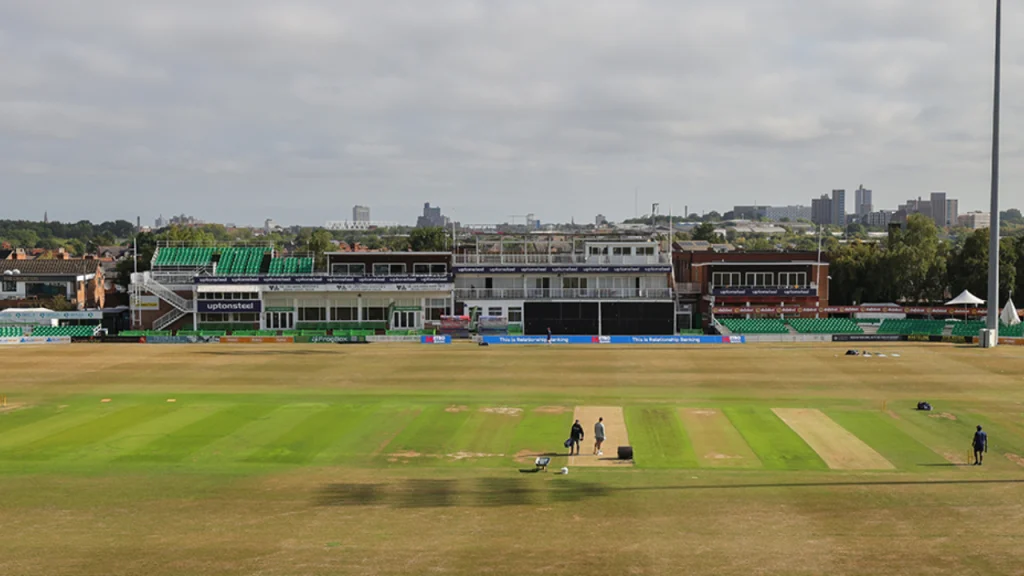
Grace Road has been Leicestershire’s spiritual centre since 1877. Any change to its name carries emotional weight. But White’s approach reflects the balance she is trying to bring to the club’s next chapter: protect heritage while strengthening the business that supports it.
“Grace Road holds a special place in the hearts of everyone connected to Leicestershire cricket,” she says. “We wanted to ensure that heritage remains front and centre as we continue to build for the future.”
Uptonsteel’s role at the club has grown steadily since 2018, first as front-of-shirt sponsor and then as stadium naming partner in 2021. The evolution to full ground naming rights marks a deeper alignment — a vote of confidence in the club’s future and an example of the kind of long-term, values-based partnerships White aims to cultivate.
Kevin Walpole, Uptonsteel’s Commercial Director, describes the relationship as rooted in “mutual respect, local pride, and a commitment to supporting the growth of the game.”
For White, the renaming is not simply a commercial move. It is proof of concept: a demonstration that Leicestershire can modernise without erasing its character, and that the commercial rebuild is already underway.
Attendance — rebuilding trust and experience, format by format
Attendance across British sport has been choppy since COVID. Cricket has felt it sharply: people grew used to staying home, and habits that once came naturally now require a reason. For White, this is not a crisis of interest but a crisis of experience. “Attendance dropping across all sports has been an issue,” she says. “It’s now trying to get them back out again… and making sure the experience they have when they get here is top notch.”
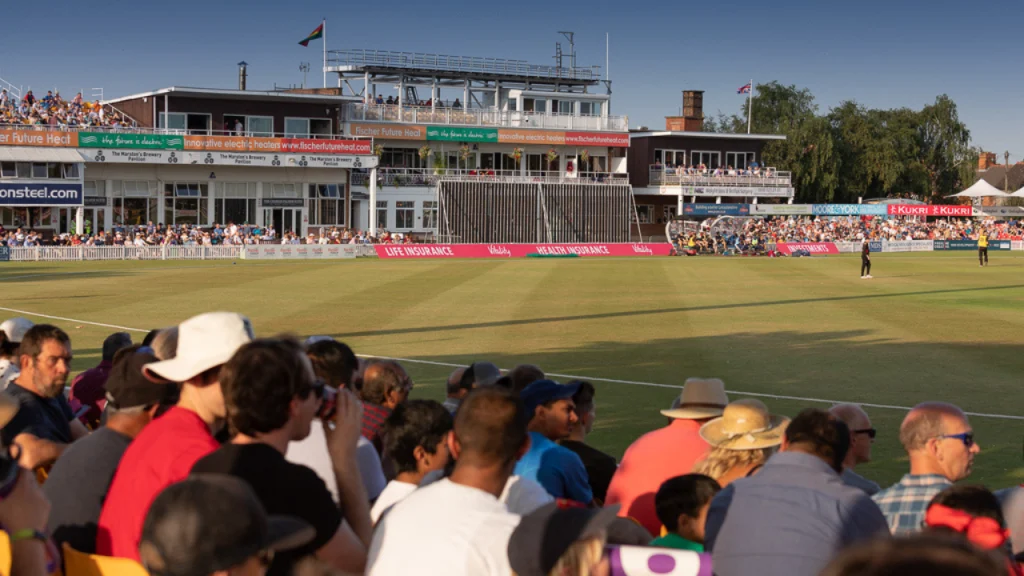
Cricket, she believes, has an advantage that many sports don’t — its multi-format ecosystem, which allows clubs to tailor the matchday experience more precisely than a single-format sport ever could. Her approach is deliberately specific to each format.
T20: the atmosphere match
“You’ve got that younger demographic… that real party atmosphere,” White says, and she sees it as a space where Leicestershire can lean into its strengths. Smaller grounds create an intimacy that bigger venues can’t match: a sense of closeness to the players, recognisable faces, moments that feel shared rather than distant. The key, for her, is not reinvention but refinement — sharpening what already works, tightening the energy in the concourses, making sure food, music and flow all contribute to an easy, fun night out.
The One-Day Cup: the family match
Here, White’s philosophy is even clearer. “You’re selling it as a day out,” she says — and then, as she puts it, “you can put in tiny letters afterwards ‘at the cricket’.” The cricket remains important, but the children’s experience is what determines whether families return. Her ideas are practical rather than extravagant: craft tables, small fair-type activities, kids’ cricket zones, informal coaching sessions, food that appeals to a range of tastes, and plenty of room for children to explore safely while parents keep an eye on the action. “This isn’t rocket science by any stretch of the imagination, but it’s that added value and you’re never going to break the bank.”
None of it is expensive, and none of it relies on gimmickry. It’s simply about lowering the friction of attending — making Grace Road (soon Uptonsteel Grace Road) feel like a place where families can spend an entire afternoon without effort.
Four-day cricket: the heritage match
In the Championship, White is realistic. The long format is harder to sell to newcomers, but it remains the beating heart of the domestic game. Her strategy is to focus on the moment with the highest energy and narrative clarity: Day One. “That exciting day where everything kicks off,” as she puts it. Create anticipation around matchups, tell the story of the contest, and use the natural drama of the opening session to build interest. After that, she trusts that purists will carry the rhythm of Days Two to Four, with the goal of slowly growing a base of returning fans who find calm satisfaction in the long-form game.
Experience as strategy
This segmentation is not a marketing trick. It is a recognition of how people actually behave — that cricket does not have a single audience but many, and that each group needs something slightly different from a day at the ground.
What runs through all of White’s thinking is the belief that the in-venue experience is one of the few levers a smaller county can control completely. It does not require major capital. It requires care. It requires noticing the details that make a family feel welcome or a casual fan feel comfortable. And it requires consistency. When people have a good time — genuinely, not theoretically — they return, and they bring others.
White sees that as Leicestershire’s opportunity. Not to outspend bigger counties, but to out-experience them: to make matchdays feel intentional, human, and rooted in the club’s identity. In a system facing structural change, she views experience not as an accessory to the cricket but as a form of long-term resilience. People come for different reasons — the noise, the family day out, the purity of the four-day game — but they return only if the club gives them a reason to look forward to coming back.
Community — the biggest untapped advantage
One of the clearest opportunities White has identified is the chance to reconnect with Leicester’s substantial Asian community — a population that loves cricket but has not always felt fully linked to the club. For her, this isn’t a side project; it’s central to Leicestershire’s future.
“We haven’t engaged with them and it’s time that we did,” she says. The point is delivered plainly, without blame or dramatics. It’s simply reality — and something she believes the club can change quickly if it approaches the work the right way.
White has already begun that process herself. “I’m not the kind of CEO that sits at their desk,” she says. Since arriving, she has been out meeting community leaders, visiting local groups, and attending events where cricket is part of the everyday social fabric. Much of her early outreach has taken the form of direct conversations: Why aren’t you coming? What would make it easier? What hasn’t the club understood until now?
“I’m trying to build those relationships,” she says, “and I’m happy to say it’s going really well so far.” The club’s Foundation has helped open doors, but White has made it a priority to show up personally — to demonstrate that the club is not merely marketing to a demographic, but speaking to people it genuinely wants to hear from.
She believes the potential impact is significant. “We definitely do have those cricket fans in the area,” she says. “We just need to show them where Grace Road is.” It’s a line that carries both geography and symbolism: the club must make the ground feel accessible, familiar, and welcoming, not distant or peripheral.
White doesn’t promise instant results. But she sees this work as one of the most important steps toward making Leicestershire more rooted, more representative, and more resilient. And she believes momentum is already forming — not from campaigns, but from conversations.
Looking Ahead — the Five-Year Mountain
Leicestershire’s next chapter is shaped by a growing sense that the club can finally plan with intent rather than react out of necessity. Promotion provides on-field validation, the Hundred windfall offers financial room to maneuver, and the Uptonsteel partnership strengthens the commercial core. Together, these pieces have given Leicestershire the confidence to think about where it wants to be five years from now.
White describes that future in concrete terms. “It looks like every T20 match sold out,” she says — not as rhetoric but as a benchmark for what the club believes is achievable. She imagines one-day matches with a renewed energy: “really vibrant one-day home matches… with so much going on that even people who dislike cricket come and still have an absolutely wonderful time.”
The club’s ambitions for the Championship are steadier but no less important: a gradually expanding supporter base and an experience that draws people back season after season. Off the field, Leicestershire sees a venue operating at fuller capacity throughout the year. “Facilities where we’re looking for more of them,” White says, “because out of the cricket season and between cricket matches, everywhere’s sold out and we’ve got nothing else to sell.”
There is also a competitive aspiration at the heart of it all — a club that players want to join, not leave. “One of the best county cricket sides that every single player in the country, if not most of the world, wants to come and be a part of.”
But even with optimism building, the scale of the work is clear. “That’s some mountain though, isn’t it?” White says with a wry smile. And yet the timeframe remains realistic: “It’s not a billion years away… probably about five. But we’ve got a lot of work to do.”
Five years to build financial resilience, deepen community roots, modernise the venue and facilities, and turn Uptonsteel Grace Road into a place that feels active far beyond matchdays. Five years to convert institutional clarity into on-field competitiveness that endures.
Leicestershire is not declaring that it has arrived. It is recognizing that, for the first time in a long time, the foundations are aligned in a way that makes the climb possible. The club is no longer trying to simply hold its place in a changing landscape.
It is trying to move upward — deliberately, collectively, and with a clearer sense of direction than it has had in years.
Read part one of cricexec’s “Great County Cricket Reset” series here.