
Editor’s note: This feature launches cricexec’s multi-part series on the future of county cricket, examining how unprecedented new funding, modern formats, and shifting priorities can reshape the England and Wales domestic game.
A Moment of Reckoning
Eighteen first-class counties. A £520 million windfall. And a domestic structure that has never been more essential — or more fragile.
English cricket’s financial landscape has been transformed by the sale of minority stakes in The Hundred franchises. For the first time in years, counties are not approaching the future asking how they will survive the next season, but how they will rebuild the next decade.
That shift is profound and is starting to happen now. It is also precarious, and the stakes are high for everyone.
As Rob Andrew — Managing Director of the Professional Game at the ECB since early 2024 — puts it, “The counties are 18 very different businesses, but all have a very significant role to play in the growth of English cricket going forward. And everyone recognizes: this is a one time opportunity.”
Over the next two weeks, cricexec will speak with county CEOs and chairs, ECB and PCA leaders and other stakeholders to understand how this infusion of capital can become the foundation for a modern, sustainable domestic game — rather than a brief reprieve before deeper issues re-emerge.
The reset has begun. What follows will determine whether the game’s oldest structure can support its fastest-changing era.
The Long Summer
For more than a century, county cricket was English cricket.
It was the rhythm of the calendar and the heartbeat of the sport — April’s cold mornings at Headingley or Canterbury, midsummer evenings at Trent Bridge, late-August finals at Lord’s. Every England great wore county colours: Hobbs, Hutton, Botham, Gower, Pietersen, Root.
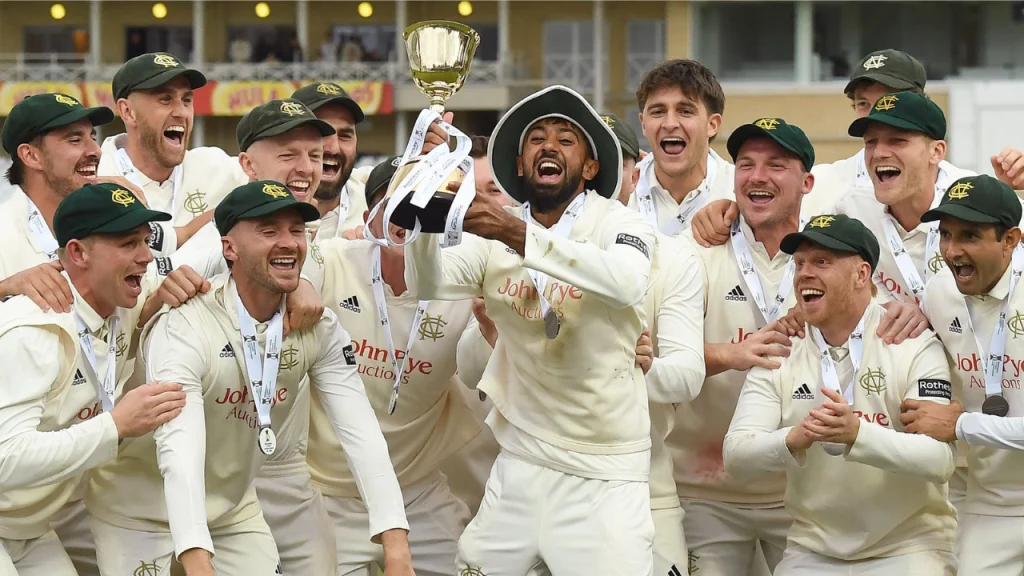
County grounds became civic monuments as much as sporting stages. They trained generations of professionals, anchored communities, and served as summer gathering places where a packed Sunday at Chelmsford or Taunton felt like a national event compressed into a local setting.
This wasn’t just England’s competition. For decades, it was where the world came to play. Overseas legends — Viv Richards, Imran Khan, Wasim Akram, Shane Warne — spent full English summers embedded in county dressing rooms. The competition was an apprenticeship, a finishing school, and an international crossroads.
But the world changed. The market changed. And county cricket, while rich in heritage, struggled to remain aligned with the global game it once defined.
A Changing Landscape
Few understand that transformation more clearly than Rob Andrew.

Originally from Richmond in North Yorkshire, he naturally grew up supporting Yorkshire County Cricket Club. Andrew recalls, “I’d grown up always watching county cricket… people said it was almost the IPL of world cricket back in the eighties because that was the only place for the best cricketers in the world to go and play out of their season.”
At Cambridge University, Andrew excelled at both cricket and rugby, but chose a career in the latter. He would go on to earn 71 caps for England, appear in three Rugby World Cups, and become one of the most influential fly-halves of his generation. When his playing days ended, his administrative career rose just as quickly: he helped steer Newcastle Falcons through the early years of the professional era, then spent a decade at the Rugby Football Union overseeing the professional game during a period of deep structural change.
He returned to cricket in 2016 as CEO of Sussex County Cricket Club and encountered a very different world to that of his youth.
The T20 Cup was launched in England in 2003 as a novelty — a weeknight spectacle designed to bring families to grounds. Instead, it sparked a revolution. Within years, T20 became the global sport’s financial engine, reaching full expression through the IPL, Big Bash, CPL, and dozens of emerging leagues that left the format’s founders behind.
Andrew describes the scale of change: “County cricket has had to adapt to a very fast-changing landscape, which has accelerated even quicker in the last decade with the growth of the IPL and franchise cricket… white ball versus red ball, county versus Test. The landscape is so different to where it was in the ‘80s.”
Where county cricket once attracted overseas stars for entire summers, those players now move in a continuous orbit of short-form tournaments: itinerant league specialists whose availability rarely aligns with the English season.
As audiences gravitated toward white-ball cricket and new formats created new commercial ecosystems, the counties’ central role in the sport became less secure — still vital, but less visible.
The Cost of Modernity – and of Winning
Modern cricket has become expensive to run.
During the 2000s and 2010s, multiple counties borrowed heavily to redevelop stands, build hotels, install lights, or expand hospitality capacities. These investments made the clubs more commercially versatile — necessary in a world where cricket revenues alone rarely pay the bills — but they also left balance sheets stretched.
County finances, especially of some smaller clubs, were also strained by the desire to compete.
As Andrew explains: “(Financial stability) tends to be a challenge for sports clubs because supporters and members like to win. Unless you’ve got a benefactor who’s prepared to put the hand in the pocket to bridge the gap, you have a P&L and a business to run, which you have to manage appropriately. And sometimes you spend a bit more money on the pitch than you can really afford.”
Andrew continued: “There’s a balance to be had, you just have to work the numbers. In sport, it’s also very easy to get those numbers slightly wrong, especially given the thin margins in county cricket – so you have to run a tight ship.”
These dynamics by themselves put substantial strain on the counties. But then came the pandemic.
“The last five or six years have been tough,” Andrew says. “We’ve come through COVID, cost of living, inflation, rising interest rates. The whole ecosystem has been squeezed.”
Counties needed matchday revenue; they had none. They needed non-cricket event income; concerts and conferences vanished overnight. Debt repayments, however, remained.
“Where was county cricket on that financial sustainability curve?” asks Andrew. “It’s fair to say there were challenges… too much debt in the game and counties that had overstretched themselves.”
By 2023 the debt burden carried by many clubs was substantial, totaling over £200. While it was concentrated among some of the larger clubs that could afford it more, no county was unaffected, and for some it bordered on unsustainable.
The fragility of the county system is well understood by Jonathan Dyson — a sports business journalist who has covered football, rugby, and cricket — and who was the lead author for a report on county cricket’s finances published by the restructuring firm Leonard Curtis this past summer.
“Counties ideally need to be able to stand on their own two feet,” Dyson says. “We recommend in the report that of a county’s revenues less than 50 percent comes from the annual ECB handout. Currently, for some of the smaller counties, the proportion is upwards of 60–70 percent.”
The Short-Form Shockwave

Against this backdrop, the introduction of The Hundred in 2021 brought both welcome investment, but also further strain.
Designed to reach new audiences and secure future broadcast revenue, The Hundred delivered commercial uplift — but required displacing the Royal London One-Day Cup, compressing the County Championship into narrower windows and forcing counties into challenging scheduling trade-offs.
Andrew explains the challenge: “the whole reason for introducing The Hundred in the first place was to bring a new audience, a new vibrancy into England. The ECB had to find a way of allowing The Hundred and the county game to live side by side and both grow, in order to grow the whole game – not only men’s cricket, but women’s cricket, domestic and international, professional and recreational.”
It is a delicate balancing act. Protecting red-ball cricket, nurturing the Championship as England’s talent pipeline, maximizing white-ball commercial value, and supporting a growing women’s system now sit atop each other in a cramped calendar.
Behind the modern spectacle lies an older, unresolved question: how do counties preserve their identity — and financial stability — in a game driven increasingly by short-form economics?
A £520 Million Turning Point
As a starting point, the ECB undertook to bring capital into the game by selling stakes in the The Hundred franchises: a process that was announced late in 2023 and completed this year.
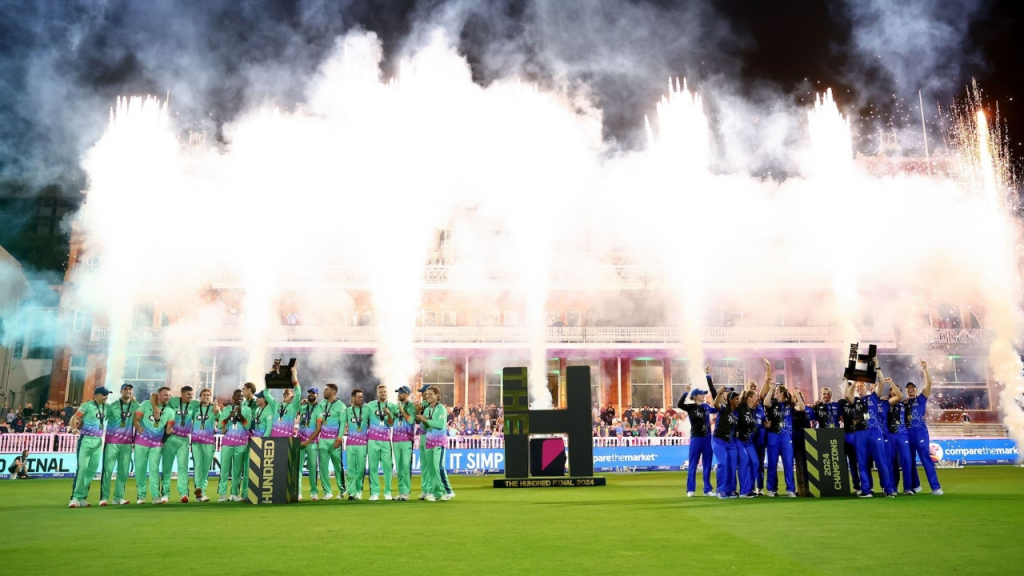
This £520 million infusion could not have come at a more welcome time. It has not only redefined the domestic financial conversations, it has brought new owners and deep pockets into the mix. These include:
-American investment group Knighthead Capital Management, who have a 49% stake in the Birmingham Phoenix. Knighthead also own Birmingham City Football Club.
-A consortium of American tech executives including Satya Nadella, CEO of Microsoft, Shantanu Narayen, CEO of Adobe, and Sundar Pichai, CEO of Google, who now own 49% of the London Spirit.
-Indian company RPSG Group now owns 70% of Manchester Originals. RPSG also owns the IPL’s Lucknow Super Giants and the SA20’s Durban Super Giants.
-The Sun Group purchased a 100% stake in the Northern Superchargers. Sun also own Sunrisers Hyderabad in the IPL and Sunrisers Eastern Cape in the SA20.
-Reliance Industries Limited, owner of the Mumbai Indians, purchased 49% sake in Oval Invincibles, reportedly soon to be rebranded MI London.
-The GMR Group not only owns a 49% stake in Southern Brave, they also bought full ownership of Hampshire. GMR also owns the Delhi Capitals in the IPL and Dubai Capitals in the ILT20.
-Chelsea co-owner Todd Boehly’s firm purchased a 49% share of Trent Rockets.
-American investor Sanjay Govil, owner of the MLC’s Washington Freedom, purchased a 50% stake of Welsh Fire.
Former England captain Michael Vaughan framed the moment succinctly: “In the immediate term the money (The Hundred) is bringing in allows the 18 first-class counties to look to the future rather than simply survive from one summer to the next.”
The distribution model for the £520 million itself is complex, but the essence is straightforward:
- 10% will go to the recreational game,
- £275m will be split among the 18 FCCs and MCC,
- Host counties retain 80% of the proceeds from selling their own stakes, while non-host counties receive an additional £150m divided 11 ways,
- and any amount above £425m is shared again across 19 entities.
The upshot is that non-host clubs will receive around £25m each.
Meanwhile, the Hundred teams will now manage their own commercial operations — sponsorships, ticketing, hospitality, merchandising — and participate in a central distribution of domestic and international TV revenues.
The Guardrails
That said, beyond debt repayment using these funds, clubs will not be able to access and spend the funds allocated to them without adhering to a process to ensure financial prudence, including applying to the ECB for disbursement.
Andrew outlines explicit guardrails the ECB has put in place for how this money must be deployed: “We have three buckets this money should be used for: debt reduction, revenue-generating projects, and reserves.”
He goes on to explain them in more detail:
Debt Reduction: “If there’s onerous debt, let’s try and get rid of it, because that helps the underlying business.” This has already been implemented across all counties.
Revenue-Generating Projects: “We want people to invest in revenue-generating projects — how do we ensure that we produce revenue generating legacies – for example through real estate – for the longer term future, which helps the business model.”
Reserves: “Let’s put a little bit aside in terms of reserves… Very few clubs in any sport in England – including cricket clubs – have reserves of any note. This is for a rainy day down the road in five or 10 years time, so we can all get over a bump in the road if there is one.”
Achieving sustainability: Twelve-Month Businesses
If there is an ultimate goal of this exercise, it is achieving financial sustainability, which Andrew calls: “the ultimate holy grail of sport” from a business perspective.
From a historical perspective, county cricket is actually a modern miracle of sustainability.
Andrew explains that cricket has never been “in a terminal state like some other clubs in other sports, which have gone out of business. County cricket has done an extraordinary job of keeping everybody going since 1890.”
Dyson agrees, contrasting county cricket’s record with that of rugby: “There have been 17 first-class counties competing in the County Championship for well over 130 years, and Durham became the 18th in 1992. Despite all the challenges over the years, not a single one has gone under.”
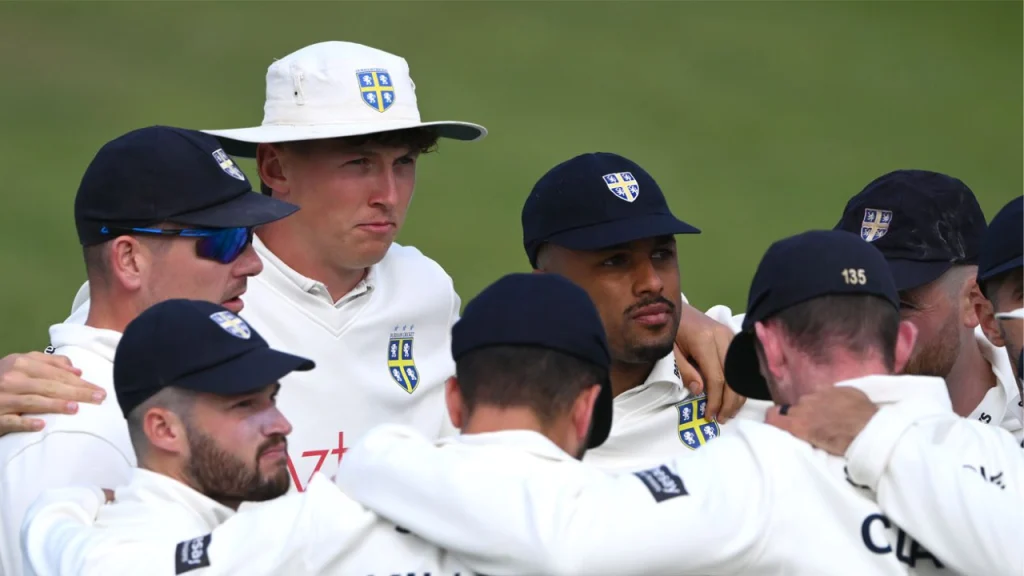
By contrast, “Premiership Rugby had three different clubs disappear in less than a year,” says Dyson, referring to the collapse of London Irish, Wasps and Worcester Warriors between September 2022 and June 2023.”
Survival, however, is no longer enough. The question now is whether the counties can transform themselves from summer-only cricketing institutions into diversified, year-round sports businesses.
This is where real transformation must happen.
David Brown — COO at Leonard Curtis and a former county pro — has seen three models up close, having played for Lancashire, Gloucestershire, and Glamorgan. His conclusion is blunt: “There are a number of counties that, from a purely financial standpoint, aren’t sustainable. They’ve got to become twelve-month-a-year businesses, not something that exists for three or four months of the summer.”
Andrew reinforces the same point: “In some cases, some of the bigger counties are making as much money out of non-cricket activity as they are out of cricket. That’s the business model now — concerts, events, conferences.”
The model is clear: cricket alone cannot pay for cricket. Real estate and venue operations are areas to explore to optimize non-matchday revenue – all while maintaining cost discipline.
This is where the new Hundred money intersects with reality: counties must use it to reduce operational pressure, not increase it. Money spent well buys sustainability. Money spent poorly buys temporary comfort at best, and overhang at worst.
Haves, Have-Nots, and Competitive Balance
If there is a challenge for the county cricket system to be aware of even after the capital infusion is processed and deployed, it is that some counties will always be inherently larger and more profitable than others – and the larger ones may get more out of their Hundred sale capital, leaving the smaller counties potentially to struggle again to compete. That was a large part of what led to the financial challenges to begin with.
As Dyson explains, even with the new funds: “Some smaller counties could become more worried they’re just going to be left behind within the current structure. You can almost see it already with the 50-over One-Day Cup, which is being played literally in the shadows of The Hundred.
“It’s in danger of becoming a two-tier system — the wealthier counties and everyone else. And this new money, it’s not a permanent revenue stream. A lot of it could go very quickly.”
Yet Andrew points out that disparity is not new: “I don’t think that’s ever changed. The sports model in Europe has always been the same — we don’t have that parity you see in the U.S. Smaller clubs can find different ways to compete.”
“Sussex are not the same business as Surrey,” Andrew continues. “It doesn’t mean you can’t win on the pitch. You’ve got to find different ways of doing it as other sports do.”
Counties compete through coaching, recruitment, player development, and building pathways and local talent pools.
“Keep producing players,” Andrew stresses, speaking from his own experience of running a smaller county.
The £520 million injection gives smaller counties breathing room, but it does not erase structural differences. The question is whether it can support sustainable pathways, not equalize balance sheets.
Purpose, Identity, and Governance
All of this actually points to a deeper question about the raison d’être of the county system in today’s global cricket landscape.
According to Andrew: “There’s more to the purpose of being a sports club than actually winning. Nobody’s more competitive than I am – but counties have a bigger role to play in growing the game for both men and women.”
That purpose has never been more valuable — nor more tested.
The real test of the reset is whether counties can evolve without eroding the identity that makes them meaningful.
Every England debutant still begins in county colours. Every pathway still flows through county academies. For all the pressure on the county game, it remains the most critical element of the English cricket ecosystem.
“All parts of the country have always produced players,” says Andrew. “Leicestershire, Durham, Somerset, Worcestershire – it doesn’t matter the county size – that’s the great strength of English cricket. Our stars have come from every corner of England and Wales.”
And they’ve all come through the county system.
This, then, is the heart of the matter: if the reset fails, England’s international pipeline fails.
If the reset succeeds, the Championship remains the backbone of the national game.
The stakes could not be higher.
What Comes Next — and What This Series Will Explore
The £520 million windfall will not solve all of English cricket’s challenges.
It can, however, create the conditions for solutions — if counties spend it wisely, and if the ECB enforces the discipline Andrew has outlined.
Every county is different. Each has its own context, and faces its own challenges. No two playbooks will – or should – be the same.
In the coming days, cricexec will examine in depth how several individual counties are approaching this opportunity.
We will take a deep dive into each situation – their unique contexts and challenges, and how they plan to make use (or not) of this windfall.
Separately, we will explore the perspectives of other crucial stakeholders: the players’ representatives, as well as the leaders driving the women’s game – and how that all figures into the plans for deploying the capital.
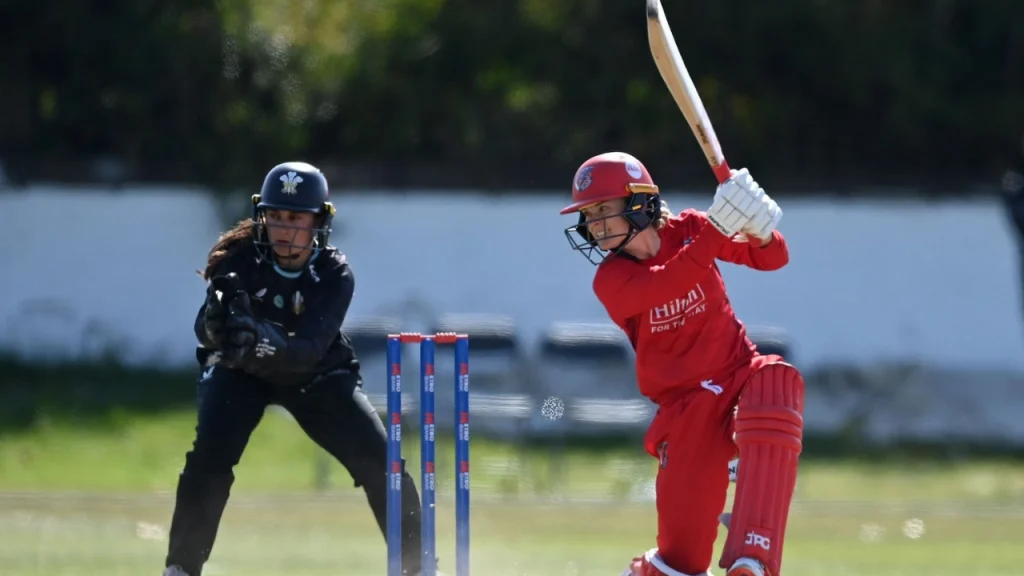
Taken as a whole, we hope to capture some of the magnitude and richness of the moment across the ecosystem.
The Decade That Will Define the Next Century
One common theme is reiterated by all the top county cricket executives we speak to: the game is bigger than they are. They want to do the right thing in this critical moment for the generations that come.
As Andrew says, today’s leaders are merely “the current guardians of the game – because that’s all we are, we’re just passing through. The history of English cricket has been written since 1890 and somebody will write the history of English cricket in the 2020s and determine whether it was well run or not. But collectively, we have agreed that this money has to be looked after, it has to be well invested, well spent.”
County cricket has endured world wars, recessions, and revolutions in sport. It has survived where others have not.
But the game has come to a crossroads it cannot bypass.
Can the county system modernize while staying true to its identity?
Can The Hundred coexist with the Championship rather than eclipse it?
Can member-owned governance adapt to professional-era economics?
Can the counties transform into 12-month businesses without losing their soul?
Will the £520 million reshape structures — or simply tide them over?
These are not rhetorical questions. They are existential ones.
The money will not come again.
The next few years will determine whether the foundations of English cricket grow stronger — or simply older.
The reset has begun.