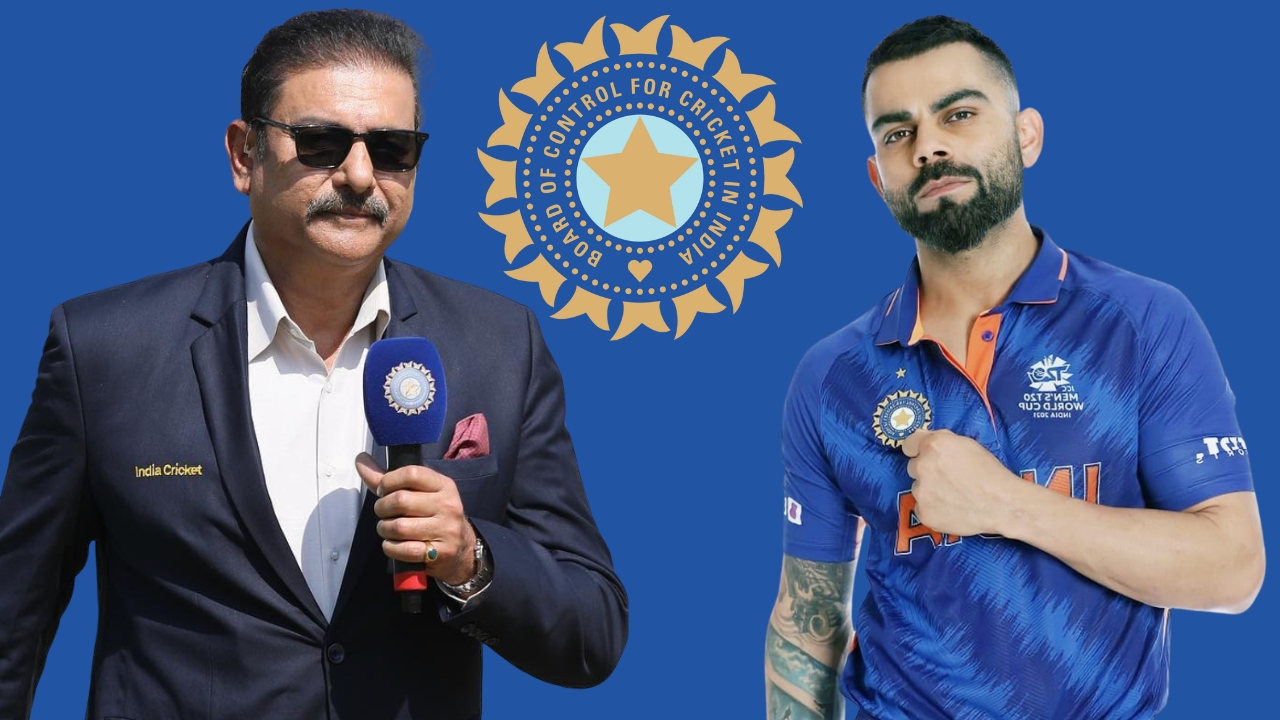
Former India head coach Ravi Shastri has publicly criticized the Board of Control for Cricket in India (BCCI) for its handling of Virat Kohli’s sudden retirement from Test cricket — a decision that has taken much of the cricket world by surprise and left one of his closest allies in the sport emotional and disappointed.
In an unusually emotional moment on Wednesday, speaking live on Sony Sports ahead of India’s five-match Test series against England, Shastri didn’t hold back as he reflected on the abrupt nature of Kohli’s departure from red-ball cricket, questioning the lack of communication and the missed opportunity to give India’s most successful Test captain a more fitting farewell.
“I feel sad that he’s gone the way he has — suddenly. I think it could have been handled better, maybe with more communication,” said Shastri on Sony Sports.
Kohli’s Test legacy: More than just stats
Shastri, who shared a deep coach-captain bond with Kohli between 2017 and 2021, has been a long-time admirer of the Delhi batter’s influence on the longest format of the game. From his aggressive leadership overseas to his commitment to Test cricket at a time when T20 dominance was reshaping priorities, Kohli earned acclaim not just for his stats but his stature as a global ambassador for the format.
“Virat has announced his retirement from Test matches, which is sad, you know, because he’s a great player. A great player. It’s only when you go that people truly realise how big a player you were. Stats don’t do justice — it’s about the way he carried himself, especially as an ambassador for Test match cricket, particularly overseas. The way he played at Lord’s, and how his team turned things around — it was unreal. And I’m glad I was a part of it.”
Kohli finishes his career with 9,230 runs in 123 Tests, including 30 centuries, placing him fourth on India’s all-time list of Test run-scorers. His leadership record — 40 wins from 68 matches — also makes him the most successful Indian captain in Test history.
A farewell that didn’t fit the stature
Kohli’s retirement announcement came just five days after Rohit Sharma also stepped away from the format, prompting the BCCI to name 24-year-old Shubman Gill as the new Test captain for the upcoming England series beginning June 20.
But behind the scenes, it appears Kohli had not made the decision lightly. According to Shastri, Kohli confided in him back in April about his intentions, revealing he was feeling “mentally fried” — a rare glimpse into the mental and emotional burden carried by elite athletes.
Still, Shastri believes there was a clear path to keep Kohli engaged — and even leading — the Test side.
“If I had anything to do with it, I would’ve made him captain straight after Australia.”
That remark alludes to India’s most recent Border-Gavaskar Trophy campaign, which many insiders viewed as a defining moment. Despite speculation that Kohli was interested in returning to the leadership role after a spate of Test losses under Rohit, the BCCI did not revisit the idea.
A leadership vacuum and a missed opportunity
After stepping down from the Test captaincy in early 2022 following India’s tour of South Africa, Kohli had largely kept his cards close to his chest. But with both him and Rohit exiting the Test arena in quick succession, and no public acknowledgment or tribute from the board about Kohli’s impact, Shastri’s disappointment resonates with many.
His remarks suggest a belief that the BCCI failed to facilitate a smoother transition or offer the kind of sendoff that players of Kohli’s stature typically receive — especially one who revitalized India’s overseas Test ambitions and carried the format with pride during his tenure.
The post-Kohli era begins
As India moves into a new Test era under Shubman Gill’s leadership, the absence of both Kohli and Rohit marks a generational shift. But the circumstances around Kohli’s exit have sparked a broader conversation in Indian cricket circles — not just about legacy, but about how the game treats its icons on their way out.
In Shastri’s words, Kohli’s impact will only be fully appreciated now that he’s gone — a poignant reminder that even the game’s giants sometimes leave without the standing ovation they deserve.