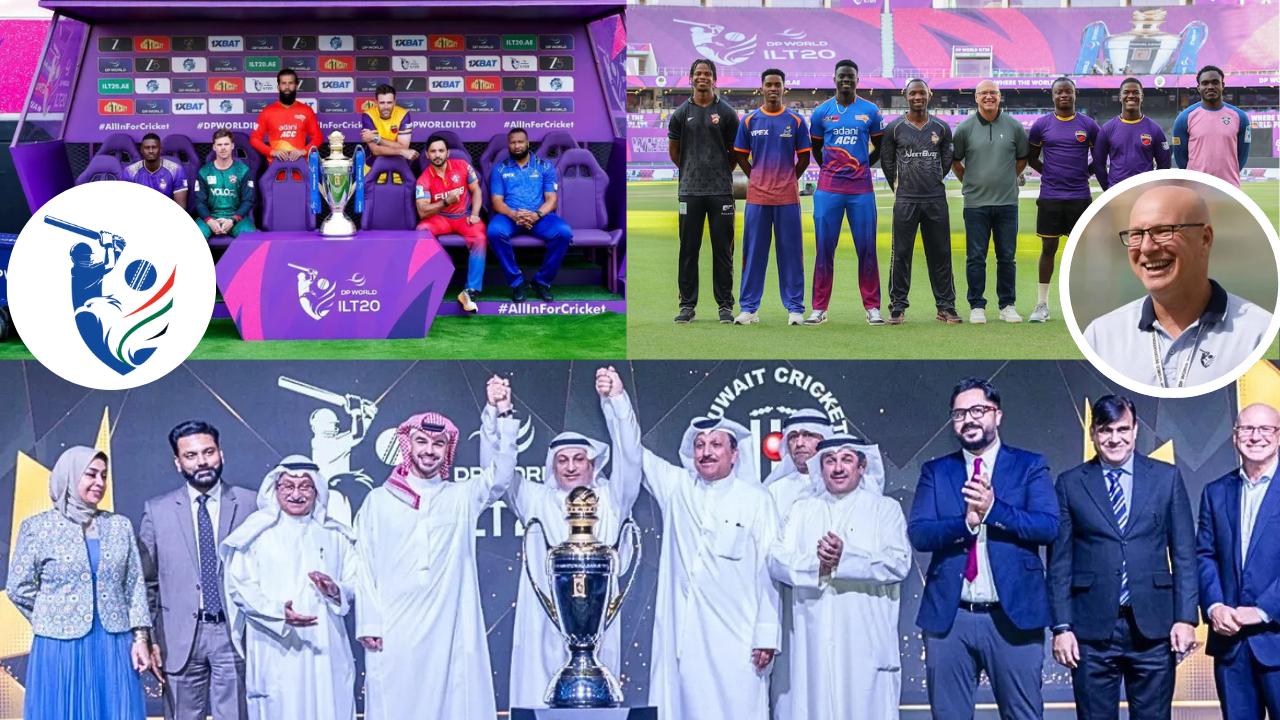
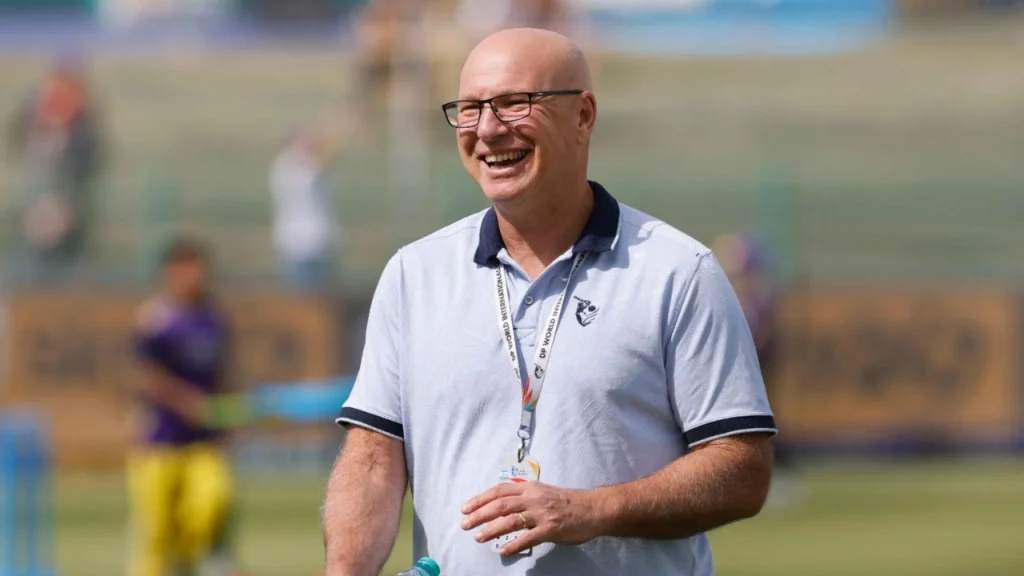
The numbers tell one story about the DP World ILT20‘s fourth season: big crowds in Dubai, broadcast deals spanning five continents, and franchise teams now backed by everyone from Reliance Industries to Avram Glazer. But David White, the tournament’s CEO since September 2023, is telling a different one — about the deliberate choices that turned a fledgling Associate-nation league into one of the sport’s most compelling competitions in just four years.
“What a great job the team did prior to my arrival,” White said, speaking exclusively to cricexec. “An associate country setting up a professional league was a tremendous achievement, and not easy.” When he arrived from New Zealand Cricket, where he’d served as CEO for more than a decade, the ILT20 had completed its inaugural season with credibility but limited infrastructure. What White brought was a framework for scaling sustainably — one that has since reshaped the Gulf’s cricketing landscape.
The league’s expansion has been methodical. This season marked the first time players from Saudi Arabia and Kuwait entered ILT20 squads following formal partnerships announced earlier in 2025. In August, the third edition of the DP World ILT20 Development Tournament drew the highest standard of play yet, feeding talent directly into the main event. And across the Emirates, girls’ participation in cricket surged from barely a thousand in White’s first year to more than 5,000 today — a fivefold increase driven in part by the Emirates Cricket Board and the league’s community outreach.
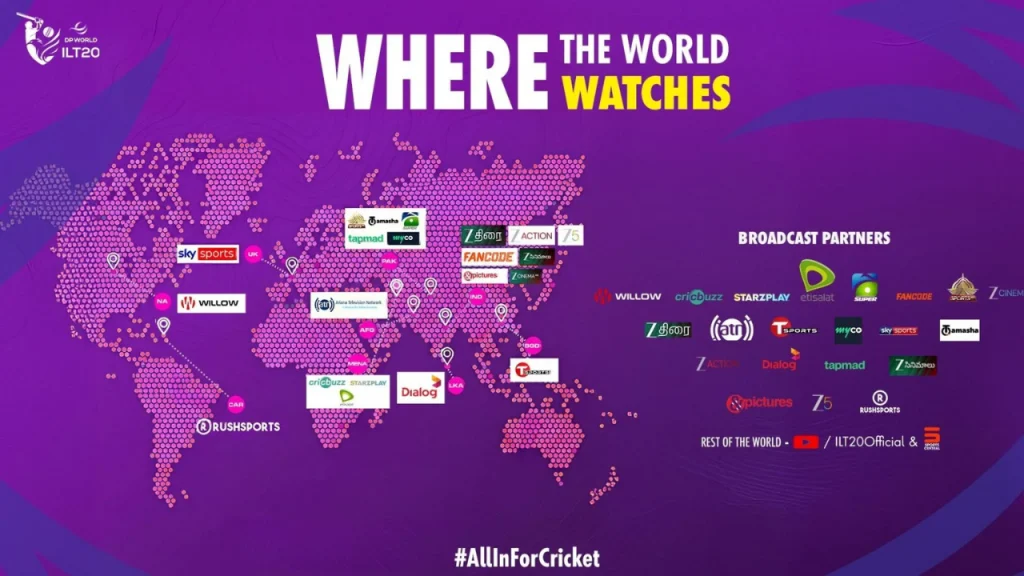
But perhaps most striking is the league’s commercial traction. Unlike many post-pandemic T20 ventures that struggled for years to find sponsors or broadcast partners, the ILT20 secured major deals early. DP World signed as title sponsor before White’s tenure. The broadcast footprint now includes England, Australia, New Zealand, South Africa, America, Pakistan, and Bangladesh, plus India through Zee’s multi-platform reach. White credits the region’s infrastructure and wealth, but also its untapped potential. “The region has tremendous wealth,” he said. “The majority of ICC sponsors come from here.”
From Wellington to the Emirates
White’s journey to the ILT20 mirrors the league’s own evolution — from traditional cricket governance to the cutting edge of franchise sport. A former opening batsman who played two Tests for New Zealand in 1990, White spent the better part of three decades in sports administration, first with rugby unions in Auckland and Wellington, then as CEO of New Zealand Cricket from 2012 to 2023. His tenure in Wellington coincided with the Hurricanes’ rise in Super Rugby. His years at NZC saw the Black Caps reach multiple ICC finals and the board navigate the complexities of hosting a World Cup and managing player contracts in the IPL era.
That breadth of experience proved essential when he joined the ILT20. “It was really attractive for me to come here and carry on the good work that they’d achieved in the first year,” White said. But beyond logistics and broadcast negotiations, White saw something broader: a chance to develop cricket infrastructure across an entire region while proving that franchise leagues could thrive outside cricket’s traditional power bases.
The Emirates Cricket Board‘s support has been foundational, and White has also leaned into the league’s UAE roots. His first priority was clear: establish high-performance pathways for UAE and regional players. “I saw a great opportunity for the UAE to develop community cricket and to use ILT20 as a catalyst for that, both boys and girls,” he said. The results have been tangible. Girls’ cricket participation jumped from over a thousand in his first year to more than 5,000 today. The UAE secondary school competition, dormant for eight years, was reintroduced. And the development tournament, now in its third year, has become the primary feeder system for the main league.
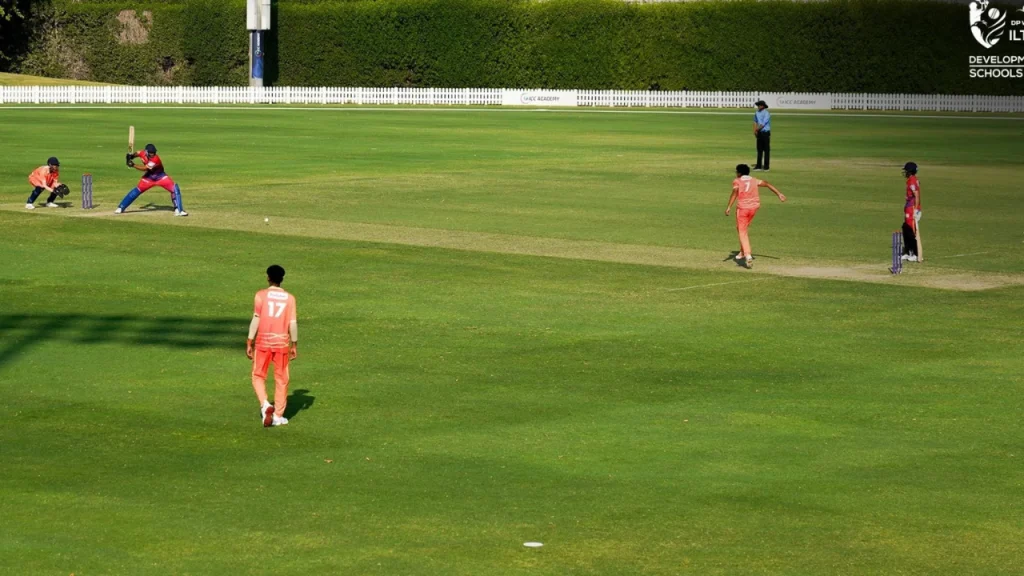
“The development tournament is incredibly competitive,” White said. “The standard every year has gone up and up and up.” The August 2025 edition featured six franchise-affiliated youth teams, with standout performers earning spots in the Season 4 player auction. For UAE cricketers, the pathway is now clear: excel in school competitions, prove yourself in the development tournament, and earn a contract with a franchise where you’ll train alongside international stars.
The regional expansion: Saudi Arabia, Kuwait, and beyond
The ILT20’s ambition extends well beyond the Emirates. In September 2025, the league announced a strategic partnership with the Saudi Arabian Cricket Federation, sanctioning the ILT20 to host matches in the Kingdom as part of future seasons. Each Season 4 franchise was required to sign at least one Saudi player. In June, a similar agreement was reached with the Kuwait Cricket Board, leading to the first DP World ILT20 Development Tournament in Kuwait and the inclusion of Kuwaiti players in franchise squads.
White sees these partnerships as essential to the league’s long-term vision. “The Gulf region is one of the big untapped markets for cricket,” he said. “People talk about America, but the potential here is huge.” The demographics support his optimism. India’s population alone represents 18% of the global total, and the diaspora across the Gulf is substantial, passionate, and economically powerful. “Eighteen percent of the world’s population is Indian, and they love cricket,” White noted. “It’s a natural market — fans, players, and economically.”
But the strategy isn’t purely mercenary. White insists that it is deep and multi-dimensional: “for us, the Saudi partnership is about grassroots development, infrastructure, and high-performance programs — fundamentally helping grow the game,” he said. “We’ve gone in at the grassroots level — very simple, very fundamental — helping them develop the game.” The long-term goal is ambitious: transform the ILT20 from a UAE-centered competition into a Gulf-wide league with teams based in multiple countries.
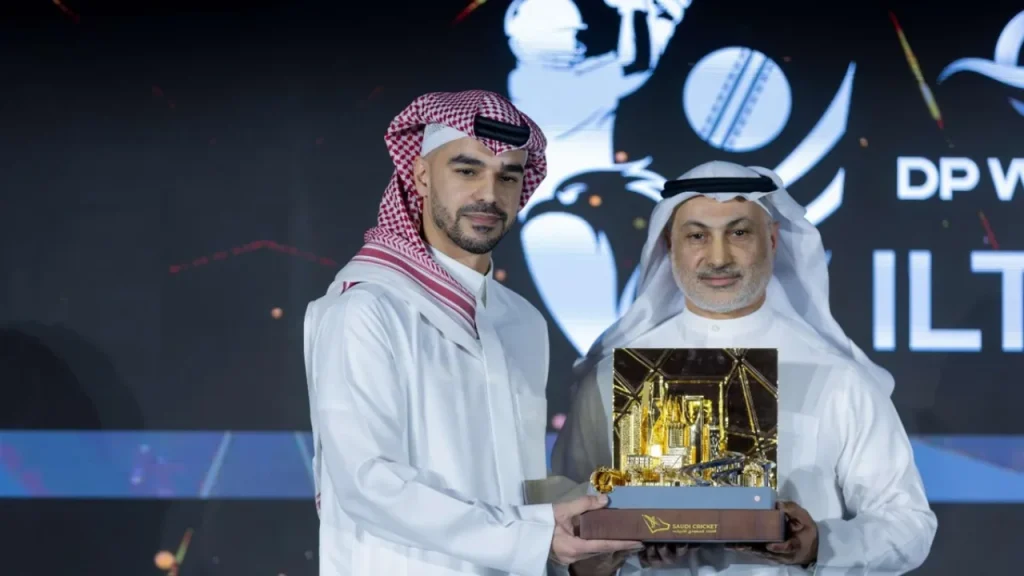
“My personal view is that the future of the league is not just a UAE league — it’s a Gulf region league,” White said. “This is one of the regions with the biggest potential for the growth of cricket in the world — player-wise, high-performance-wise, and economically.”
Building local stars in a global league
One of the ILT20’s most distinctive features is its player composition rules. Unlike most T20 leagues, which cap overseas players at four or five per team, the ILT20 allows up to eight international players in the starting XI. That flexibility attracts marquee names — this season’s rosters include Phil Salt, Kieron Pollard, Nicholas Pooran, and Sam Curran.
At the same time, the league has overall squad requirements: a minimum of 11 players from ICC Full Member nations, four from the UAE, one each from Kuwait and Saudi Arabia, and two from other Associate Member countries. This keeps the league’s focus on local player development.
White argues the model works precisely because it combines star power with deliberate pathways for UAE and regional talent. “The big one is high performance — for UAE players to train and play in a high-performance environment with world-class coaches and world-class players,” he said. “That gives UAE players a real sense of direction, and we’re seeing players really coming through now.”
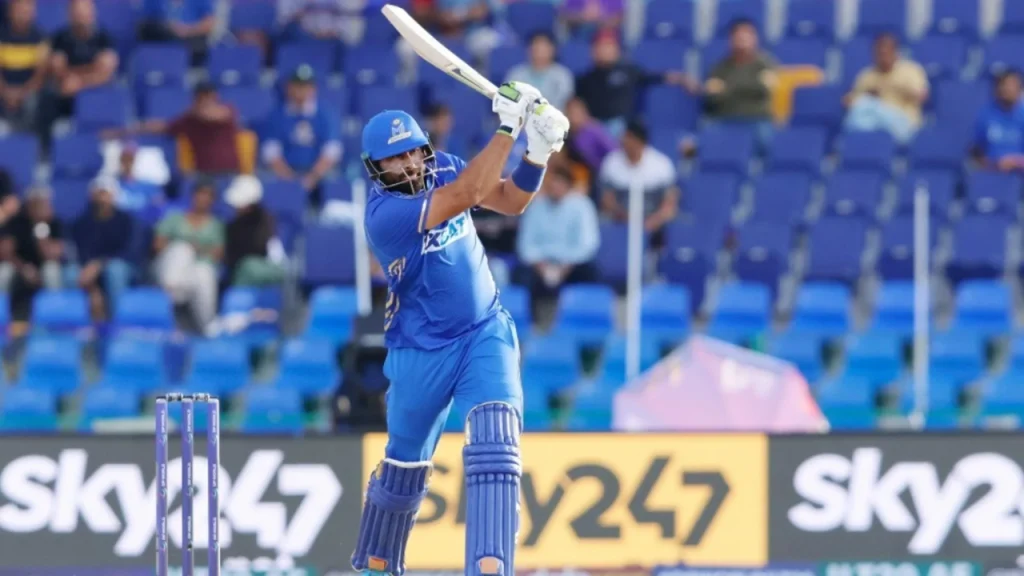
The numbers bear this out. Desert Vipers’ Khuzaima Tanveer emerged as one of the tournament’s leading wicket-takers this season, finishing with 13 wickets and earning widespread praise for his pace and variations. MI Emirates’ Muhammad Waseem, one of the tournament’s leading run-scorers for the fourth consecutive season, has become a fixture of UAE’s national setup. Gulf Giants’ Aayan Khan became the first UAE player to win Player of the Match in Season 4.
The inclusion of African players through the DP World ILT20 Player Development Initiative further broadens the league’s impact. Seven emerging cricketers from Botswana, Kenya, Nigeria, Rwanda, Sierra Leone, Tanzania, and Uganda joined franchise setups this season as net bowlers, gaining exposure to elite training and match-day preparations. “One of the other success stories is having seven young African players come in as net bowlers — the standard has been really good,” White said. “As an associate country, we see it as our role to help develop associate cricket as well.”
The ownership advantage
The ILT20’s ownership structure gives it unusual advantages. Three franchises — MI Emirates, Abu Dhabi Knight Riders, and Dubai Capitals — are backed by IPL owners (Reliance Industries, Kolkata Knight Riders, and GMR Group, respectively). That connection brings credibility, broadcast leverage, and operational expertise. But the other three — Desert Vipers (Lancer Capital, chaired by Avram Glazer), Gulf Giants (Adani Sportsline), and Sharjah Warriorz (Capri Global) — represent major global capital with varied sports and business portfolios.
“It’s tremendous to have the breadth of knowledge and experience that IPL teams bring — big brands have been very powerful for us,” White said. But he’s equally impressed by the non-IPL owners. “The Desert Vipers probably do more in the community than any franchise. It’s a great melting pot of experience.” That blend of cricketing expertise and global sports sophistication has helped the ILT20 professionalize rapidly, from player recruitment to marketing activations.
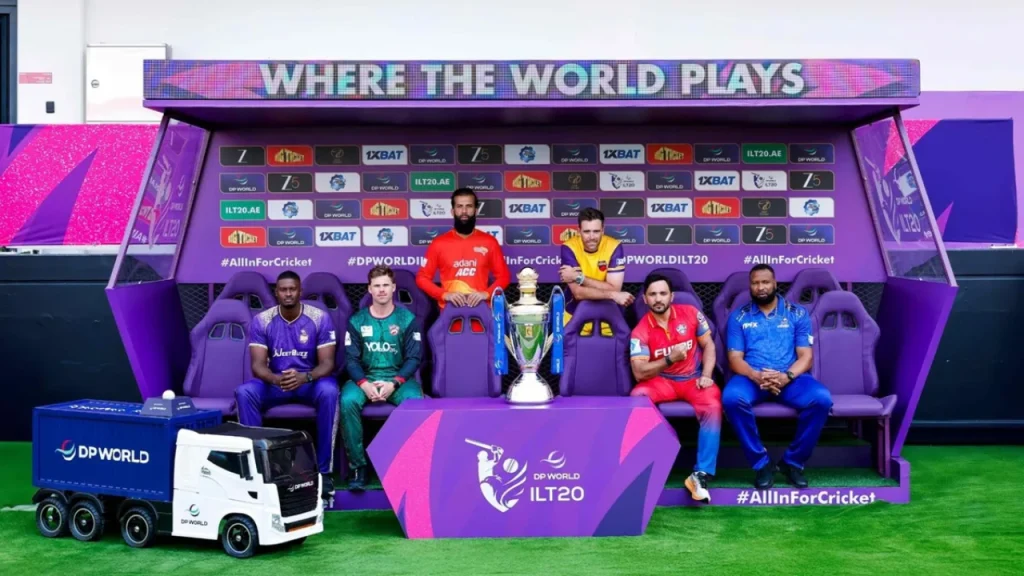
The league’s first-ever player auction, held in October 2025, marked another maturation step. Previously, franchises signed players through a draft system. The auction created more competitive bidding, broader player pools, and transparent market values. Each franchise was allocated a squad budget ranging from $1.5 million to $2 million, with up to $800,000 available for auction spending. The format worked: multiple players from Saudi Arabia and Kuwait earned contracts, and several UAE cricketers commanded six-figure sums.
Why the ILT20 works: infrastructure, timing, and access
Ask White why the ILT20 succeeded where other leagues have struggled, and he points to three factors: infrastructure, timing, and player experience. The UAE’s cricket facilities — Dubai International Stadium, Abu Dhabi’s Sheikh Zayed Stadium, and Sharjah Cricket Stadium — are world-class, well-maintained, and accessible. “The quality of infrastructure here is outstanding — Dubai, Abu Dhabi, Sharjah — tremendous facilities,” White said.
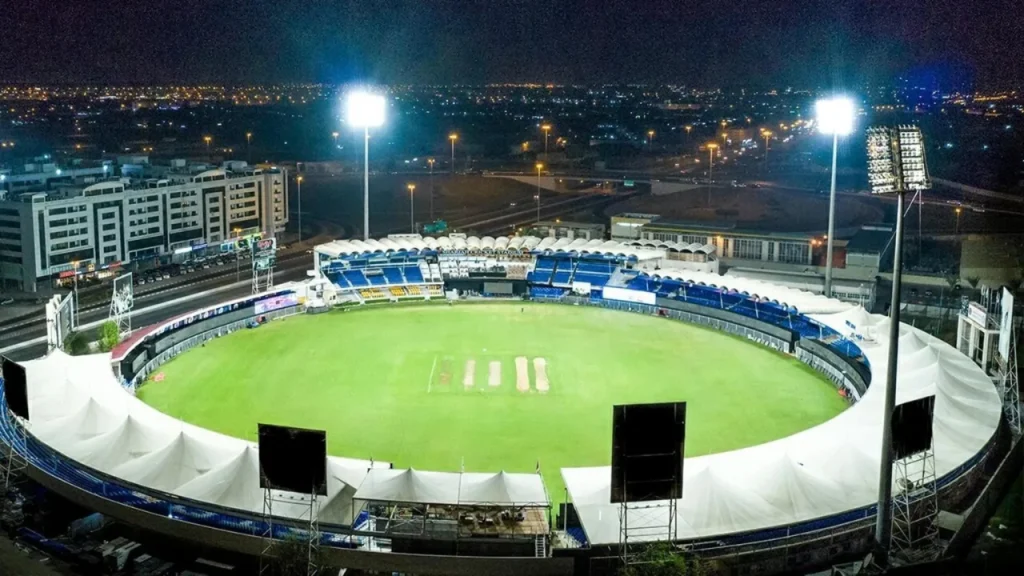
The timing of the tournament, staged in December and January, offers ideal playing conditions and minimal calendar conflicts. And unlike leagues where teams fly across continents between matches, ILT20 franchises stay in one hotel and travel by bus. “Players love that they stay in one hotel, don’t fly anywhere, and can bring their families,” White said. “It’s a really attractive environment.” That simplicity reduces costs, minimizes player fatigue, and creates a festival atmosphere that appeals to families and casual fans.
The broadcast strategy has been similarly pragmatic. The league’s partnership with Zee Entertainment in India was secured before White arrived, but he has since expanded global reach. “We’re now on all the major cricket broadcast networks around the world — England, Australia, New Zealand, South Africa, America, Pakistan,” White said. “Our strategy is quality production, wide reach, and outstanding facilities — that’s really important for our commercial partners.”
Quality production matters. The ILT20 invests heavily in broadcast standards, employing the same cameras, graphics packages, and commentary setups used in premier global leagues. That polish signals legitimacy to sponsors, broadcasters, and fans. Combined with the league’s digital presence and in-stadium experience, the ILT20 has positioned itself as destination cricket — not just a secondary tournament, but a marquee event in the T20 calendar.
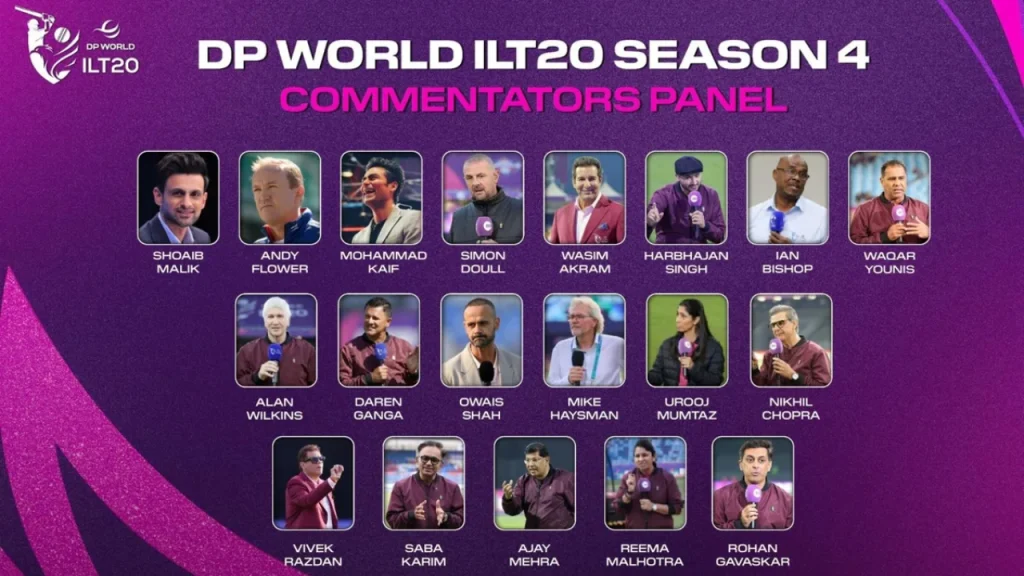
To top it off, the ILT20 had an all-star cast of commentators, including Ian Bishop, Simon Doull, Dinesh Karthik, Muhammad Kaif, Wasim Akram, Waqar Younis, Shoaib Malik, Harbhajan Singh, Alan Wilkins, Saba Karim, Urooj Mumtaz and others.
The franchise league era and cricket’s future
White sees the ILT20 as part of a broader transformation in cricket’s structure. “It’s my personal opinion that cricket is going to look much more like the football model, where players play for franchises across leagues,” he said. The proliferation of T20 leagues — from the IPL and Big Bash to the CPL, PSL, and now the ILT20 — suggests cricket is moving toward a franchise-dominated ecosystem where players sign with multiple teams across different competitions.
“Leagues are going to be a big part of the future of cricket — there’s no question about that,” White said. He credits the IPL’s explosion 17 years ago with reshaping the sport’s economics. “Players have never had it better in terms of remuneration, and they’ve got to thank the explosion of the IPL for that.” But he’s also mindful of the challenges: how does international cricket fit alongside franchise commitments? How do Test matches, the sport’s longest format, survive in a world where T20 leagues proliferate?
White doesn’t claim to have all the answers, but he’s confident the ILT20 can coexist with international cricket. The tournament’s December-January window avoids major ICC events and bilateral series. Its relatively short duration — 34 matches across five weeks — minimizes player burnout. And its commitment to developing regional talent ensures that national teams benefit from the league’s existence, rather than being undermined by it.
“The UAE team have increased their depth, they now qualify for the Asia Cup, and they have the ability to beat any team on the day,” White said, pointing to the national side’s recent successes. “What’s exciting about the Asia Cup is that Afghanistan, Pakistan, and UAE have had a lot of experience playing in the DP World ILT20 in these conditions, which will certainly help them.”
Building something bigger
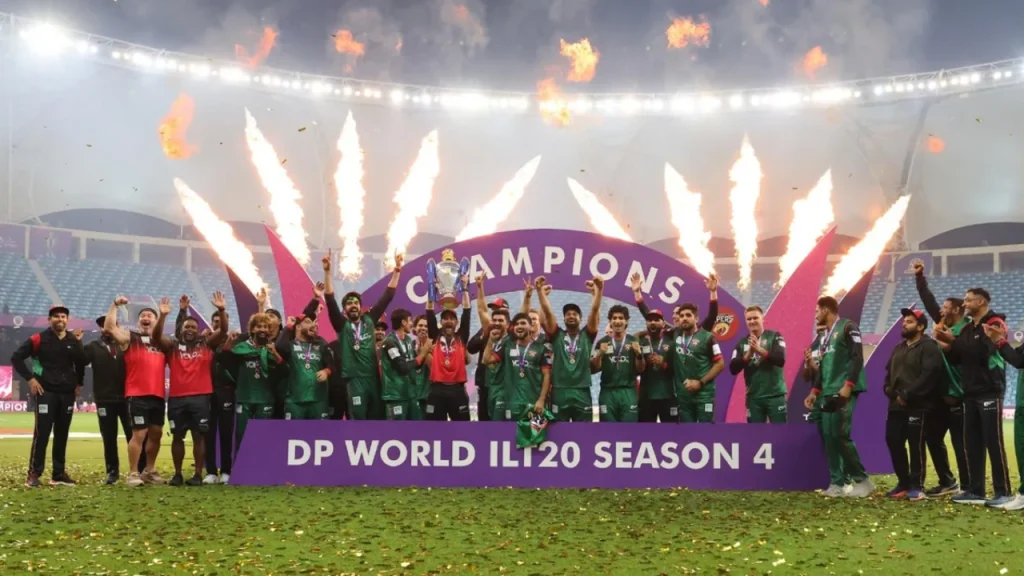
The Desert Vipers’ 46-run victory over MI Emirates in the Season 4 final, played before a capacity crowd at Dubai International Stadium, capped a season that felt like a coming-of-age. The tournament’s broadcast reach extended to more than 200 million viewers globally. Attendance figures surged. Social media engagement broke league records. And across the Gulf, conversations about professional cricket shifted from “if” to “when.”
For White, this success is validation but not an endpoint. The next phase involves hosting matches in Saudi Arabia and Kuwait, expanding the development tournament, and deepening community engagement across the region. “We see a big part of our role as helping develop cricket in the Gulf region through DP World ILT20,” he said. “DP World ILT20 is going to be a catalyst to help grow cricket within the Gulf region.”
That vision — of a league that spans borders, nurtures local talent, and competes on the global stage — is what drew White from New Zealand Cricket to the Emirates in the first place. It’s also what makes the ILT20 more than just another franchise league. It’s a proof of concept: that an associate nation, with the right partners and the right strategy, can build something that rivals the world’s best.
“It’s incredible that cricket has been able to transform itself and generate this kind of revenue,” White said. “It’s amazing.”
Four seasons in, the ILT20’s transformation is far from complete. But for David White and the league’s leadership team, the blueprint is clear — and the region’s cricketing future looks brighter than ever.