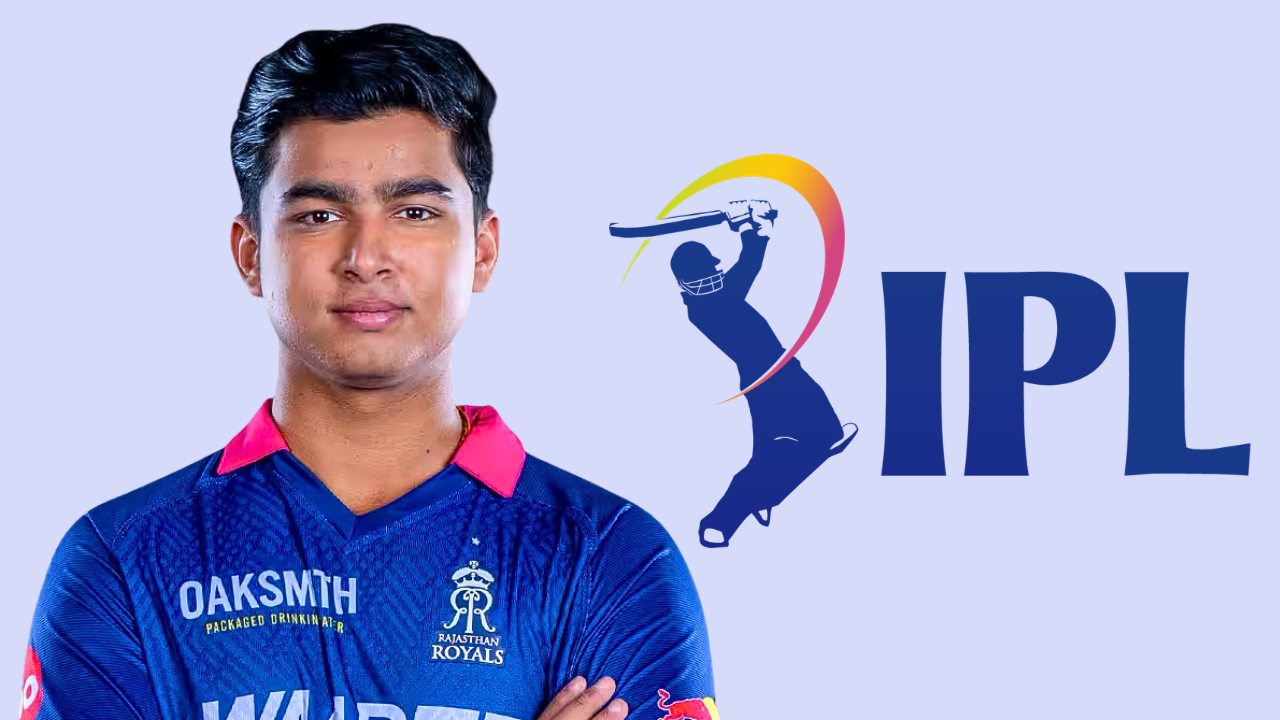
Vaibhav Sooryavanshi’s breakout IPL 2026 season has triggered renewed scrutiny around the league’s Impact Player rule, with former India batter Sanjay Manjrekar arguing that the system risks preventing young cricketers from developing — and being judged — as complete players. The 15-year-old Rajasthan Royals batter has scored 440 runs in 11 innings this season, emerging as one of the tournament’s biggest stories, but his deployment largely as a batting-only substitute has intensified debate over whether the rule is distorting long-term player growth.
The discussion has expanded beyond Sooryavanshi’s performances with concerns growing around how the rule allows players to contribute in only one phase of a match while avoiding the pressures and responsibilities traditionally associated with top-level cricket. Rajasthan Royals have frequently used the teenager as an Impact Player, limiting his involvement in the field during matches.
Questions over complete player development
Manjrekar raised concerns over the wider implications of the system while speaking on the Sportstar Insight Edge Podcast. “We respected players like Inzamam-ul-Haq for their batting, but we also saw their fielding and other aspects of their game. That helped people properly assess a player. Right now, someone can come in, face a few balls, display their hitting ability, and then disappear without showing the other side of their cricket.”
The former India batter also questioned whether Sooryavanshi’s current role allows the teenager to develop beyond his batting strengths. “I’m increasingly feeling that the Impact Player rule should be reconsidered for this reason as well. Is this all we want to see from Vaibhav Sooryavanshi, just one side of his game? A cricketer is someone who bats well and fields well too.”
Sooryavanshi has become one of the youngest players to dominate an IPL season, with his aggressive batting rapidly placing him among the most talked-about names in Indian cricket. His rise has already sparked conversations around future India selection despite him being only 15 years old.
Concerns over pressure and accountability
Manjrekar also argued that young players should experience the demands and accountability that come with fielding under pressure during elite-level matches. “We are not expecting to see all 3 dimensions of a player. But the more I think of it, it all makes sense, and you’re right, Sooryavanshi, you want to see him be on the field and see what happens and be put under pressure as well. If he is a great batter, but a slight liability in the field, I’d like to see that exploited. That is also something we have experienced as fielders when we drop a catch at the tension that comes with it, which is going to be batting and chilling. You don’t want one of the highest sort of levels of the sport to be that easy.”
When asked whether Sooryavanshi’s role as an Impact Player could hamper his development as a fielder, Manjrekar responded directly. “Absolutely.”
He continued by arguing that cricket should continue testing players across multiple disciplines rather than allowing them to specialise in only one role during matches. “And that is an issue that’s going to be there. India won the T20 World Cup despite the impact player rule being there, despite a guy like Shivam Dube not bowling at all, but still doing well in the T20 World Cup. So things are happening. But I believe that a cricketer, not somebody, will just come in and tuck, tuck, tuck, then take a break and enjoy life. I just wanted to become a little more testing for every player, not just if he is a good bowler, bowls his 4 overs, I’d like to see him in the field as well.”
BCCI review remains under discussion
The debate around the Impact Player rule has continued to grow throughout IPL 2026 as teams increasingly use tactical substitutions to strengthen either batting depth or bowling flexibility depending on match situations. As previously reported by cricexec, the Board of Control for Cricket in India is scheduled to review the rule after the conclusion of the 2026 season, although no mid-season changes are currently being considered.
Speaking to reporters at the BCCI headquarters earlier this month, BCCI Secretary Devajit Saikia said franchises had not formally approached the board seeking a reconsideration of the regulation. “There is no official request that we should revisit this particular Impact Player proposition. It is in the media that I sometimes read it. But if it comes from the teams, then we’ll have to take a call. But till now, no such situation has arisen.”
Wider concerns around the IPL model
Manjrekar also questioned whether the current structure risks creating an environment where players can make significant financial gains despite having limited involvement in matches. “When I saw Rohit Sharma bat in the last game, he got 22 runs in 15 balls. I mean, I’m not somebody who wants to focus too much on how much money he’s getting, but for 15 balls, he’s going to get paid the entire match fees or whatever. So when there is easy money to be made and a reward for very little effort, you’ve got to start worrying about that model because that’s never going to be a long-term, successful model.”
With the BCCI’s review scheduled after the conclusion of IPL 2026, the debate around the Impact Player rule is increasingly shifting beyond tactics and entertainment value toward broader questions around player development, skill assessment, and how young cricketers are prepared for the demands of international cricket.