The first thing the owners of the European T20 Premier League‘s fifth franchise wanted to get right was not a marquee signing or a sponsorship deal. It was a name — and, more specifically, who that name belonged to.
They had a shortlist. Rotterdam is one of the world’s great port cities, the gateway to Europe, and the early ideas leaned into that maritime identity: various names were on the table. In the end the group settled on the Dockers, and the reasoning says a great deal about how this franchise intends to operate. “The blue-collar people, the hardworking guys, are the ones who made Rotterdam,” explains Madhukar Shree, the franchise’s Managing Partner. “We wanted to pay a tribute to them — and at the same time keep a name they could relate to.” There was a practical test, too. “Dockers, Dockers — it’s pretty easy on your tongue,” Shree says. “We want to hear those chants in the stadium when we play!”
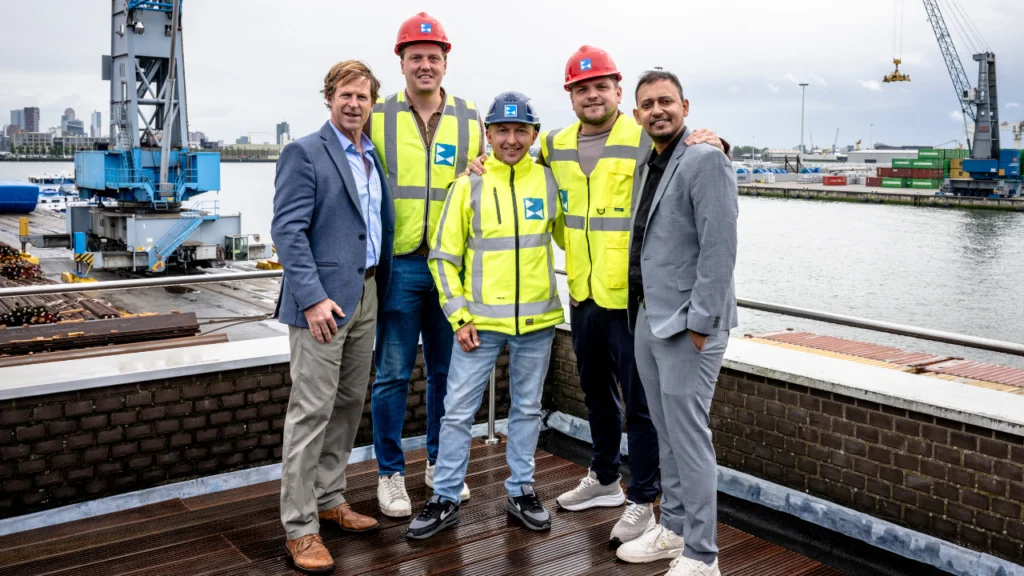
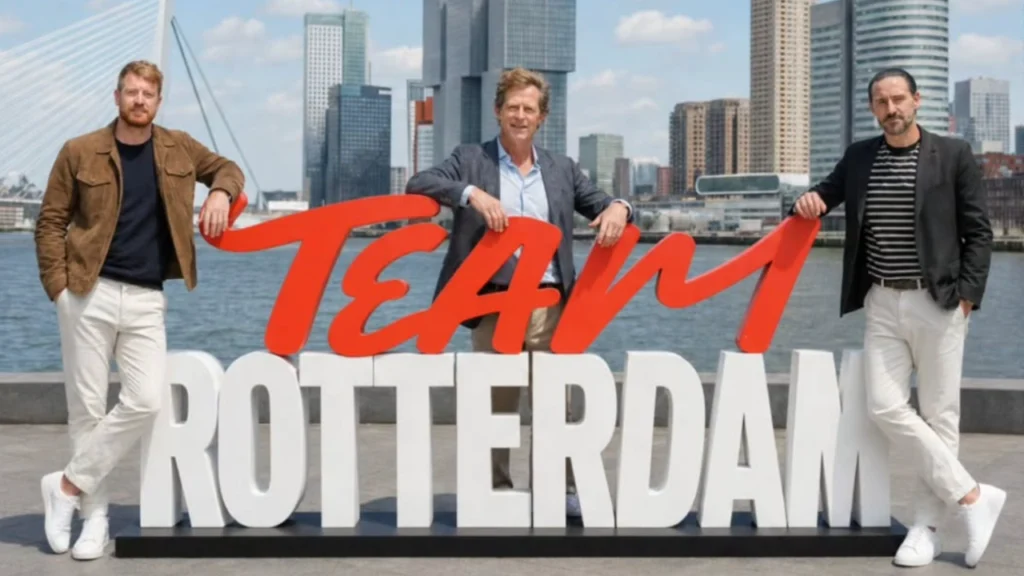
It is a small detail that captures a large ambition. The Rotterdam Dockers — known until now simply as Team Rotterdam — are owned by some of the most famous names in the modern game. But the operating thesis behind the franchise is almost the opposite of a celebrity import. The owners are not trying to parachute South African stardom into the Netherlands and hope a crowd follows. They are trying to build something a Dutch city will, eventually, claim as its own.
A South African team in a Dutch city
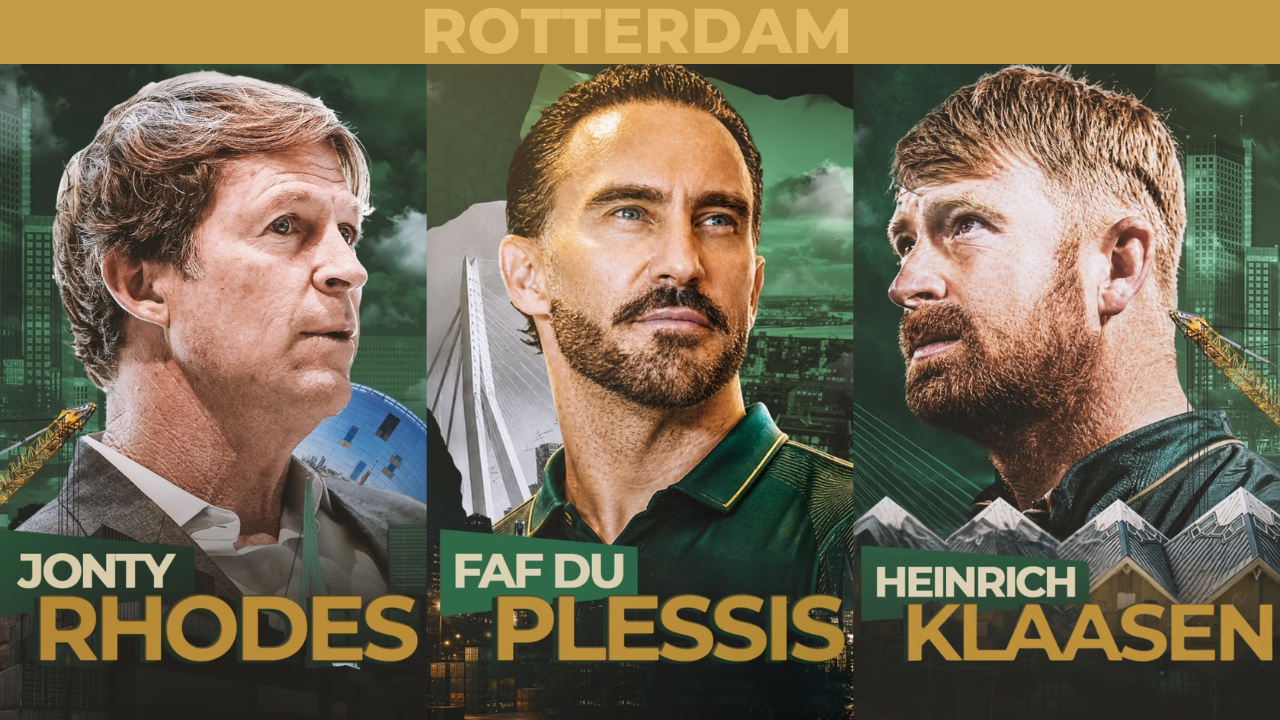
The ownership group reads like a who’s who of South African cricket. Du Plessis, the former Proteas captain who has gone on to captain franchise teams on nearly every circuit in the world. Rhodes, still the sport’s eternal benchmark for fielding and a former international coach. Klaasen, the explosive wicketkeeper-batter who walked away from international cricket at the peak of his powers and is, by any measure, one of the most destructive T20 players alive. Add Shree, an Indian operator who has worked across the IPL, the CPL, the ILT20 and the Women’s Premier League, and the result is a franchise with a global powerhouse group of owners — but based, deliberately, in a European port.
The owners are candid that the combination is unusual. “We are more like an Indo-African,” Shree says of the ownership’s character. Rhodes spends five to six months of the year living and working in India; his daughter is named India. The capital backing the venture includes Indian investors. And yet the entire project is anchored in Rotterdam, a city Shree visited for the first time only recently and came away convinced by. “Rotterdam is a beautiful city. It has a mix of everything — the infrastructure, the water bodies, corporates, sport and culture,” he says. “It’s a complete city.”
For Klaasen, the choice of city was the easy part. “Why we chose Rotterdam? It felt natural,” he says. “It’s a city that represents diversity, energy, and the growth values we want to reflect in our team. It’s a place where sports is evolving, and we see a real opportunity to connect with the fans and build something unique from the ground up.” He frames the franchise’s character in the city’s own image: “Rotterdam is a city defined by ambition, and that’s exactly the mindset we want this franchise to embody.”
There is a competitive edge to the South African flavour, too. When the ETPL’s earlier franchises were unveiled — Steve Waugh and Olympic hockey great Jamie Dwyer in Amsterdam, Glenn Maxwell in Belfast, Kyle Mills and Nathan McCullum in Edinburgh — the ownership map tilted heavily Antipodean. Rhodes saw an opening. “When we saw the Aussies and the New Zealanders involved in the other franchises, we went, ‘Okay — here’s an opportunity where, within a tournament, we can have our own tournament,'” he says, invoking the Southern Hemisphere’s long-running rivalry. With Rahul Dravid since taking Dublin and Matthew Hayden joining Glasgow, the league’s competitive geography now maps neatly onto its ownership — and the Dockers carry the Indo – South African standard into Europe.
The architect, and the conversation that started it
If the players give the Dockers their visibility, Shree gives the franchise its engine. He is the business lead, the Managing Partner, and the person who assembled the group in the first place — and his path into the league is a quietly telling one.
A decade-plus into a career spent in the back offices of sport rather than on its fields, Shree has built and run commercial and cricket operations across an unusually broad set of properties: nine seasons with Punjab Kings in the IPL, a stint with the CPL’s Saint Lucia Kings, sponsorship work at Gujarat Titans, team operations for the Sharjah Warriorz in the ILT20 and the UP Warriorz in the WPL, plus tennis, kabaddi and motorsport ventures besides. He had also, years earlier, been lined up to run an earlier, ill-fated attempt at a Rotterdam team before that project stalled. “Rotterdam has chosen me,” he jokes, “not the other way around.”
The thread that brought him to the ETPL, as it happens, ran through cricexec. After this publication profiled the ETPL last October 2025, before any franchise conversations had started, let alone deals being concluded, Shree reached out to this author, who introduced him to the ETPL’s founders; from there, the conversations about taking a franchise began. Shree spoke with the league about its vision and its economics, brainstormed with the people in his network, and ultimately submitted an expression of interest. “Everything seemed pretty positive, and it seemed like a big opportunity,” he says. “When you look across the world right now and ask where the next set of big leagues is coming up, I would say it’s Europe.”
What he needed next were partners — and the first call he made was to a man he had met under pressure. Shree and Rhodes first crossed paths during the pandemic-disrupted 2020 IPL, where Shree was from the commercial team for the franchise Rhodes was coaching. “Raising and managing sponsorship in that period was really tough,” Rhodes recalls, “and he and I connected really, really well.” When Shree came calling years later, there was already trust in the bank. “Given that Jonty knew me from six, seven years back, there’s a comfort there,” Shree says. “He knew that if I’m calling him about something, I would have given it a long, deep thought already.”
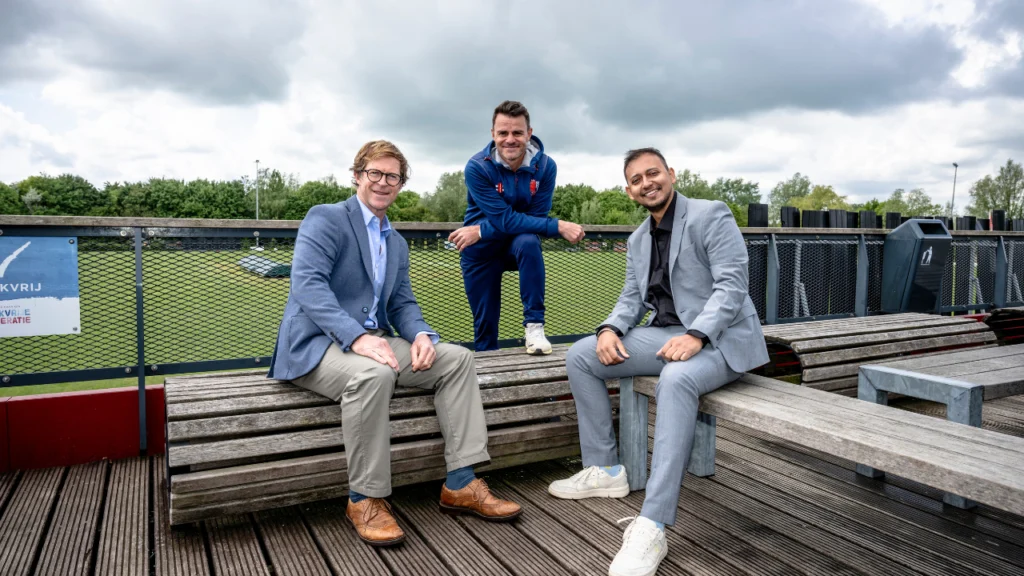
Rhodes did not take much convincing. He had recently retired from the game — “for the fifth time,” he says, ” — and he had seen, during his years as Sweden’s national coach, exactly what one person of standing could do in a country where cricket was small but the passion was outsized. “I was sold straight away,” he says. His only real question was about time horizon. “I just wanted to know: is there an exit as an owner? Do I have to get out? Can I stay in for the next 10 years or more? That is the key from our perspective.”
Building a consortium, one conversation at a time
With Rhodes aboard, the group went after the players who could anchor a roster — and found a generation of cricketers thinking hard about what comes after the playing days end.
Du Plessis was first. We barely had to make the pitch. “We’d sent him the proposal, and he just jumped on it,” Rhodes says. Du Plessis, deep into a lucrative second life on the franchise circuit, had become selective. “He said, ‘I’m now on the franchise circuit. I have to pick. I’ve got opportunities, but I need ones that tick so many boxes,'” Rhodes recounts. The Dockers ticked them: a four-week commitment, easy travel in and out of South Africa, a family-friendly window, and — for a famously meticulous dresser — creative control over the team’s look. “He gets the rights to design the gear and choose the colours,” Rhodes says, laughing. “Everything’s with intention. Nothing’s just thrown on.”
Du Plessis frames the move as a milestone. “This is my first step into team ownership, and the timing couldn’t be better, with European cricket gaining real momentum,” he says, speaking to cricexec. “Having experienced franchise leagues across the world, I see immense potential in what the ETPL is building. I’m looking forward to contributing both on and off the field, and helping shape a strong cricketing culture within our team.” He will captain the side as well as co-own it — in the room from the very first discussion. As Rhodes puts it: “Faf sat down in all the discussions. From day one he said he’s in, and he explained why.”
Klaasen needed even less persuading. “He didn’t need any other convincing,” Rhodes says. “He said, ‘I’m a circuit player, no longer playing international sport.’ And he has an opportunity he didn’t think two or three years ago would be possible.” Klaasen’s own framing is unsentimental about what this next phase represents. “For me, I’m looking forward to what’s a new chapter in my life, and it’s growing the game of cricket.” That chapter, he made clear, runs through Rotterdam. “I’m really looking forward to partnering up with Rotterdam, and we’re pushing hard to make this thing happen — to run a professional business, get the community behind us, and get the right infrastructure and the right people in place to make this a success.”
Underlying all of it is a generational shift in how cricketers think about their careers — one Rhodes watches with interest. “Seeing football, David Beckham, watching all these documentaries — it’s made a lot of cricket players wake up,” he says. “Cricket players these days are businessmen. The salaries they’re earning, they’ve got to invest their money. Business has become part of the sport.” Du Plessis, he says, treated ownership as the logical next step. “And man, has he jumped in.”
The ETPL’s economics were designed to make exactly this kind of ownership viable. Rather than chase billion-dollar conglomerates, the league deliberately courted cricketing names and built its financial architecture to match: co-founder Saurav Banerjee has described halving the franchise fee from his advisors’ recommendation and lifting the common-pool distribution to 80% in the league’s first three years, so that franchises and the league reach breakeven at roughly the same time. It is a structure that lets the people who know cricket best afford to grow alongside it — which is precisely what the Dockers’ owners intend to do.
Stars who do the work
The star wattage is real, and the owners are not shy about its value. But what has struck Rhodes is how much of the unglamorous work his fellow owners actually want to do.
He has, by his own admission, learned to stay in his lane. “Those two — I’m just a co-owner. I know my lane,” he says of du Plessis and Klaasen, who drive the cricket decisions. “I’m staying far away from decisions made on or off the field regarding playing personnel.” More than once, he says, he has dropped off a call only for du Plessis and Klaasen to keep going for another hour, deep in debates about squad balance and recruitment. Klaasen, for his part, has put “a lot of passion and energy” into the player side of the build.
That hands-on instinct is rooted in hard-won conviction about what makes a league work. Du Plessis, who has played in nearly every major competition on the planet, has thought about it from the inside. “You get the player perspective — what are the things that are really important for a player to feel, and to enjoy, to make them come back,” he says. “And then you understand it from an experience point of view: what do the leagues that do it well look like? You take all of those learnings and try to put them into place.” His non-negotiable is quality. “It’s really important to get an A-plus product,” he says. “If you do something where it’s almost a C-category, people aren’t really excited about it. If your product is good, people will support it. If it’s below par, they’ll go somewhere else.”
He has equally firm views on the kind of environment owners should create. “The good owners I’ve played for are the ones who very much feel like family — they’re there to support you, to look after you,” du Plessis says. “When you’re not performing at your best, they’re a shoulder. I’ve seen the good and I’ve seen the bad, so it’s about making sure we stay away from the bad.” The cricketing logic flows from that: “Guys generally play their best cricket when they can just go out there and express themselves.”
Klaasen, meanwhile, is making the case for the franchise model with his bat. Even as he was helping to start the Dockers, he was tearing through IPL 2026 — more than 400 runs in 10 innings at a strike rate near 157, sitting third in the Orange Cap race. He points to his co-owner as proof the longevity is real. “If you look at our co-partner, Faf — he’s like old wine. The longer he plays, the better he becomes,” Klaasen says. “He’s been dominating leagues around the world since he retired from international cricket. It shows you it’s possible. You just have to take more care off the field. It’s not like you can have a holiday and walk into these leagues.”
A name, and a promise to the city
For all the international firepower, the part of the project Shree returns to most often is local.
“The whole idea is not just a cricket franchise, but more of a culture — built out of Rotterdam, and at the same time global,” he says. “The team will have a bit of Indian influence and African influence, but it will be based out of Rotterdam.” Pressed on what success looks like, he does not reach for trophies or television numbers. “If you ask me what the goal would be, it’s that the locals in Rotterdam say: ‘This is our team.’ That’s my goal.”
Getting there, he believes, means listening before promoting. Shree and Rhodes have already been to Rotterdam to meet government officials, community figures and local fans, and Shree describes the approach in almost diplomatic terms. “The idea is not to push cricket onto the locals or the government,” he says. “It’s to understand where they are, what their vision is — short term and long term — and how we can contribute to that.” One theme has surfaced repeatedly in those conversations: the physical and mental well-being of the city’s young people, an area where the owners think a sports franchise can be genuinely useful.
That posture extends to Dutch cricket’s existing institutions. The Netherlands already has dozens of clubs and pockets of strong facilities, and Shree is adamant the Dockers arrive as partners, not rivals. “We want to be their allies. We’re not their competitors,” he says. “The whole idea is to grow the sport together.” The Royal Dutch Cricket Association (KNCB) has welcomed the group in similar terms, with CEO Huib van Walsem calling the arrival of three such experienced cricket figures an encouraging moment for the Dutch game — a chance to strengthen grassroots development and create clearer pathways for young players.
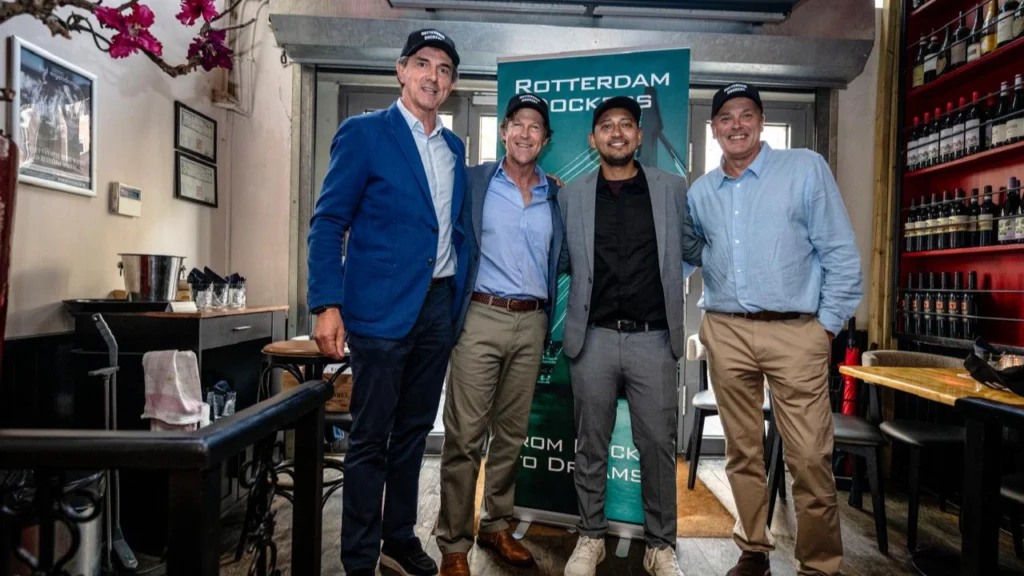
And so back to the name. The Dockers, that tribute to the hands that built the port, is meant as a statement of belonging — a promise that the franchise will earn its place rather than assume it. The owners have even toyed with a motto to match the city’s industrial grit: from dockyards to dominance. It is, for now, an aspiration. But it is the right kind of aspiration for a team that has chosen to define itself by its host city rather than its famous owners.
Growing the game in Europe
The Dockers are also, by design, a development project — and here Rhodes’s experience becomes the franchise’s most distinctive asset.
His time coaching Sweden left him with a clear conviction: talent alone does not grow a cricket nation, infrastructure does. “You can’t just have 11 guys who want to play cricket on a weekend,” he says. “The clubs that stood out were the ones with a youth program, a girls’ program, a women’s team. You have to build an infrastructure — and each club needs to have one.” He also saw the pull of national pride, sharpened now that cricket is an Olympic sport for 2028. In Sweden, he recalls, tennis players and ice-hockey athletes turned up to try cricket simply because it offered a route to representing their country.
His instinct, honed across years of IPL coaching, is to multiply his impact rather than hoard it. “If I coach 15 players in an IPL and then leave, that’s 15 players I’ve impacted,” he says. “But if I coach 10 coaches, and they each coach 15 to 20, suddenly I’ve impacted 200 players.” That is the lane he intends to occupy at the Dockers. “Coaching coaches, coaching management — that will be a big focus for me when the ETPL kicks off,” he says. “It’s not just about growing the players or the base. It’s about growing coaches and the entire infrastructure.”
Shree sees the same opportunity through the lens of associate cricket, where he has watched the ILT20 transform the prospects of Emirati players. “There’s talent in associate cricket that just needs a platform,” he says. “Once they start getting it, it changes them — financially, skill-wise, security-wise.” The ETPL has built that conviction into its rules, treating players from across the ICC’s Associate Member nations as locals — a structural choice that opens the league to talent from all over Europe and beyond. With cricket heading to the LA Olympics and England, Wales, Ireland and Scotland co-hosting the 2030 T20 World Cup, Shree is convinced the timing is right. “Europe will be a big catalyst,” he says.
Locked and loaded for August 26
The ETPL’s inaugural season runs from August 26 to September 20, six city-based franchises contesting 33 matches across Ireland, Scotland and the Netherlands. For the Dockers, the runway is short and the work is well underway: a captain in place in du Plessis, a roster taking shape, a city being courted, and a name now fixed to the side of the franchise.
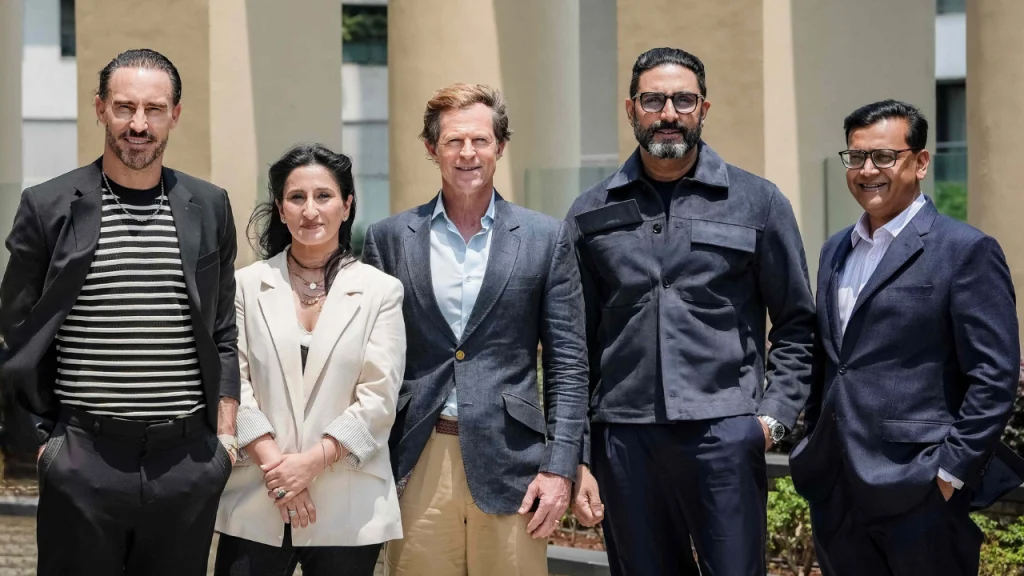
What the owners are selling, in the end, is conviction. Klaasen’s words at the announcement double as the franchise’s mission statement. “We’re not just here to own a team,” he said. “We’re here to build something the city and its fans can truly be proud of.” Whether the Dockers become that — a team Rotterdam calls its own — will be settled over years, not weeks. But the group has been deliberate about starting in the right place. With the right name – and with the people that name is meant to honour.