
A spaceship that lands six times a year
When Stuart Cain walked into Edgbaston Stadium in 2020, he inherited one of cricket’s great venues — and one of its most complicated relationships with the community that surrounded it.
The stadium’s reputation was secure. Test matches at Edgbaston had become cultural moments: the 2005 Ashes thriller, the 2019 Ashes Test where England chased down 398, and the India-Pakistan World Cup clash that drew 24,000 fans. Players loved the atmosphere. Broadcasters loved the intensity. The People’s Stadium was known for noise and energy that felt less manufactured than at other Test grounds.
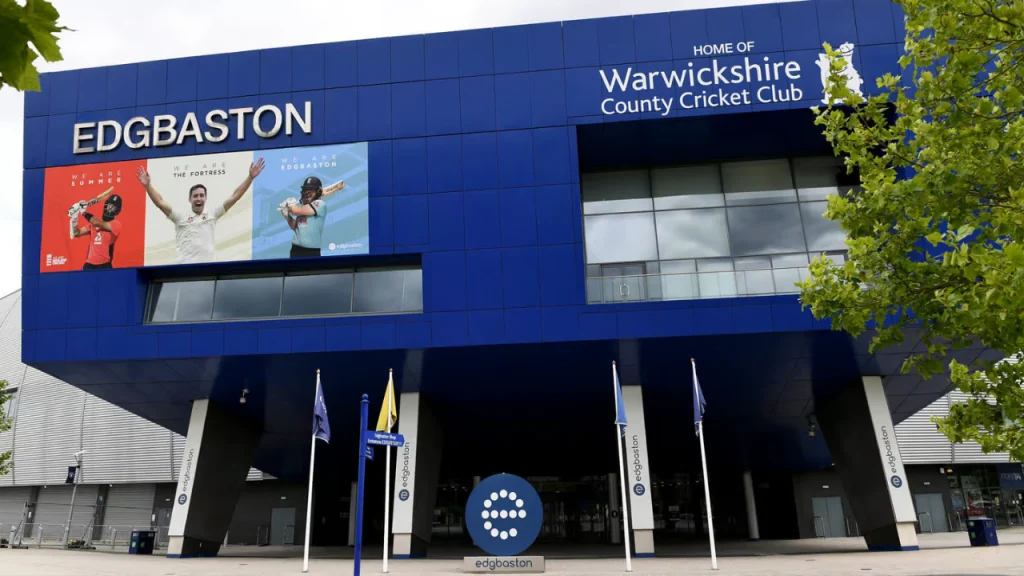
But when Cain began speaking with residents and business owners in surrounding neighborhoods, a different picture emerged. One person told him the stadium felt like a spaceship: it landed six times a year, caused chaos on the roads, then disappeared. Another described it as Willy Wonka’s chocolate factory — a place surrounded by a six-foot wall, with curious locals peering over.
“We had a great stadium that felt like a secret to the local community,” Cain recalled. “And as a result, it didn’t feel like it was really part of the city.”
This wasn’t a problem Cain could solve with better marketing. It was structural. The stadium’s physical design, operational rhythms, and institutional culture all reflected a venue built for occasional spectacle rather than year-round civic presence. To change the perception of Edgbaston, Cain would need to change the reality.
A CEO who speaks multiple sports languages
Cain’s background prepared him for this challenge. His career has spanned multiple sports and commercial disciplines, giving him an unusually broad view of how modern sports organizations operate.
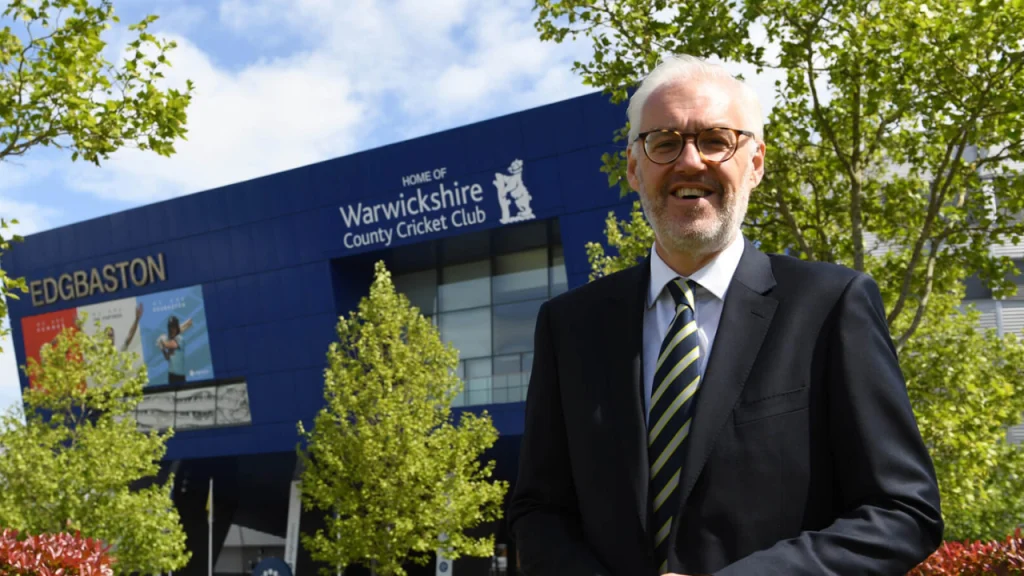
He spent a decade at Molson Coors leading Carling’s Premier League sponsorship and working on FIFA projects including the 2010 World Cup, which gave him fluency in the sponsorship economy. From there he moved into football at Wolverhampton Wanderers and Rangers FC, followed by seven years at the NEC Group in Birmingham running commercial marketing and music venue operations — where he learned to monetize spaces beyond sport and think about year-round utilization.
Three years at Wasps as Commercial Director and later CEO brought different lessons. The club operated a men’s rugby team and a professional women’s netball franchise, as well as the Ricoh Arena Conference & Exhibition space, a casino and Hilton Hotel. Cain saw how different audiences required different products, how women’s sport needed dedicated investment, and how venues could be platforms for multiple sporting and leisure identities.
By the time he arrived at Warwickshire, he understood how to structure commercial deals, operate complex facilities, and think about sports organizations as year-round businesses rather than seasonal events. Perhaps most importantly, he had seen what happens when an organization fails to connect with the community it serves.
The marketing problem nobody talks about
One of the most striking elements of Cain’s perspective on county cricket comes from his time outside the sport. Having marketed teams in rugby and football, he can see the structural challenge that counties face with unusual clarity — and it’s a challenge that almost nobody else in English cricket seems to articulate plainly.
“Cricket was probably a couple of years behind other sports in how it thought commercially,” he said. But the deeper issue isn’t just about commercial sophistication. It’s about brand architecture.
In rugby or football, a club has one team playing one format of the game. The brand is unified: Manchester United plays in the Premier League, FA Cup, and Champions League, but it’s always Manchester United playing 11-a-side football. Marketing becomes simpler because the proposition is coherent.
County cricket asks fans to follow multiple formats under different team names. Warwickshire CCC plays in the County Championship and One-Day Cup with Warwickshire Bears playing in the Vitality Blast — three competitions with different audiences, formats, rhythms, and commercial propositions. Then, layered on top, Birmingham Phoenix plays in The Hundred, using Edgbaston as home but operating as a separate brand with a separate identity.

The result, Cain argues, is confusion. “If I were a new fan, I’d look at cricket’s formats and brands and think, ‘I’ll just go watch the horses — it’s too confusing.'”
The Hundred complicates this further. Cain is clear about its strengths: “The Hundred made cricket more accessible — to families, women, and different communities. City versus city made more sense to younger people than historic counties.” But inside cricket, he notes, “it caused a bit of a civil war with the traditionalists.”
What Cain has found is that the overlap between Hundred audiences and county audiences is smaller than many assumed. “There was surprisingly little overlap between Phoenix fans and Bears fans,” he said. That presents both challenge and opportunity: counties must now figure out how to build pathways between formats. “The challenge is how you take a Hundred fan and guide them towards T20, then maybe one-day, then maybe four-day cricket.”
This is marketing at its most complex: not just promoting a product, but constructing a journey through multiple products that don’t naturally align.
Birmingham’s superpower
If the marketing challenge is structural, Cain believes the solution is rooted in something Birmingham has in abundance: diversity.
“One of Birmingham’s superpowers is its diversity — ethnically, by gender, by age, by universities bringing in 100,000 students from everywhere,” Cain said. “Cricket should bring people together, and the city should celebrate diversity as a strength.”
But when Cain arrived, the stadium wasn’t capitalizing on that diversity. Birmingham is one of the most ethnically diverse cities in the world, one of the youngest in Europe, and 51% of the population is female. Yet Edgbaston wasn’t reflecting that reality. “We weren’t really pulling our weight when it comes to representing women’s interests or sport,” Cain said. “And we weren’t making ourselves feel safe and welcoming for some of those communities that do live around the stadium.”
The solution required physical changes, institutional mindset shifts, and deliberate relationship-building. Cain knocked down the walls that made the stadium feel closed off and opened it up with a public plaza and walkway. He went door-to-door, meeting with community leaders to understand barriers to attendance.
“I knocked on the doors of local mosques and said, ‘Can I come in for a cup of tea? Why do you come? Why don’t you come? How can we help?'” The conversations that followed led to tangible initiatives, including Ramadan leagues where young people could play cricket until one in the morning after Iftar.
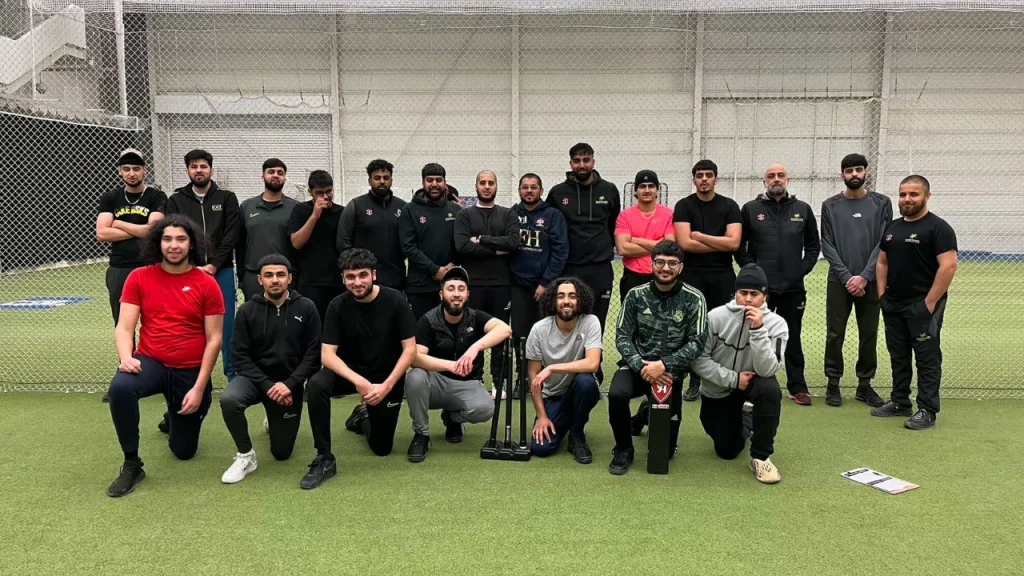
The mindset shift was equally important. “When you look at a business problem, you ask: is it a skillset issue or a mindset issue?” Cain said. “And for us, it was both. The community piece wasn’t really about money — it was about changing mindset. When you reframe it as ‘how do we best represent the communities we serve?’, you get very different solutions.”
The phrase Warwickshire now uses internally is simple but deliberate: “Edgbaston must be safe and welcoming for all, whoever you are and whatever walk of life you’re from.”
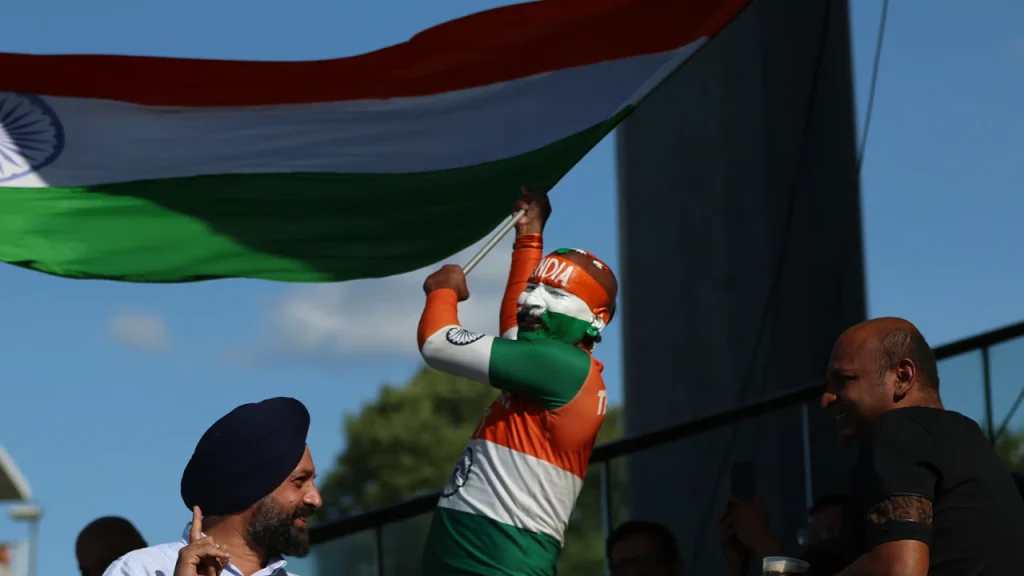
One moment crystallized the transformation. During a 2024 Legends game at Edgbaston between notorious rivals, India and Pakistan, England’s Euro 2024 quarter final against Switzerland was happening simultaneously. Warwickshire put the football match on the exhibition hall screens and as it went to penalties, what happened next caught Cain by surprise: fans wearing India shirts and Pakistan shirts were cheering England on, united in their joy as every penalty went in. “We had people in India shirts and Pakistan shirts standing together, cheering England scoring,” Cain recalled. “That summed up what cricket and this city should be.”
The hotel that changes everything
For all the focus on community engagement and format marketing, the most tangible transformation at Warwickshire is physical: a 146-room Radisson RED hotel being built inside the stadium bowl.
Cain frames the strategic rationale clearly. “Birmingham lacks four- and five-star hotels — for a city of this size, that’s a strategic issue.” The city hosts major conferences, concerts, and sporting events throughout the year, but doesn’t have the hotel capacity to fully capitalize on that demand.
“The hotel transforms our conference and events business — no buses, no logistics nightmare,” Cain said. For corporate clients booking events at the stadium, on-site accommodation removes one of the major friction points of venue selection.

But the real transformation happens on matchdays. Eighty-five rooms will have pitch-facing balconies, and eighteen will be fully convertible into hospitality suites. “On matchdays, 50 rooms become pitch-facing hospitality suites — it quadruples our hospitality inventory,” Cain explained. “By 2027, the stadium bowl will feel completely different.”
The economics are straightforward. More hospitality inventory means more premium revenue per match. More hotel rooms mean more conference revenue. The hotel doesn’t just add one revenue stream — it multiplies the value of several existing ones.
The project, however, required capital that Warwickshire didn’t have on its own. This is where The Hundred money becomes essential. “Without the Hundred money, we wouldn’t have been able to bridge the funding gap on the hotel,” Cain said.
Warwickshire’s approach to the Hundred investment was distinctive. When the ECB sold their 49% stake in the eight Hundred franchises, different host counties took different strategic positions with their 51% stake. Some sold the full 51% to maximize immediate cash. Warwickshire chose to retain their 51% ownership of Birmingham Phoenix, which meant taking on an investment partner but keeping control and reducing the immediate cash injection.

“We kept 51%, so our balance sheet is stronger — but we didn’t get as much cash as some others,” Cain acknowledged. The tradeoff was deliberate: Warwickshire prioritized integrating the Phoenix into the traditional Warwickshire cricket structure and long-term governance over short-term liquidity. .
The hotel is scheduled to open in spring 2027, in time for that year’s Ashes Test. When it does, Edgbaston will join an elite group of UK sporting venues with on-site hotels.
Choosing the right partner
When it came time to select an investment partner for Birmingham Phoenix, Warwickshire had options. The Hundred franchise sales process attracted interest from multiple bidders, including several with existing IPL or international cricket portfolios. Warwickshire, however, was clear about what it didn’t want.
“We were clear we didn’t want an IPL investor — we didn’t want the Phoenix run as part of a global cricket portfolio, Warwickshire has always been a leading name in cricket, and we felt that should continue by embracing the Phoenix in to the club and being control of the entire cricket portfolio” Cain said. The concern was about priorities: if an investor’s primary expertise was cricket operations across multiple franchises, there was a risk that Birmingham Phoenix would become just one asset among many.
What Warwickshire wanted was “a global investor who could bring expertise in fan experience, digital growth, and commercialisation — while leaving cricket to us.” This led them toward private equity and sports investment firms. “That naturally led us to the US,” Cain said.
The partner they selected was Knighthead Capital, a US-based private equity firm. Knighthead brought experience in sports team ownership and venue investment, but not in cricket specifically — which was precisely the point. The firm also owns Birmingham City FC and has unveiled plans for a new 62,000-capacity stadium called “The Powerhouse” as part of a Sports Quarter development in East Birmingham, demonstrating its commitment to transforming the city’s sporting infrastructure.
“Knighthead wasn’t the answer looking for a question — we went through a proper process,” Cain said. “They understand Birmingham, but they also understand the global sports economy.”
The division of labor is clear: Warwickshire retains operational control of cricket and community programming, while Knighthead contributes capital, commercial expertise, and connections into broader sports business networks.
Two brands, one venue
One of the least discussed but most strategically complex aspects of Warwickshire’s operation is managing two distinct brands — Warwickshire Bears and Birmingham Phoenix — that share the same physical venue but target fundamentally different audiences.
Cain is blunt about the difference. “Warwickshire is a regional proposition — most fans come from within the county and surrounding 20 mile radius.” The Bears represent county pride, cricketing heritage, and multi-format competition. The fan base is loyal, engaged, and predominantly regional. Sponsorship deals reflect that: regional businesses, local partnerships, and national brands with footprints in the West Midlands.
Birmingham Phoenix, by contrast, is designed as a national and international product. “The Bears are about regional heart and community; the Phoenix is an international, digital-first proposition, that has a strong Birmingham following but reaches national and international cricket fans alike” Cain said. The Hundred’s city-based branding, compressed format, and broadcast prominence give Phoenix a reach that counties can’t match. “We’re looking at following diasporas — brands that trade across India, Pakistan, and England — and monetising that connection.”
The challenge is ensuring both brands thrive without cannibalizing each other. “The Hundred is only four home games — you don’t build a white ball summer on that alone,” Cain noted. “There’s space for the Hundred and Vitality Blast to coexist.” Success means recognizing that overlap is limited and building pathways for fans who want to cross between formats.
On the field: tradition meets ambition
For all the commercial transformation, Warwickshire remains, first and foremost, a cricket club. Cain describes the club’s position with characteristic directness. “We’re a bit like the Manchester United of football — one of the greats for 150 years, but we probably haven’t won the silverware we should have over the last 25 years.” Something he and the club’s coaches are working hard to fix.
The comparison is apt. Warwickshire has deep cricketing pedigree: Chris Woakes, Ian Bell, Jonathan Trott, Dennis Amis, M.J.K. Smith. The club’s history of producing England players is as strong as any county’s and continues with the recent emergence of Jacob Bethell. But recent trophy success has been inconsistent, and the pressure to compete across three domestic formats while maintaining pathways for young talent creates constant tension.
Cain sees the dual mandate clearly. “It’s not just about winning trophies for the Bears — it’s about creating a great pipeline of players for England as well.” This is the bargain at the heart of county cricket: counties must balance short-term competitiveness with long-term talent development.
The financial windfall from The Hundred gives Warwickshire more room to invest in both sides of that equation. Better facilities, more coaching resources, and improved scouting infrastructure all serve both competitive performance and player development.
Women’s cricket: building from the foothills
One of Cain’s earliest observations when he arrived at Warwickshire was the absence of a professional women’s structure. “I’d come from rugby where we had men’s and women’s teams as well as a professional women’s netball team, and I looked around and thought: where’s the professional women’s cricket environment?” he said. “We weren’t really representing women’s interests or women’s sport in a meaningful way.”
Since then, Warwickshire has launched a professional women’s team, but Cain is realistic about where the program stands. “The women’s game doesn’t make money yet — but the more resources you have, the more you can invest,” he said. “We’re at the foothills — the structure is there, now we’ve got to commercialise it.”
The challenge is familiar to every county with a women’s program: building sponsorship revenue, ticket sales, and merchandising to a level where the team can support itself. Cain is clear that full self-sufficiency may not be realistic in the near term, but the investment is non-negotiable.
“Even if it doesn’t fully fund itself yet, subsidising women’s cricket is absolutely the right thing to do,” he said. “You can’t inspire young girls unless they see role models on the pitch.”
A venue, a club, a city
Five years into Stuart Cain’s tenure, Warwickshire County Cricket Club is no longer the same organization he inherited. The walls have come down — literally and figuratively. The stadium that once felt like it belonged only to the cricket elite now hosts year-round events, conferences, and community programming.
The hotel, when it opens in 2027, will be the most visible symbol of this transformation. But the deeper shift is cultural: Warwickshire has moved from thinking of itself as a cricket club that owns a stadium to a civic institution centered around cricket.
The challenge now is execution. The hotel must open on time and perform commercially. Community engagement must deepen rather than plateau. The pathways between Birmingham Phoenix and Warwickshire Bears must be built and maintained. And the cricket teams must deliver results that justify the investment.
But the foundation is in place. As Cain puts it: “We see ourselves as the people’s home of cricket, and that really ties in with Birmingham as a city — down to earth, industrial, self-deprecating, living in the moment.” Five years into his tenure, that vision is starting to feel less like aspiration and more like reality.
Read part one of cricexec’s “Great County Cricket Reset” series here.
Read part two of cricexec’s “Great County Cricket Reset” series here, featuring Leicestershire County Cricket Club.
Read part three of cricexec’s “Great County Cricket Reset” series here, featuring Glamorgan County Cricket Club.
Read part four of cricexec’s “Great County Cricket Reset” series here, featuring the Professional Cricketers’ Association.