
Twenty years in the wilderness
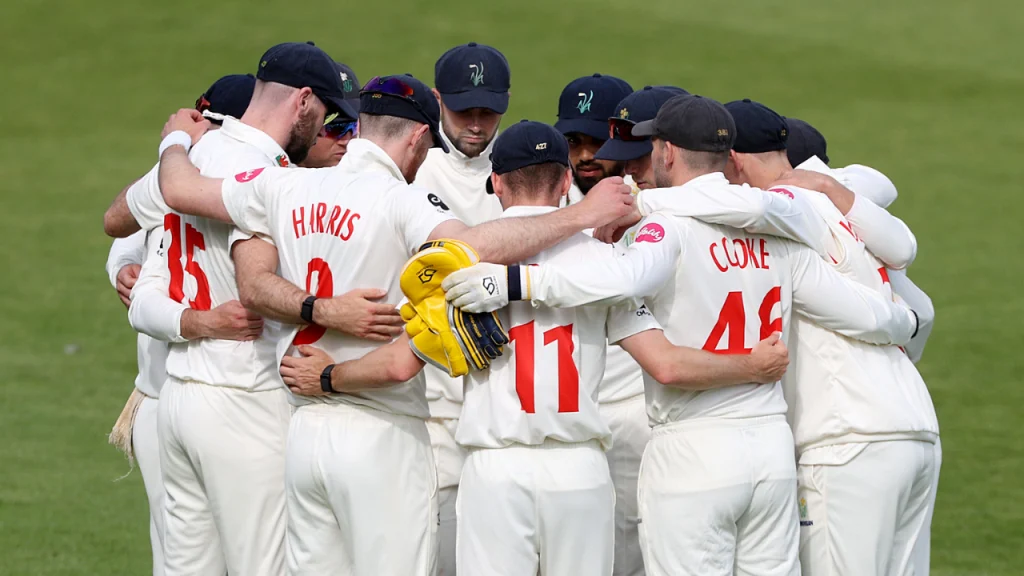
The messages came through one afternoon last September, cascading in from former players, overseas talent, members who had watched for decades. “I got messages from people who’d played hundreds of times for Glamorgan and from overseas players who were here a year or two. Everyone’s delighted we’re back in Division One,” said Dan Cherry, the club’s CEO. It had been 20 years since Glamorgan last competed in the top tier of the County Championship. For a club that had lifted the trophy three times and once hosted Test cricket’s greatest spectacle, the Ashes, the return felt overdue.
For Cherry – who has spent the last 25 years of his life embedded at Glamorgan, first as a player, then as an executive – the moment was deeply personal. “I’m Glamorgan through and through,” he said. The journey from professional cricketer to executive was never the plan. “I told everyone I would work at the club for at most six months after retiring… and 18 years later I’m still going. It has always felt like a fresh challenge.”

The promotion carries weight for a club with championship pedigree. Glamorgan has won the County Championship three times: in 1948, 1969, and 1997. But the club’s recent success has been confined to white-ball cricket. They won the Royal London One-Day Cup in 2021, ending a 17-year trophy drought, then claimed it again in 2024. Now, back in Division One, they can compete for the prize that matters most to their history.
The club knows promotion alone solves nothing. The challenges remain: decades of financial constraint, geographical obstacles unique to Wales, and the need to rebuild a competitive squad. This is an institution that faces hard work ahead. But the timing is fortunate, and Glamorgan will tackle those challenges armed with the windfall from the Hundred stake sales and with a world class partner in tow.
Wales’ cricket paradox: a nation, but not a network
Glamorgan holds a singular distinction in English and Welsh cricket: it is the only first-class county representing an entire country. “We represent a nation… there are 3.1 million people in Wales and many more Welsh outside Wales who support Glamorgan,” Cherry noted. That should be an advantage, a built-in fan base across borders. But the reality is more complicated.
Cardiff, Glamorgan’s home, is a successful city but one where sport competes fiercely for attention. “Cardiff is a successful but competitive city — Principality Stadium, Cardiff City FC, major concerts — so participation is challenged,” Cherry explained. The Principality Stadium, home to Welsh rugby, casts a long shadow. Cricket, for all its heritage, battles for space.
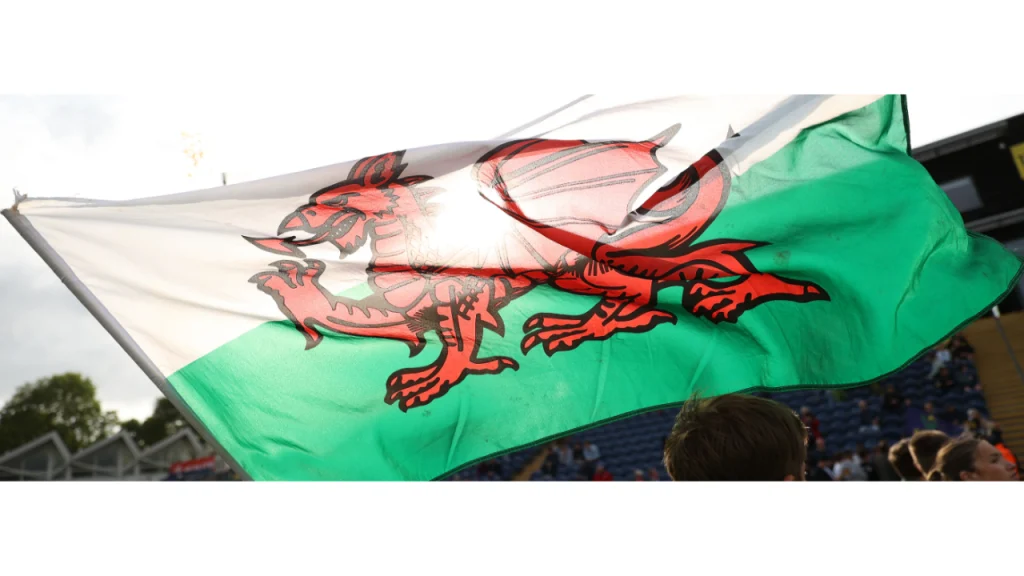
Then there is the infrastructure gap. “We don’t have the public-school network and private schools in Wales that England does, so we don’t benefit from facilities and talent development in the same way,” Cherry said.
Geography compounds the challenge. “It takes four hours to drive end-to-end in Wales… so covering the geography for coaching and facilities is a challenge.” For a county trying to nurture talent across an entire nation, the logistics are punishing. Coaches travel hundreds of miles to reach remote clubs. Young players often face similar journeys for trials and training.
The stadium gamble and the debt overhang
Glamorgan’s modern financial struggles trace back to a bold decision made in the early 2000s: the development of Sophia Gardens into a world-class stadium. “Our chairman in the 2000s said we needed to host international cricket and develop the stadium if we wanted to challenge the big venues,” Cherry recalled. The ambition was justified. Without international fixtures and the revenue they generate, Glamorgan risked irrelevance.
The stadium opened in 2009, hosting the first Ashes Test of that summer and the results were transformative. It was a triumph. But the cost was steep. “It cost around £20 million to build the stadium… at one stage we were about £17 million in debt. The previous team got it down to about five,” Cherry said. For years, the debt hung over every decision. Investment in the playing squad became virtually impossible. The club operated in survival mode.
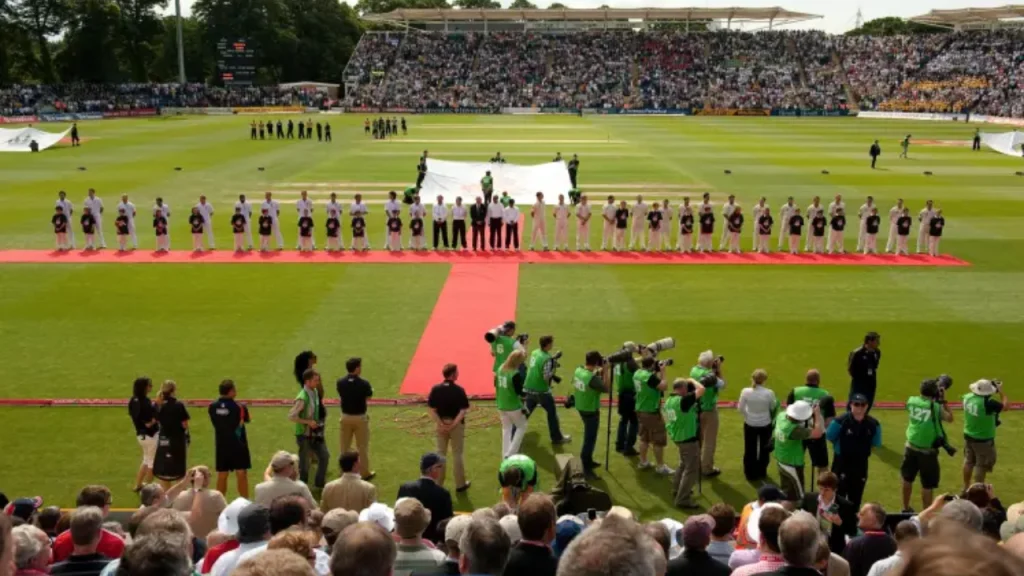
“We’ve not been able to invest in our team for a long time because we were constantly bankrolling the debt and just trying to survive.” The consequences extended beyond finances. Glamorgan struggled to attract top talent. “It’s very difficult to get top-level talent now since T20 came in… that opportunity isn’t there anymore,” Cherry noted. The global T20 circuit offered players more lucrative options than county cricket.
The club’s history had included legendary overseas players. Viv Richards, Waqar Younis, Matthew Elliott, Michael Kasprowicz, Javed Miandad — names that once drew crowds to Glamorgan. The ability to market such stars, to sell tickets around their appearances, defined an era. That model collapsed with the franchise revolution. Players could earn more in a month of T20 leagues than a season of county cricket. Glamorgan was challenged to compete.
Yet Cherry acknowledges the stadium’s importance. “It’s important we maintain Category A status for international cricket and the Hundred — without those big games it’s hard to make money.” Glamorgan is both a county club and a host venue. That dual role brings revenue but also demands constant infrastructure investment. Sophia Gardens must compete with Lord’s, The Oval, Edgbaston, and Old Trafford for fixtures. Any slippage in standards risks losing those events.
The Hundred windfall: clearing the slate
The sale of stakes in The Hundred franchises represented a watershed moment for English and Welsh cricket’s host counties. For Glamorgan, the deal brought something more fundamental than windfall cash: it brought freedom. “The opportunity with the Hundred sale has meant we’ve cleared our debt… we’re now more sustainable and can start investing wisely,” Cherry said.
The structure of Glamorgan’s deal is unique. Unlike other counties that sold majority stakes or opted for 51-49 splits, Glamorgan negotiated a true 50-50 partnership with Washington Freedom, the American franchise owned by Sanjay Govil. “It’s 50-50 — hopefully that signals we are true partners. The partnership has been strong from day one,” Cherry said. The arrangement reflects mutual respect. The Washington Freedom gain a foothold in one of cricket’s most storied competitions. Glamorgan retains meaningful ownership and operational influence.

Cherry speaks warmly of the relationship with Govil and his team. “There was an instant connection with Sanjay, Dhiraj and the team… We share values, beliefs, and a love of cricket and family.” The alignment extends beyond business. “Sanjay wants to grow cricket in the community and represent the whole nation… We share a passion for giving as many girls and boys the chance to pick up bats and balls.”
The partnership offers practical benefits as well. “There are obvious benefits — sharing players, coaches, camps in America, sponsorship, global markets,” Cherry said. Glamorgan’s players could train in the United States during the off-season. Welsh Fire could tap into Washington Freedom’s commercial infrastructure. The possibilities are expansive, and have already started to become reality, as the Freedom’s Director of Cricket Michael Klinger recently joined the Fire staff as well.
Investing wisely: infrastructure, revenue, and patience
With debt cleared and cash in the bank, Glamorgan faces decisions that will define the next era. The temptation to spend quickly is real, but Cherry’s approach is deliberate. “We won’t rush… but a lot of thinking is around reinvesting in the stadium. Our floodlights are some of the oldest in the country. Upgrading to LED will improve quality and cut running costs.”
The floodlights are symbolic of broader needs. Sophia Gardens requires modernisation across multiple areas to maintain its Category A status. But Cherry is also thinking beyond infrastructure. “We want projects that make us less reliant on ECB funding… conference centres, hotels — potentially with partners — to generate more revenue.” The vision is for Sophia Gardens to become a year-round commercial venue, not just a seasonal cricket ground.
Revenue diversification is critical. English cricket’s financial model is shifting. The Hundred’s commercial success has changed expectations. Counties must generate their own income streams rather than relying on ECB distributions. For Glamorgan, that means leveraging its stadium location on the banks of the River Taff in central Cardiff. Conference facilities and hospitality could operate year-round, smoothing the seasonal volatility of cricket revenue.
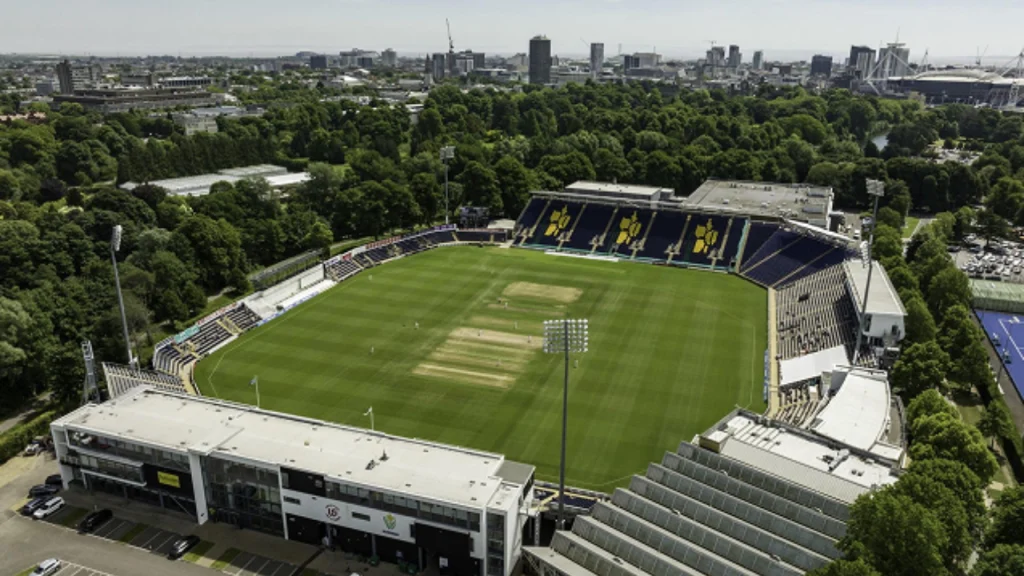
The club is developing a comprehensive stadium master plan that includes these revenue-generating projects. The approach is methodical. Cherry and his team are studying the financials, looking at partnerships, considering what Cardiff’s market can sustain. The goal is not just to spend the Hundred windfall but to create assets that generate returns for decades.
Marketing, identity, and filling the stands
Glamorgan’s commercial challenges extend beyond infrastructure. The club needs people in seats. “We’ve said openly we need more bums on seats… Our core Championship members are an ageing demographic,” Cherry admitted. The County Championship, for all its tradition, struggles to attract younger audiences. Four-day cricket requires patience, an acquired taste in an era of short-form entertainment.
The Blast offers a different opportunity. “The Blast demographic is shifting toward families and females,” Cherry said. T20 cricket’s faster pace and evening scheduling make it more accessible. Glamorgan is investing in marketing to capitalise on that shift. “There’s a huge opportunity digitally — content, ticketing, retail… The Hundred has a more tribal feel and we can build that fandom around Glamorgan and Welsh Fire.”
Digital engagement is central to the strategy. Social media, streaming content, and online ticketing can reach audiences beyond Cardiff. But Cherry also emphasises retail opportunities. “That’s something which American sports do brilliantly… everyone wears the shirt, they buy a cap, there’s that tribal feel,” he noted. Glamorgan sees potential to build merchandise sales around both the county brand and Welsh Fire, creating multiple revenue streams from the same fan base.
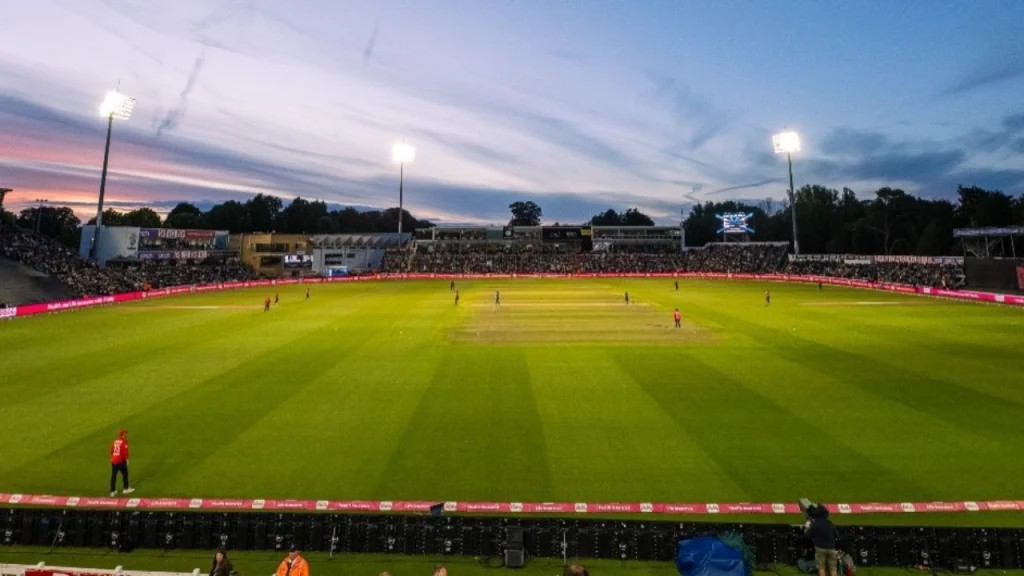
Yet Cherry also emphasises the importance of local identity. “We’re also trying to develop more young Welsh players so fans feel affinity with local talent.” The connection between community and club must be rebuilt. Fans want to see players who represent Wales, who share their identity. Cherry acknowledges Glamorgan has not developed enough Welsh talent in recent decades. That is changing. The club is investing in pathways, in coaching across Wales, in making sure talented young Welsh cricketers see a future at Glamorgan rather than seeking opportunities elsewhere.
Women’s cricket: building for 2027
Glamorgan’s entry into Tier One women’s cricket in 2027 represents another transformative opportunity. The club initially missed out on the first wave of professional teams but used the delay strategically. “We were disappointed to miss out initially, but having time to get everything in place will benefit us… Women’s cricket in Wales is very strong and participation is booming,” Cherry said.
The numbers tell a compelling story. Wales ranks second only to Yorkshire in girls’ participation in the ECB’s All Stars and Dynamos programs. Women’s teams, both softball and hardball, have proliferated across Wales in the past five years. The demand exists. What has been missing is a professional pathway.
The impact on Welsh talent will be profound. “Girls won’t need to leave Wales anymore to play professionally… They can achieve all their ambitions here.” Previously, talented Welsh women had to move to England to pursue professional careers. That exodus drained the local game. Now, those players can stay home. The pathway runs from All Stars programs through age-group cricket to professional contracts. For the first time, a young girl in Wales can see a clear route to representing her nation at the highest level without leaving.
The Hundred windfall enables this ambition. “The Hundred money will allow us to invest in women’s cricket to give them parity and equality when we join in 2027.” Cherry’s commitment is not just rhetorical – Glamorgan has already begun investing. “We’ve invested nearly £100,000 in the square and more nets… We have one of the biggest indoor centres in the UK and are exploring domes in Wales.”
The infrastructure investments will serve both men’s and women’s teams. The new grass nets at Sophia Gardens provide additional training capacity. The indoor centre, with seven lanes, allows men’s and women’s teams to practice alongside each other. The domes Cherry mentions would provide year-round training space, addressing Wales’ unpredictable weather. For a club that has struggled with resources for decades, the ability to invest in world-class facilities represents a dramatic shift.
Ambition and reality: the top-eight goal
When asked about Glamorgan’s vision for the next three to five years, Cherry’s answer is both ambitious and grounded. “Our strategy is to make Wales proud. We want to establish ourselves as a top-eight UK club in the new cricket landscape.” A top-eight finish would place Glamorgan among cricket’s elite counties, competing with the likes of Surrey, Lancashire, Yorkshire, and Warwickshire.
The pathway to that goal is clear. “We’ll get there by developing players and building a core of young Welsh boys and girls representing Glamorgan.” Talent development has always been Glamorgan’s strength, from Wilf Wooller to Tony Lewis to Matthew Maynard. The challenge is creating pathways that retain talent rather than losing it to wealthier counties, something that Cherry recognises will take time.
The execution challenge
The windfall has arrived. The debts are cleared. The promotion is secured. Now Glamorgan faces the hardest phase: turning money and momentum into sustained success. History offers cautionary tales. The history of English sport is littered with clubs that chased quick fixes and failed to build sustainable models.
The timeline is compressed. LED floodlights will go in this winter. The stadium master plan must move from concept to execution. Marketing investments must show returns in ticket sales and merchandise. Young Welsh players must emerge through the pathway and establish themselves in the first team. Each decision compounds.
Yet the opportunity is genuine. If The Hundred becomes a global franchise powerhouse, Glamorgan’s Welsh Fire stake could transform the club’s financial position for generations. “If the Hundred becomes a challenger to the IPL, being 50% owners of Welsh Fire gives us obvious upsides… We can reinvest that back in Glamorgan,” Cherry said. Even without that scenario, the club is better positioned than at any point since the stadium opened in 2009.
The responsibility weighs on Cherry. He has literally spent his life at Glamorgan. He understands what is at stake. Wales has one first-class cricket club. One pathway for talented Welsh players. One institution carrying the sport’s heritage and future in the nation. The money, the promotion, the partnership — these are tools. What matters is what Glamorgan builds with them.
The great Welsh reset is underway.
Read part one of cricexec’s “Great County Cricket Reset” series here.
Read part two of cricexec’s “Great County Cricket Reset” series here.