A full house, and a very long road
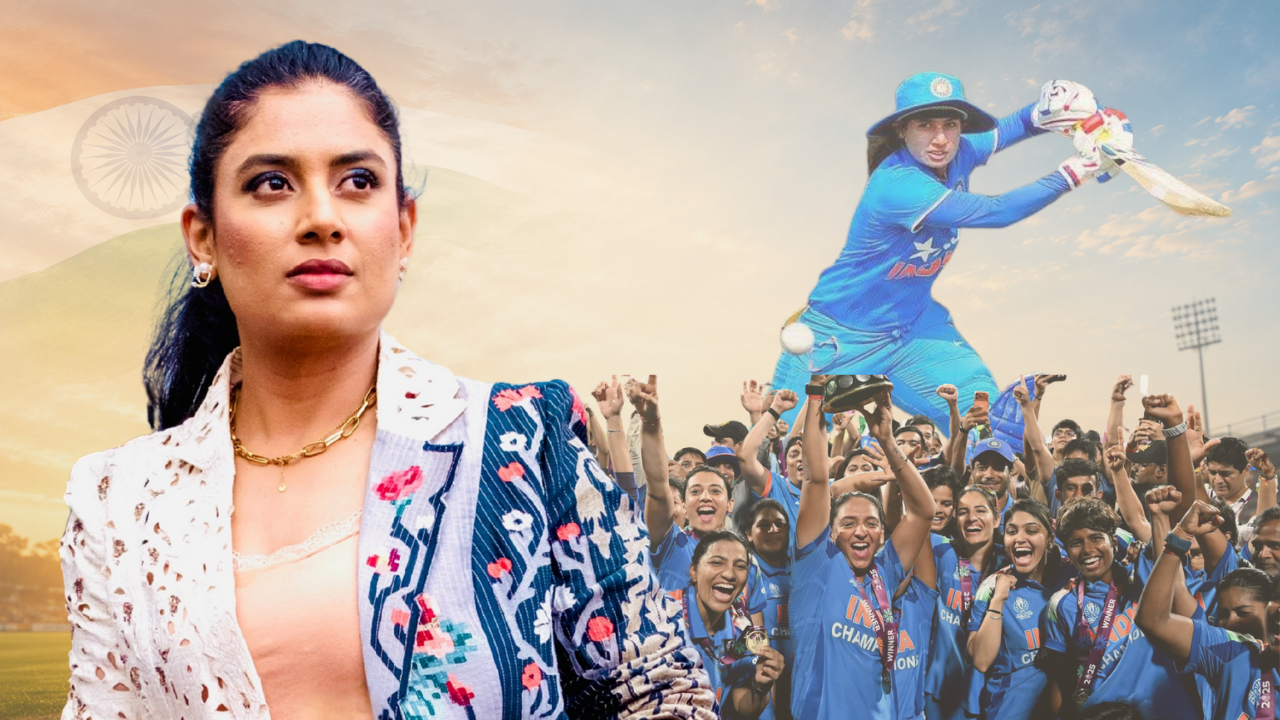
From the commentary box at Edgbaston, Mithali Raj watched a sea of blue fill the stands for India against Pakistan. The number on the official sheet was 18,814 — a sell-out, and the highest-attended group game in the history of the Women’s T20 World Cup. Across the first three days of the 2026 tournament in England, 44,844 fans came through the turnstiles, a record opening weekend for any ICC women’s event. For most of the people in those seats, this was simply what a World Cup looks like. For the woman calling the cricket, it was the destination of a journey that took the better part of three decades.
“It took a long time for women’s cricket to be where it is today, getting people to turn up to the venues,” Raj said. “It was a similar craze that one sees in men’s cricket. To see women’s cricket up there, on par with the way people turned up to the stadium, was very heartening.”
There is a particular irony in Raj narrating this moment rather than living it on the field. She captained India over eighteen years, into two ODI World Cup finals, in 2005 and 2017, but the team was defeated in both. She retired in June 2022. And in November 2025, the team she had carried for two decades finally lifted the elusive trophy, beating South Africa by 52 runs at the DY Patil Stadium to win the India Women’s first-ever World Cup in any format. She was not on the team sheet that day. But it is difficult to look at where Indian women’s cricket has arrived and not see her fingerprints all over the path that led there.
Coming up the hard way
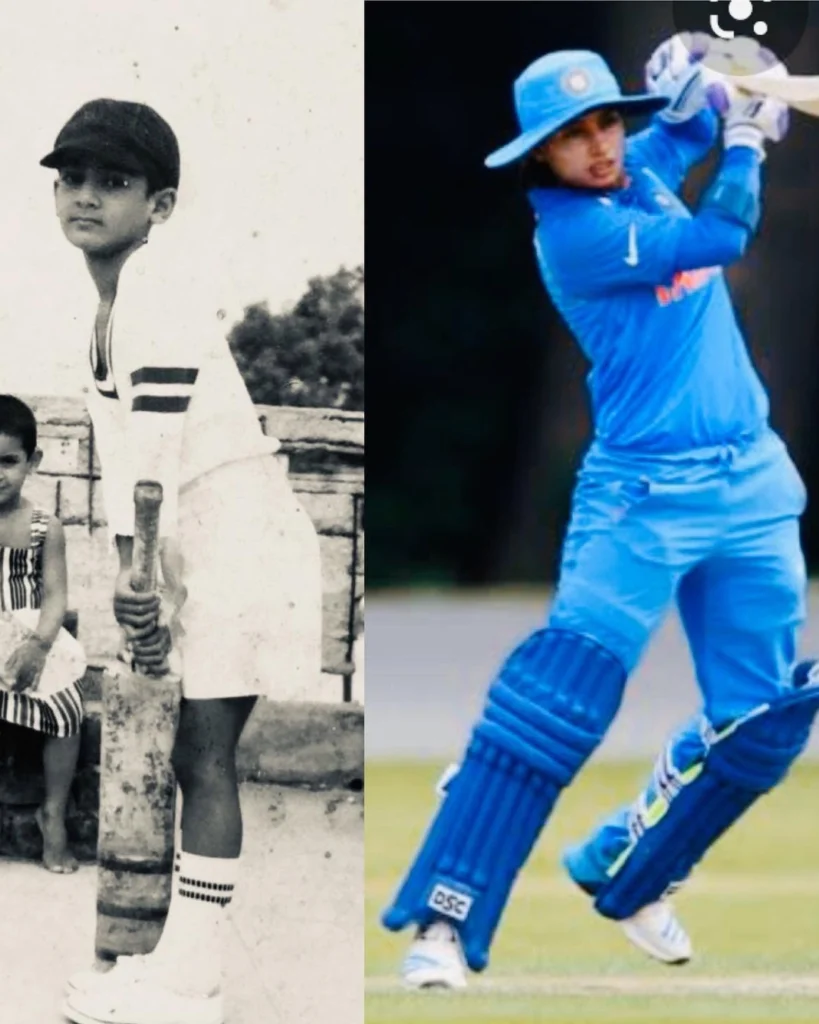
Raj came to cricket young — a nine-year-old in a household shaped by the discipline of the armed forces; her father, Dorai Raj, was a warrant officer in the Indian Air Force. She trained alongside her older brother, took to the bat with an obvious natural gift, and was fast-tracked through the system, selected for the Andhra Pradesh state side as a teenager and capped for India at sixteen.
A full house, and a very long road
From the commentary box at Edgbaston, Mithali Raj watched a sea of blue fill the stands for India against Pakistan. The number on the official sheet was 18,814 — a sell-out, and the highest-attended group game in the history of the Women’s T20 World Cup. Across the first three days of the 2026 tournament in England, 44,844 fans came through the turnstiles, a record opening weekend for any ICC women’s event. For most of the people in those seats, this was simply what a World Cup looks like. For the woman calling the cricket, it was the destination of a journey that took the better part of three decades.
“It took a long time for women’s cricket to be where it is today, getting people to turn up to the venues,” Raj said. “It was a similar craze that one sees in men’s cricket. To see women’s cricket up there, on par with the way people turned up to the stadium, was very heartening.”
There is a particular irony in Raj narrating this moment rather than living it on the field. She captained India over eighteen years, into two ODI World Cup finals, in 2005 and 2017, but the team was defeated in both. She retired in June 2022. And in November 2025, the team she had carried for two decades finally lifted the elusive trophy, beating South Africa by 52 runs at the DY Patil Stadium to win the India Women’s first-ever World Cup in any format. She was not on the team sheet that day. But it is difficult to look at where Indian women’s cricket has arrived and not see her fingerprints all over the path that led there.
Coming up the hard way
Raj came to cricket young — a nine-year-old in a household shaped by the discipline of the armed forces; her father, Dorai Raj, was a warrant officer in the Indian Air Force. She trained alongside her older brother, took to the bat with an obvious natural gift, and was fast-tracked through the system, selected for the Andhra Pradesh state side as a teenager and capped for India at sixteen.
The numbers, though, tell only the bright half of the story. The cricket she came up in offered almost none of the rewards the modern game does.
Not the first, but the one who carried it
For all the decorations, Raj is careful about where she sits in the lineage of the Indian women’s game. She was not the first pioneer. She was the one who happened to be carrying the weight when the ground finally began to shift.
When she came through the ranks, the women who had built the foundations of the sport in India — Shantha Rangaswamy, Diana Edulji, Sudha Shah, Shubhangi Kulkarni — were giants but not household names. She came to know them fully as her own career progressed. “When I played under-16 and under-19, I thought this is the only set of girls who play in India,” she said. “When I got selected for the senior team my seniors educated me about who Shantha Rangaswamy is, who Diana Edulji is, and what they mean for women’s cricket. I grew up with their stories told to me by my teammates.” She speaks of them as the people who made her own path possible — the same role she would later play for the generation behind her.
What followed was a long passage through the wilderness. When Raj debuted, India’s women played not under the powerful Board of Control for Cricket in India but under the cash-strapped Women’s Cricket Association of India (WCAI), with a different shirt and almost no money behind it. “We had a very different logo,” she said. “We only came under BCCI in 2007.” Until then, even a first tour abroad was a fundraising exercise. “My first tour to England was under the WCAI, and the state association didn’t have enough money to send me,” she recalled. “They said, you have to arrange for your own finances. My father had to reach out to his bank, and to my school, to fund part of that trip.”
The scarcity ran down to the equipment. “Those days the equipment was very expensive. A good quality bat is very expensive,” she said. “So I used to have one bat for the entire year, or even two years. That was more precious to me than anything else,” she jokes. And yet she insists the lack of recognition never made her feel like a lesser athlete — a confidence she traces directly to how she was raised. “I never felt the pinch of not getting the same recognition or respect as the men cricketers — not even as a kid,” she said, “because at home my parents always saw me on par with my brother. There was no difference between a boy and a girl.”
Even the move under the BCCI, when it came, was a slow build rather than a switch that was flipped. “When we moved under the BCCI, certain aspects got better — facilities, travel. We didn’t have to run around for team sponsorship,” she said. “But the number of games didn’t really increase at first. What it did was put a structure in place — the domestic season, stronger state associations. It took a while for even BCCI to understand the requirements of women cricketers.” She took the mantle from those who came before, and held it through the years when holding it offered very little reward.
The night television changed everything
If there is a single moment Raj points to as the hinge of her own career, it is not a century or a final. It is the first time she saw herself on a screen.
“2009 was the first time the World Cup matches were televised, and the World Cup was in Australia,” she said. “Not all games — they chose a few that could display a good brand of women’s cricket.” She had arrived at that tournament expecting it to be her last. “Before that World Cup, I was actually thinking of retiring. I’d been nursing an injury for the longest time,” she said. “I told my mother this would be my last World Cup; I’d come back home and I’d get married.”
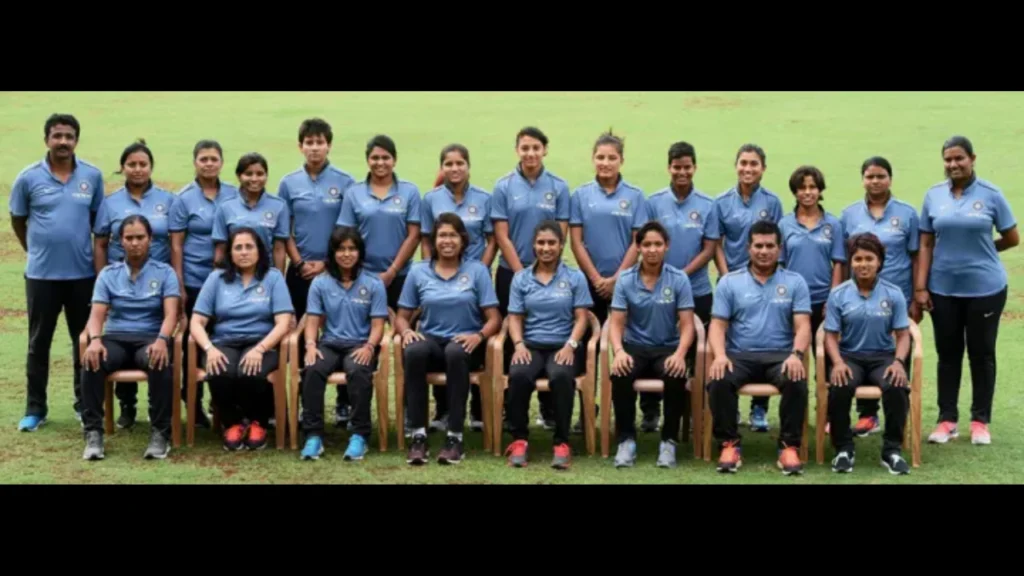
Then the cameras changed the maths. “That was the first time I saw myself on television — the highlights, the men commentators, reputed former cricketers calling live about your game, about your shots,” she said. “My father saw me on television playing for India. I could sense a little change in me. I told my mother, let me extend my career for two more years.”
It is a story she tells with a smile, but the point underneath it became a theme of her career. “When you see yourself on television, when you see people acknowledge your game, in a way it helped me continue the sport,” she said. Visibility was not a vanity; it was what kept a generation of players in the game long enough for the game to find its audience — and Raj, by being the most watchable batter India had, became a one-woman argument for putting cameras on women’s cricket in the first place.
2017, and the turning of the tide
The argument was finally won, decisively, in the summer of 2017. Raj captained India to the World Cup final at Lord’s, where they fell to England by nine runs in front of a full house and a vast television audience. India lost the match but, in a sense, won the war.
“A lot of factors helped in 2017,” she said. “The ICC and ECB did very good marketing the World Cup before the start. Social media was pretty new, so everybody was on it. And the first game, against the hosts, we ended up winning. So everything really worked for the sport to get elevated to that level.” During that tournament she passed Charlotte Edwards to become the leading run-scorer in women’s ODI history and the first woman to 6,000 runs in the format — milestones that gave the broadcasts a record-breaker to follow.
What 2017 created, in Raj’s reading, was a shift in how the industry saw the women’s game: not as a cause to be supported, but as an asset to be backed. “People turned up to watch what the Indian women’s team was doing, because it was live on television and there was news all over social media. It got a lot of eyeballs,” she said. “People thought, this is a product you can invest in. You’ll always invest in a product that can grow. Women’s cricket was that product. 2017 is the year the mindset shifted — a lot of organisations, a lot of CEOs, thought this is a sport that requires that sort of investment.” She also grasped, earlier than most, that audiences buy narratives before formats: “Everybody loves stories, and women’s cricket started to get that. We started to have our own stories, our own history, and people were very curious to view that.”
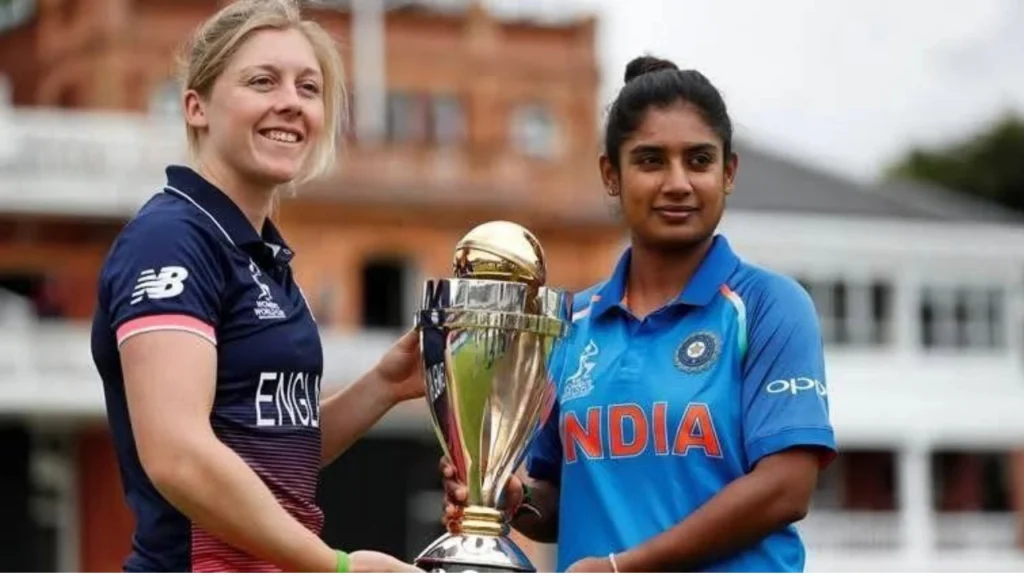
Here is the part that gives Raj’s own story its peculiar shape. She played right up to the moment franchise cricket for women truly arrived — and then stepped away just as it did. England’s Hundred, with its fully professional women’s competition, had launched only in 2021. Raj retired in June 2022. A few months later the Women’s Caribbean Premier League played its first season; a year after that, in 2023, the Women’s Premier League arrived in India and instantly became the richest property in the women’s game. “The WPL was the impetus the sport needed to really shoot up,” she said.
She had spent two decades growing the brand of women’s cricket in its most important commercial market — making the case, bat in hand, that this was a product worth investing in. But when the leagues, the auctions and the sold-out franchise stadiums finally appeared, she did not play a single match in any of them.
A seat at the table
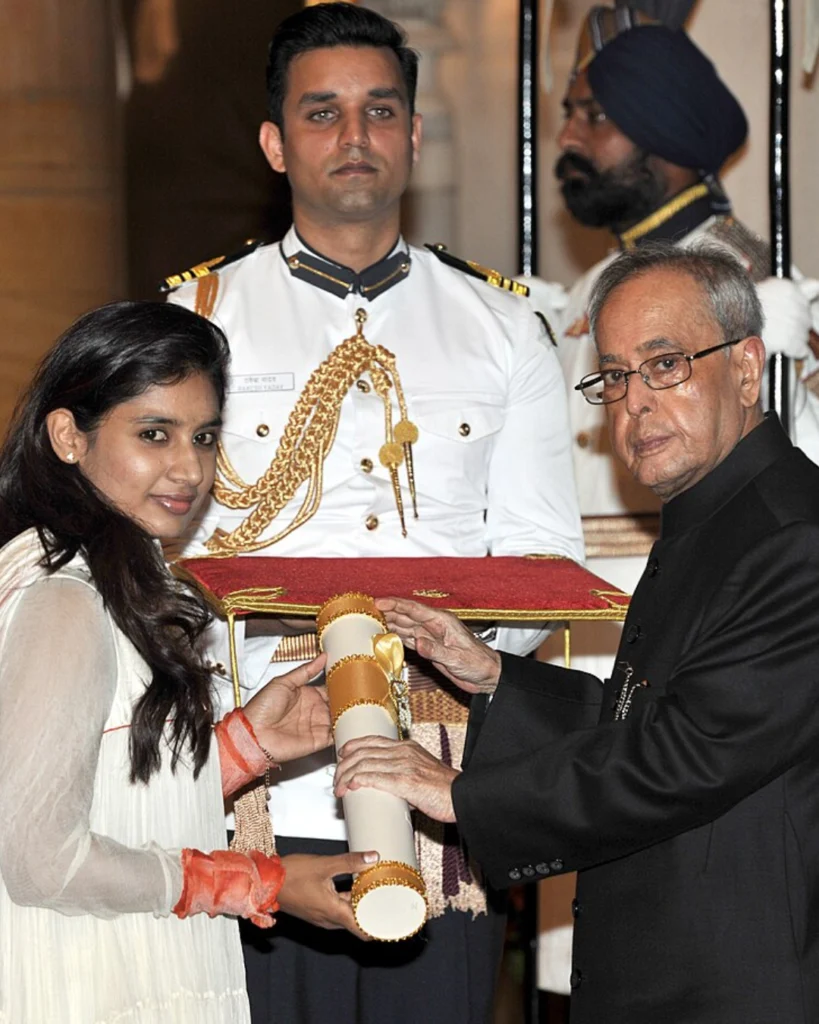
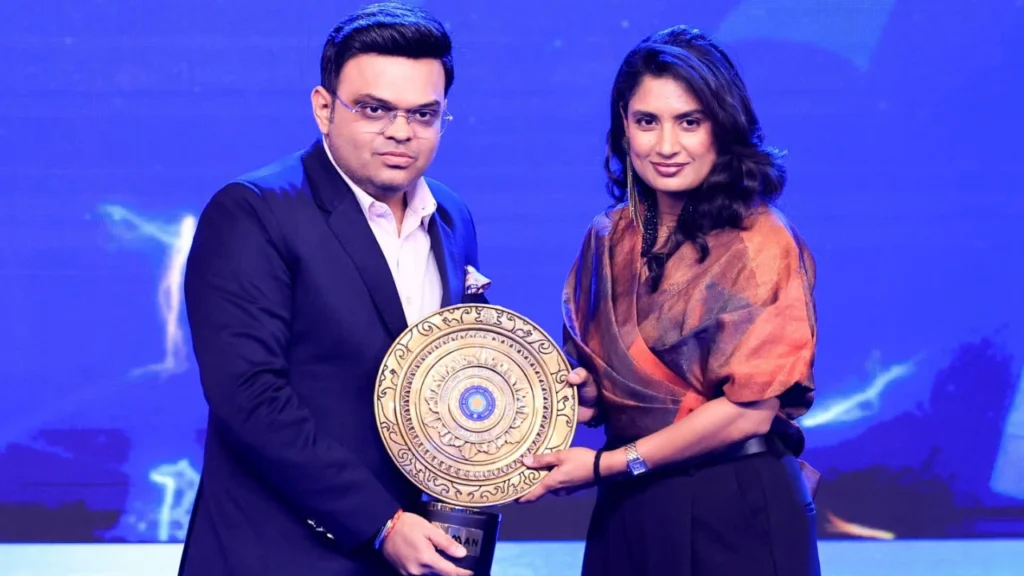
What she did not do was leave. Publicly, Raj has never been more visible: she is a fixture in the commentary box for the biggest events, including this World Cup, her reads as sharp as her batting once was, and the honours have kept coming — in March 2026 the BCCI handed her its Lifetime Achievement Award for Women at the Naman Awards in New Delhi, citing her contribution to the growth and global stature of the women’s game. She is recognised, decorated, and on air. But none of that is the work she finds most consequential.
That work happens where the cameras don’t. If the playing career was about proving the sport’s value, the second act has been about using her standing to widen the gate behind her — quietly, institutionally, and in much the same vein as she drove the women’s game when she was the one batting.
Raj sits on the ICC Women’s Cricket Committee as its Media Representative, and through that body she was part of the campaign that secured cricket’s place at the Los Angeles 2028 Olympics. “I’m so proud of that — because in a way I had an opportunity to help get the sport into the biggest event on this planet,” she said. “Being on that committee, you get to tweak things, to put across the players’ perspective — the smaller countries, what their difficulties are.”
Her case for the Olympics is, characteristically, less about glamour than about plumbing — about where the money to grow the game actually comes from in nations where cricket has no commercial base. “When a sport becomes an Olympic sport, the government tends to fund the organisations,” she explained. “Until then it’s only the ICC, trying to trickle finances down to different countries — and it can do only so much. You need the support of the governments. That was the big decision. Now you see so many countries part of it — African countries, Nepal, China wanting to play — because when it’s an Olympic sport, every country feels there’s an opportunity to win a medal, and then the governments invest. That’s exactly what we wanted.” It is the same logic that drove her playing career, scaled to the level of nations: visibility creates value, and value attracts the investment that lets a sport take root somewhere new.
Back to the districts
The other half of Raj’s post-playing life runs in the opposite direction — not up toward the Olympic movement, but down onto the grounds of Andhra Pradesh, where she works as a consultant to the state cricket association. It is a role she chose deliberately, against the usual path.
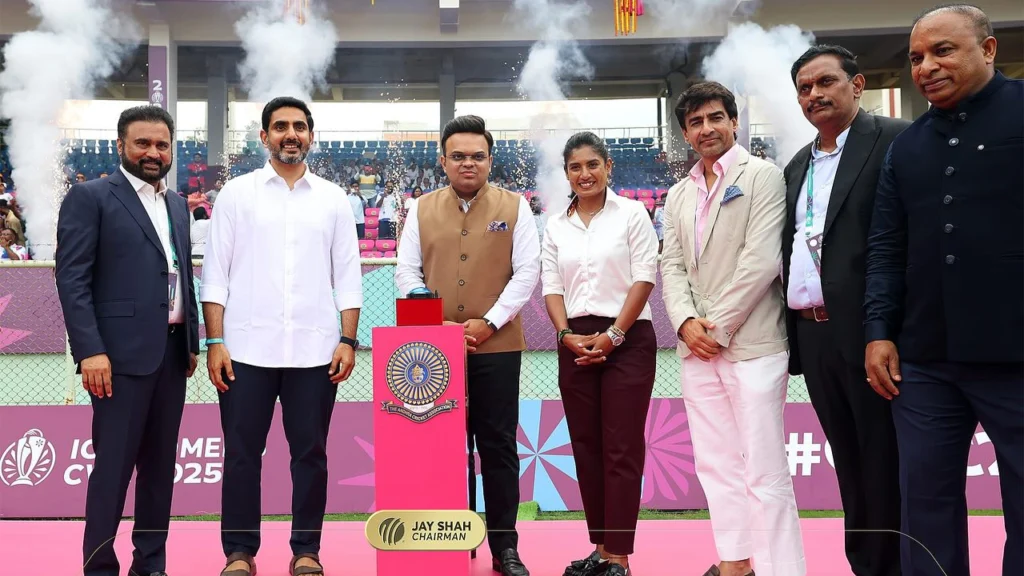
“I’ve always felt I would enjoy the administrative role, unlike many who naturally transition into coaching,” she said. “When you’ve seen women’s cricket pre-BCCI and post-BCCI, and the growth of the sport, I feel I have so much experience to bring to that.” Her first priority on the job was the kind of thing a legend could easily have skipped: she went and sat with the youngest players. “The first thing I did was attend an under-15 camp, interacting with twelve- and thirteen-year-olds,” she said. “There’s a vast difference in how a young kid speaks to you and how an elite athlete does. They had absolutely no apprehension. Everyone had two or three questions — some funny, some intense. I thoroughly enjoyed it, because they don’t judge you. They’re just eager for answers. After a long time playing, I just wanted to spend more time with those thirteen- and fourteen-year-olds.”
What she found at the grassroots tempered any triumphalism about the sport’s boom. “When I went into Andhra, there were a lot of girls who came from the rural areas, from the districts, who had to travel two or three kilometres one way to reach a bare-minimum facility to train,” she said. “A few are from families where there’s no guarantee of three meals a day — they were malnourished at that age, and still playing cricket, doing all the fitness work. I was taken aback when I got to know all of this.” The lesson, she says, is that the headline numbers conceal a harder reality. “It’s not all rosy just because the sport is growing. At the grassroots level there’s still a lot of work to be done — not just giving facilities, but understanding that some come from the interiors of the country, whose parents are daily wagers, who can’t give them proper nutrition or equipment. That’s where I come in.”
Her intervention is small in rupees and large in consequence, and it is built around a specific cultural obstacle she knows well: families who pull their daughters out of sport the moment it costs money. “In India, when parents feel a girl is playing a sport and needs funding, they say, why are you playing, we don’t have enough, just stop. They don’t even invest in education,” she said. “We didn’t want girls to stop playing. So the association started giving stipends — basic, four or five thousand rupees — so the parents don’t pull the girls out. Then we find ways to fund them, to give them scholarships. That was a bit of a challenge, but we managed to start it.”
The system already has a face. “Shree Charani is one of those kids who played for India, and I’m so happy — because the association finally has an international cricketer, after a long time, from that part of the country,” Raj said. Charani, a slow left-arm spinner from a village in the Kadapa district who came through Andhra’s setup, announced herself with figures of 4 for 12 on her T20I debut in 2025, and then took 14 wickets as part of India’s victorious 2025 ODI World Cup campaign. The state that had developed Charani now has a World Cup winner. The line from Raj’s Andhra role to that trophy is not straight, but it is real — and it lands precisely on the prize she herself never got to hold.
The bridge
There is a version of Mithali Raj’s story that is simply a tally of records, and it would be one of the longest in the sport. The more interesting story is about timing — a player who did her work in the decades when the work was thankless, then stepped aside just as the rewards arrived. She is, by most measures, exactly where a pioneer should end up: recognised rather than forgotten, decorated rather than overlooked. And yet the satisfaction she describes is not about any of that. It is about the eighteen thousand at Edgbaston, the trophy that came home in 2025, the twelve-year-olds with too many questions, and the spinner from a village in Kadapa who now plays for India because a state association took a long view of women’s cricket development.
Raj took Indian women’s cricket to the brink of a promised land she never crossed as a player. What she has done since — through the committee rooms of the ICC, the Olympic campaign, and the under-15 camps of Andhra — is keep the road behind her open, so that the next girl carrying one precious bat for two seasons has somewhere to walk. She built the bridge. She is still, quietly, laying the next plank.