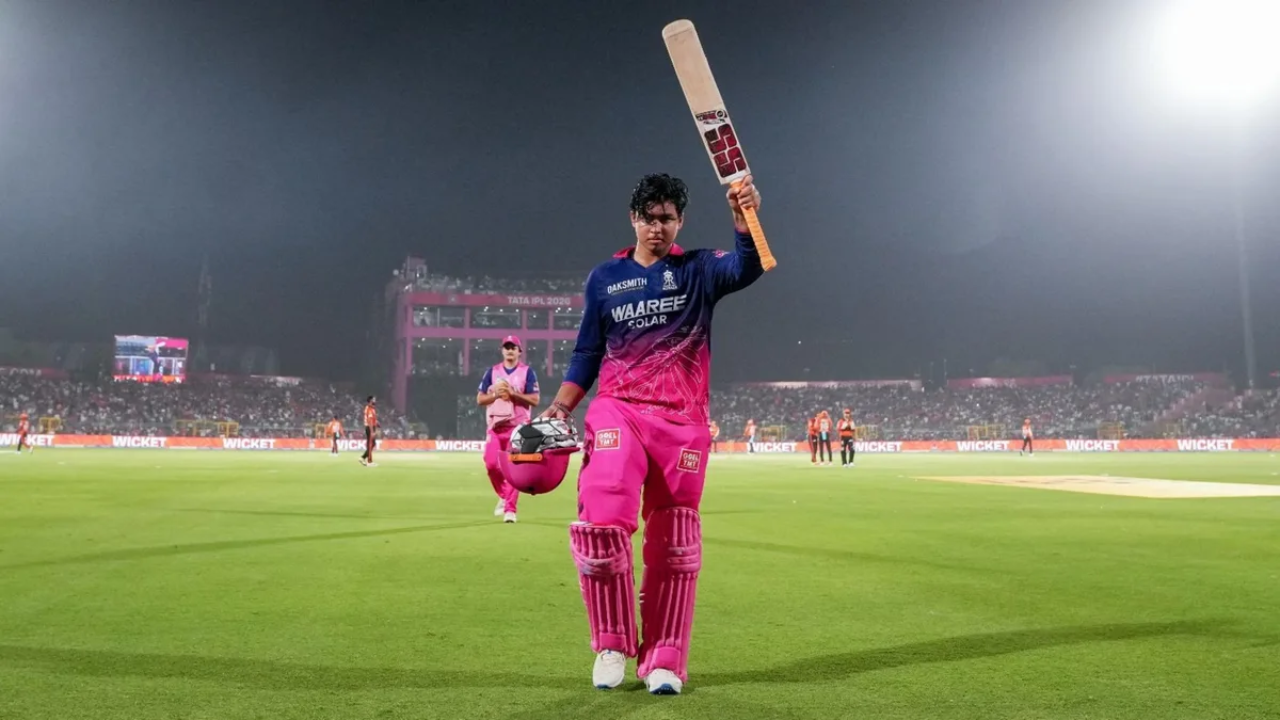
At just 15, Vaibhav Sooryavanshi has already entered a commercial bracket occupied by some of Indian cricket’s established stars, with his endorsement rate now estimated at ₹1.5–2 crore (approx. US$157K–209K) per day as brands move to capitalise on one of the sport’s fastest-rising young profiles.
According to a report by Hindustan Times, Sooryavanshi’s commercial value has accelerated dramatically during the 2026 IPL season, creating an unusual marketplace around a player who remains a minor. His emergence has also raised questions around how endorsement agreements, professional representation and commercial workloads should be managed while his cricket career is still developing.
Indranil Das Blah, Founder & CEO of AMP Sports & Entertainment, told Hindustan Times, “Pre-IPL, there was really no benchmark… it’s fresh off the bat that he’s charging around ₹1.5 crore a day.”
Sooryavanshi’s endorsement value could rise further
The current valuation follows a rapid sequence of performances that has increased Sooryavanshi’s profile. After attracting widespread attention during his breakout 2025 season, he scored 175 in the U19 World Cup final earlier this year before his performances during the IPL further expanded his commercial appeal.
Das Blah places Sooryavanshi’s current endorsement standing alongside established Indian cricketers including Shubman Gill, Rishabh Pant and KL Rahul. If the teenager sustains his form over the next two years, he estimates that Sooryavanshi could eventually command ₹3–4 crore (approx. US$314K–418K) per day, putting him among the country’s biggest celebrity endorsers.
The opportunities currently available to Sooryavanshi are expected to be structured as cash deals rather than retainers or equity-based arrangements. That allows brands to secure an association with his growing profile at a stage when much of his long-term commercial trajectory remains tied to how his cricket career develops.
Minor status creates an unusual commercial challenge
Sooryavanshi cannot independently enter endorsement contracts without a guardian, while India does not have a dedicated framework comparable to the Name, Image and Likeness system used for college athletes in the United States. One of the unresolved areas concerns multi-year agreements that begin while an athlete is a minor but continue after the player turns 18.
Aahna Mehrotra, Founder of AM Sports Law and Management Co., said, “There isn’t, as yet, established legislation or jurisprudence in India that gives us a definitive answer to that.”
Indian cricketers can also have separate commercial obligations through governing-body or league sponsors, franchise sponsors and personal endorsement agreements. Those different layers allow players to work with brands in distinct capacities, increasing the importance of understanding precisely where individual contractual commitments apply.
Access to specialist advice can consequently become particularly important for young athletes and families encountering the commercial side of professional sport for the first time. Mehrotra noted, “The biggest blind spot is a lack of awareness and the wherewithal to have the kind of legal guidance that athletes at a higher level typically have.”
Sooryavanshi does not currently have a formal agent, with his family handling his commercial affairs and the Rajasthan Royals ecosystem providing support. Das Blah believes the franchise environment has helped ensure he is not commercially overexposed and has suggested that, as his career progresses, Sooryavanshi could eventually establish his own agency or sign with a professional management company.
Complan makes Sooryavanshi its new-generation ‘Complan Boy’
Complan has expanded its association with Sooryavanshi by placing him at the centre of its “India Ka Complan Boy” campaign, reviving one of the nutrition brand’s longstanding advertising properties for a new generation.
The campaign follows Sooryavanshi’s appointment as a Complan brand ambassador earlier in 2026 and builds on the brand’s “Thoda Plan, Thoda Complan” platform. Complan is using the cricketer as a contemporary version of the established “Complan Boy” identity, connecting the campaign with ambition, preparation, perseverance and family support.
Tarun Arora, CEO and Whole-Time Director, Zydus Wellness, said in an official statement, “Brands stay relevant when they continue to evolve with the people they serve. At Complan, we have a distinctive legacy of celebrating children who dream big, and today’s generation is dreaming in new and different ways. Vaibhav represents that evolution beautifully. His journey is a story of ambition, preparation, perseverance, and family support. These values have always been at the heart of Complan. With ‘India ka Complan Boy’ we are refreshing a much-loved brand equity and bringing it into the lives of a new generation in a way that feels authentic to them.”
Complan signed Sooryavanshi before his IPL 2026 breakout, giving the company an association with the player before his endorsement rate reached its current level. The partnership also has a personal connection for the cricketer, who has said that he and his two brothers grew up with Complan at home.
Sooryavanshi said in an official statement, “Playing in the IPL and getting the opportunity to represent India at such a young age is something I feel very grateful for. I know I still have a long way to go and a lot to learn. Whatever I have achieved so far has only been possible because of the support of my family, coaches, and teammates. We are three brothers who have grown up with Complan in the house, so becoming ‘India ka Complan Boy’ feels really special. I hope it encourages other children to dream big, work hard, and always remain grounded.”
Managing commercial commitments alongside cricket
The expansion of Sooryavanshi’s endorsement opportunities also creates demands on his time. For a developing athlete, commercial appearances and shoots have to coexist with training and competition, making the scale of those obligations an important part of any agreement.
Mehrotra said, “There needs to be a balance between an athlete’s commercial and professional commitments. If endorsement work starts affecting training and performance, that ultimately becomes counterproductive for the athlete.”
Ajimon Francis, Managing Director of Brand Finance India, has cautioned against equating Sooryavanshi’s immediate endorsement appeal with durable brand value. His assessment is that long-term commercial standing requires years of character, consistency and discipline, with cricketing development remaining more important at this stage than maximising short-term earnings.
The combination of rapidly increasing endorsement fees, major consumer-brand interest and Sooryavanshi’s status as a minor has created a commercial situation rarely seen around an Indian cricketer at such an early stage of his career. How that opportunity is managed will depend not only on the brands seeking an association with him, but also on the contractual advice, representation and workload decisions surrounding his development.