A profitable sports league in year one is nearly impossible. A profitable sports league in year one that attracts families, women, and children in equal measure is a unicorn. When Knighthead Capital Management evaluated Birmingham Phoenix and The Hundred, the New York-based investment firm found both — along with something else: a competition so divisive within cricket that half the sport’s establishment wanted it to fail.
For Knighthead, that was the point of entry.
The firm has built its sports portfolio by identifying assets experiencing rapid change, structural transformation, or market uncertainty — moments where traditional investors see risk and Knighthead sees mispriced opportunity. When the Hundred franchise sales were announced in 2024, Knighthead sent Kyle Kneisly, who is involved in much of the firm’s sports activities with certain of his partners, to evaluate whether Birmingham Phoenix fit that pattern.
What he found was a league that checked nearly every box on Knighthead’s investment criteria. It also happened to be located in a city where the firm was already committed to a £3 billion urban regeneration project anchored by sport.
The firm that runs toward fires
Knighthead Capital Management was co-founded in 2008 by Tom Wagner and Ara Cohen, two investors who built their careers navigating complexity. Over the past nineteen years, the New York-based firm has grown into a diversified asset management platform managing billions of dollars across credit, real estate, insurance asset management, and an increasingly prominent sports portfolio.

The firm’s sports investments follow a pattern: assets experiencing rapid change, structural transformation, or market uncertainty. Knighthead holds positions in NASCAR’s Legacy Motor Club, Birmingham City Football Club, and the Professional Fighters League, among several others. The thread connecting them is not sport itself but the presence of disruption — moments where traditional investors see risk and Knighthead sees mispriced opportunity.
Tom Brady partners with Knighthead across several of these investments, though he is not involved in the cricket holdings. Wagner serves as chairman of Birmingham City FC, where the firm has announced plans for a £3 billion Sports Quarter development in East Birmingham, including a new 62,000-seat stadium designed by Heatherwick Studio.

Kneisly joined Knighthead in 2020 after seven years at Farmstead Capital Management, where he focused on distressed credit and special situations, and earlier experience in mergers and acquisitions and restructuring advisory at the legendary Perella Weinberg Partners. His professional background centers on what he calls turnarounds and rapid-change environments.
“Classically, I’ve always been in turnarounds,” Kneisly explains. “Most turnaround situations are where problems arise, a rapid rate of change occurs, and you take a bet on the turnaround of a business.”
That toolkit, he notes, translates well to certain sports investments. Knighthead’s involvement in Formula One properties during COVID provided an early proof point. The firm watched as F1 underwent structural changes around the Concorde Agreement, which reshaped revenue distribution and governance.
“With Formula One… we lived through the Concorde Agreement and saw how the formation or setup of a league, and the shift within league regulation, can propel a sport forward,” Kneisly says. “Everyone talks about the “Drive to Survive” series on Netflix, but a huge part of F1’s success is the league setup.”

The league that divided cricket — and attracted capital
The Hundred launched in 2021 amid significant skepticism. Traditionalists argued it was unnecessary, that T20 cricket already served the short-format audience, and that creating a separate competition risked fragmenting the domestic calendar. The competition was polarizing before a ball was bowled.
For Knighthead, that division was part of the appeal. Kneisly describes it as almost a requirement for the firm’s entry. In mature leagues with broad consensus, large private equity firms have established playbooks and valuations reflect stable expectations. The Hundred, by contrast, was unproven.
“With the Hundred, it was less a turnaround and more a novel league,” Kneisly says. “There had to be naysayers — that’s almost a requirement for us entering.”
Valuations during the auction process ranged wildly. Some thought teams would sell for £10 million, others projected £500 million. That kind of uncertainty creates inefficiency, and inefficiency creates opportunity for investors comfortable operating without a consensus view.
“There was a very wide view as to where valuations were going to land,” Kneisly notes. “Those situations, where no one really knows the value — no expert report[LT1] report to rely on — feel very normal to us.”
The one-of-one startup league
But Knighthead’s interest was not contrarian for its own sake. The firm identified characteristics in The Hundred that distinguished it from other startup leagues Kneisly had evaluated. Most significantly, the competition was approaching profitability in year one — an outcome he describes as almost unheard of in sports.
“Most startup leagues initially lose a ton of money,” Kneisly says. “It’s quite unique to see one managed really to profitability. That really raises eyebrows — having seen dozens of these, this is a one-of-one.”
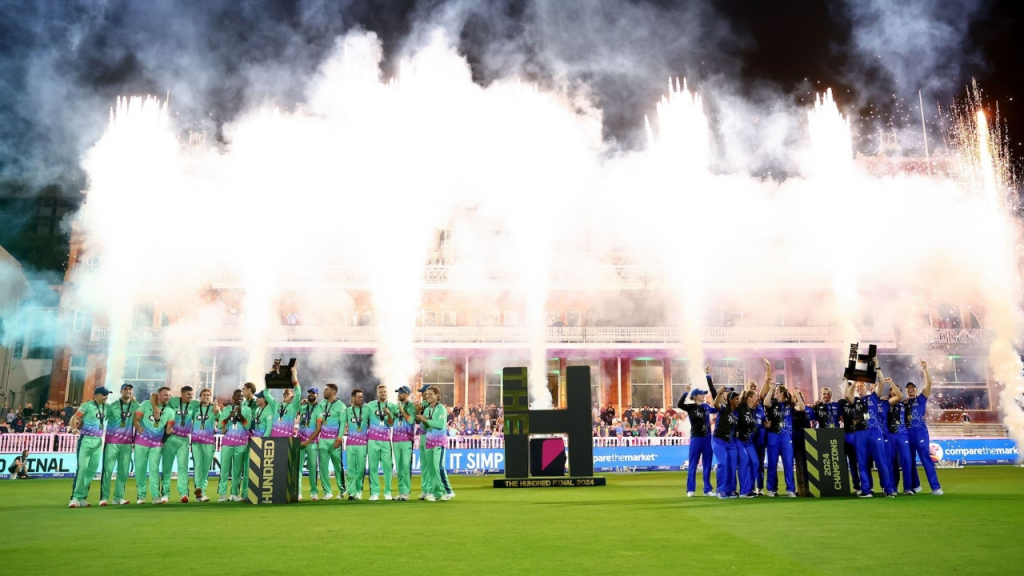
The financial profile matters because profitability changes valuation dynamics. Sport properties trading below profitability often receive revenue multiples of one or two times. Profitable franchises in major U.S. leagues trade at eight to twelve times revenue. The gap is substantial.
“Incremental revenue in sport is exceptionally high margin,” Kneisly notes. “That profitability threshold is one of those unlock points.”
The Hundred had reached profitability without the massive capital outlays typical of league launches. For an investor focused on growth assets in environments of change, it looked like a compelling entry point.
The demographic profile that changes the equation
If profitability was the first signal, audience composition was the second — and in some ways, the more powerful one.
When Kneisly attended a Hundred match at the Oval to evaluate the product, what struck him was not the cricket itself but who was watching. The crowd skewed younger, more female, and more family-oriented than traditional county or Test cricket audiences.
At Birmingham Phoenix’s home ground of Edgbaston, the numbers confirm what he observed. Nearly a quarter of attendees are under 16. Close to a third are women. The demographic mix represents a profile that most sports leagues spend years trying to cultivate.
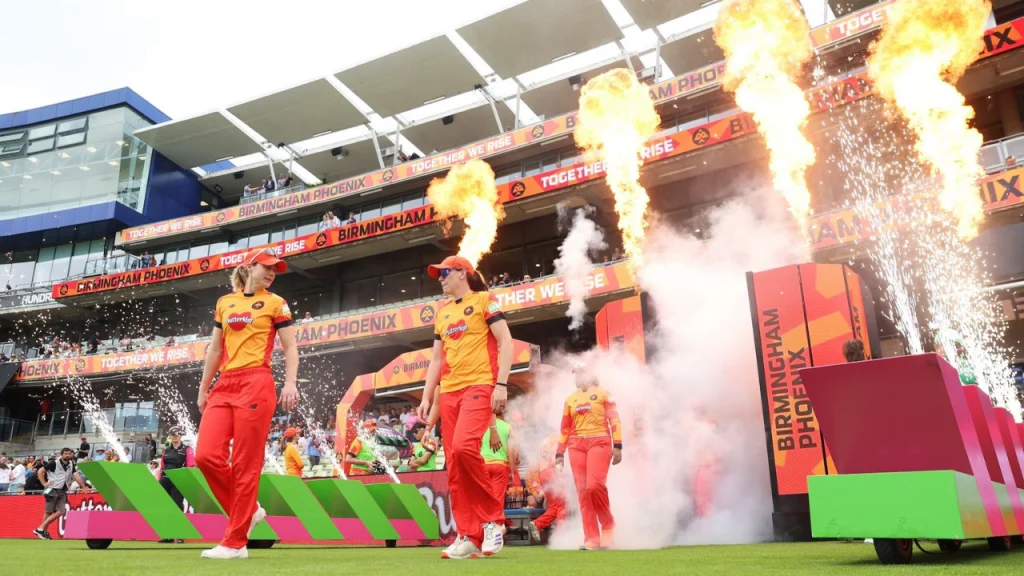
That audience composition changes the commercial equation. Sponsors value access to female and family demographics. Broadcasters seek content that appeals beyond traditional sports viewers. The Hundred was not just profitable — it was profitable while serving an audience mix that most sports leagues spend years trying to cultivate.
Kneisly views it as a structural advantage, particularly for the women’s game, which receives equal billing and prime broadcast slots in The Hundred.
Why Birmingham — and why Warwickshire
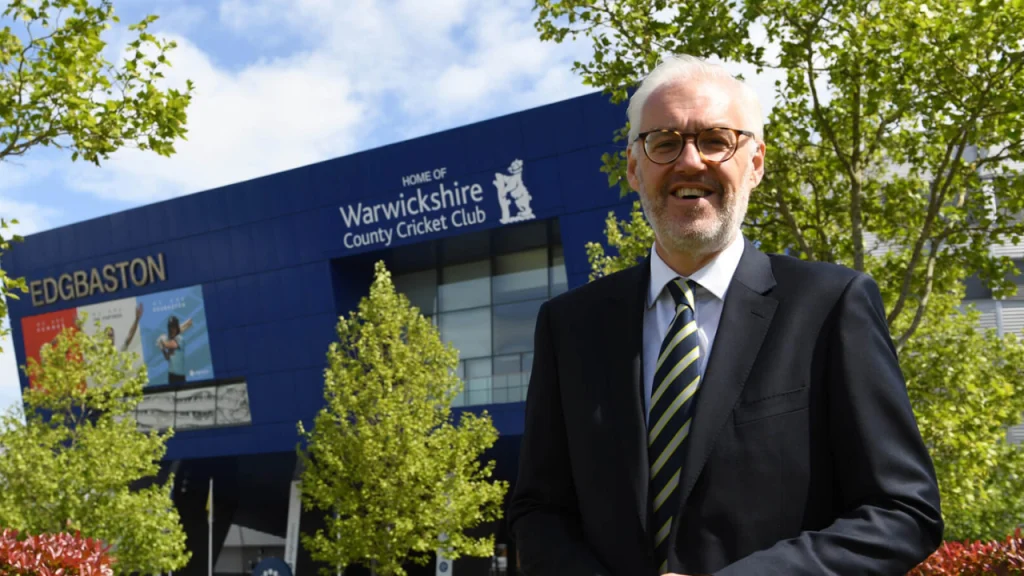
Knighthead’s path to Birmingham Phoenix was opportunistic rather than planned. The firm was already operating Birmingham City FC when the Hundred franchise auction was announced. Through that involvement, Knighthead had developed a working relationship with Warwickshire County Cricket Club and its leadership.
“It’s always helpful when you’re dealing with known assets and known people,” Kneisly says, including its CEO Stuart Cain. “Stuart was not a mystery to us. We already had teams engaged with Edgbaston on hospitality and events because they excel in those areas.”
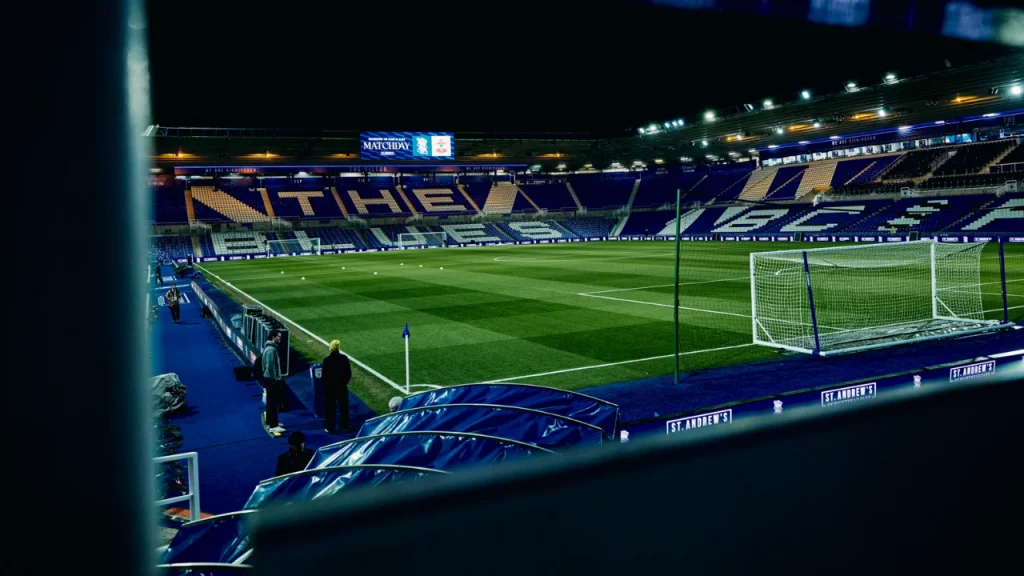
The interactions predated the auction by months. Warwickshire had been advising Knighthead on hospitality strategy as the football club worked to modernize St Andrew’s Stadium. When the Phoenix opportunity emerged, the existing relationship made evaluation easier.
“We interacted with Stuart almost monthly,” Kneisly says. “This predated any news of any auction. By no means were we out there looking for a cricket team.”
But the decision to invest was not relational. The Phoenix investment fit Knighthead’s broader thesis about the city. The Sports Quarter development is predicated on the belief that East Birmingham, despite being close to the city center, has been underutilized due to transport infrastructure limitations. The Phoenix investment aligns with that vision: another high-profile sporting property in a city where Knighthead is already committed to long-term regeneration.
“Had it not been for our involvement in Birmingham, we would not have been part of this process,” Kneisly says. “Knowing Stuart, the team, and having a positive bias towards the operation at Edgbaston made it an easier to be involved.”
The calendar dynamics also work. Birmingham City’s football season runs from August through May. The Hundred happens in summer, filling a void in the sports calendar, which creates resource availability on the football side to help augment the cricket operation.
There is, however, a delicate balance. Birmingham is home to two major football clubs — Birmingham City and Aston Villa — and the rivalry is fierce. Knighthead owns one but cannot assume Phoenix fans support the same club.
“We’ve been very strict about not making any formal crossover,” Kneisly says. “We acknowledge we cannot isolate half the Phoenix fan base.”
Active capital, hands-off cricket
Knighthead’s investment philosophy across its sports portfolio is rooted in a clear division of labor: capital and expertise where the firm has an edge, deference where it does not.
The firm is direct about cricket itself.
“With the Phoenix, we are not experts in cricket,” Kneisly says. “We understand sport, and parts of short-format cricket, but that was parked to the side — and I think that helped the county. Sometimes the last thing you want is an investor telling you how to manage a sporting property.”
Knighthead sees value in areas that leverage its broader portfolio and network. Social media presence, which had been dormant during the off-season, is one area of focus. Commercial partnerships are another — the firm’s involvement in NASCAR, English football, and other properties gives it access to sponsors and partners who might not otherwise consider cricket.
“We’re naturally in conversation with a lot of the key partners,” Kneisly says. “And within Birmingham, we know most of the players in that commercial market.”
The firm also brings a different risk appetite than traditional corporate management.
“We’re huge fans of risk,” Kneisly says. “When we can quantify risk — upside, downside, capital deployment — we approach it differently than a traditional corporate management team.”
The cricket partnership model is deliberate. Knighthead is a minority shareholder, with Warwickshire retaining 51% ownership of Phoenix. Control remains with the county club, which ensures continuity in cricket operations and governance. Knighthead provides capital, opens commercial doors, and offers operational expertise in areas like venue management and fan experience.
Community investment as strategic necessity
Beyond sport, Knighthead sees community investment as essential to the broader Birmingham project. The real estate development is enormous in scale, and creating goodwill matters.
One area of focus is foundation work. Birmingham City, Birmingham Phoenix, and a local netball property all have foundations embedded in their communities. By coordinating programming across football, cricket, and netball, Knighthead can offer more comprehensive youth sports access.
“The foundation crossover is probably more important than it sounds,” Kneisly says. “Football and cricket foundations are deeply embedded in their communities. Being able to offer football, cricket, and netball programming — together — can add real social value.”
The foundation work connects to the real estate vision. As Knighthead embarks on what Kneisly describes as a Herculean growth strategy in Birmingham, community engagement becomes not just goodwill but strategic necessity.
“We’re not blind to the enormity of the real estate project,” he says. “Creating goodwill within the city is the least we can do as we embark.”
A stadium as catalyst for urban transformation
The Birmingham Sports Quarter is not a side project for Knighthead. It is a £3 billion commitment to regenerate a section of East Birmingham using sport as the anchor.
Kneisly frames the logic from an American perspective, where cities have used sports infrastructure to transform underutilized areas. He cites examples in Baltimore and Washington, D.C., where stadiums were built in deprived neighborhoods and catalyzed surrounding development.
“From an American lens, this makes a lot of sense,” he says. “In U.S. cities, sport infrastructure placed in deprived areas can transform communities. Often the land is undervalued relative to what it could be with better use.”
Birmingham presented a rare opportunity. The city has limited contiguous land available for large-scale development, but the area around St Andrew’s included 50 acres that Knighthead was able to acquire from the city council.
“There aren’t many cities where you can buy 50 acres of contiguous land,” Kneisly notes. “With that opportunity, you ask: what can we do with this?”
The site is only a mile from Birmingham’s city center, yet the ring road structure made it feel isolated. Addressing transport access became the first priority, and Knighthead worked with local and central government to solve the connectivity issue in under a year.
“The key impediment was transport,” Kneisly says. “Despite clichés about how slow things work in the UK, this was solved in under a year — effectively unbottlenecking transport to the east end of the city. Pretty phenomenal.”
The new stadium will be Birmingham City’s home, featuring a retractable pitch and retractable roof, allowing it to host NFL games, FIFA-compliant football matches, concerts, and conferences.
“We envision retractable pitch and retractable roof, NFL-compliant, FIFA-compliant, able to host concerts and various events,” Kneisly says. “One of the more modern stadiums.”
Edgbaston will not be part of the Sports Quarter, but the development will include cricket infrastructure.
“The East Birmingham community is predominantly South Asian,” Kneisly notes. “Meeting their interests means cricket infrastructure will absolutely be part of the wider campus.”
The broader vision includes what Kneisly calls a one-campus model — a centralized sports complex with training facilities, sports science infrastructure, and health programming. Some of those facilities may be shared across Birmingham City, Birmingham Phoenix, and potentially other teams.
Hospitality as experience — not just access
Edgbaston’s transformation is already underway through Warwickshire’s hotel project, and Knighthead sees it as setting a new standard for matchday environments.
The stadium is constructing a 146-room hotel with pitch-facing rooms and balconies. On matchdays, many of those rooms will convert into hospitality suites, quadrupling Edgbaston’s premium inventory. Knighthead is not directly invested in the hotel — that project is Warwickshire’s — but the firm sees it as indicative of a broader shift in how cricket venues think about fan experience.
“From a hospitality perspective, this is trailblazing,” Kneisly enthusiastically explains. “Even in the U.S., this is cutting edge.”
“Edgbaston’s summer hospitality atmosphere is exceptional — almost Miami F1-like,” Kneisly continues. “Alternative entertainment within the stadium environment.”
The hotel and surrounding areas will amplify what already exists.
“We want Phoenix matchdays to be must-see entertainment,” Kneisly says. “Even if you don’t watch cricket, you can lounge for four hours and be part of the experience.”

Cricket’s commercial future — and Knighthead’s place in it
Knighthead sees The Hundred as part of a larger shift in how global cricket will be structured commercially.
The Indian Premier League has demonstrated that private ownership of cricket franchises can generate substantial value. Australia’s Big Bash League is moving toward a similar model. South Africa’s SA20 and the UAE’s ILT20 already have private franchise ownership. The Hundred is now the first major English European competition with significant private capital. Kneisly expects those leagues to become increasingly interconnected, with ownership groups operating across multiple markets and formats.
Cricket is also progressively penetrating the American market. Major League Cricket launched in 2023, and the sport will be included in the 2028 Los Angeles Olympics.
The international dimension also affects how Knighthead thinks about player recruitment and retention. Currently, Warwickshire manages those decisions, and Knighthead is not involved. But the league’s structure is expected to evolve, potentially moving toward an IPL-style player auction model. If that happens, the strategies – and contributions – of investors will start to matter more.
A bet on audiences, not nostalgia
Knighthead’s investment in Birmingham Phoenix is not sentimental. The firm did not buy into cricket because of the sport’s heritage. It invested because the numbers worked, the demographic profile was compelling, and the risk-reward calculation made sense.
The Hundred divides opinion within cricket, and that division is unlikely to disappear. Knighthead is not trying to resolve the debate. It is betting that the competition’s ability to reach women, children, and families will prove commercially valuable regardless of the sport’s internal politics.
The firm’s involvement in Birmingham Phoenix is inseparable from its broader commitment to the city. The Sports Quarter, the new stadium, the foundation work, and the cricket investment all reinforce the same narrative: Knighthead is betting on Birmingham, not just individual assets within it.
Whether that bet pays off depends on execution. But for a firm that has built its portfolio by running toward uncertainty, the challenge is familiar. The Hundred offered Knighthead an environment it knows well — a startup league with profitability, a demographic profile traditional sports cannot replicate, and a city committed to growth.
For Knighthead, those demographics are not just interesting — they are the entire investment thesis. And in The Hundred, they found all three already in place.
Read part one of cricexec’s “Great County Cricket Reset” series here.
Read part two of cricexec’s “Great County Cricket Reset” series here, featuring Leicestershire County Cricket Club.
Read part three of cricexec’s “Great County Cricket Reset” series here, featuring Glamorgan County Cricket Club.
Read part four of cricexec’s “Great County Cricket Reset” series here, featuring the Professional Cricketers’ Association.
Read part five of cricexec’s “Great County Cricket Reset” series here, featuring Warwickshire County Cricket Club.